—
메타크리틱
0개
DLC
Steam
플랫폼
어드벤처, 캐주얼
장르
출시 예정
플랫폼별 가격 비교
가격 히스토리
차트 로딩 중...
게임 소개
The year is 1910 and you have arrived in the Town of Almanac with a key, a letter, and a missing friend.
You were a detective once. Now you are running someone else's agency, taking on cases to pay the rent, and trying to figure out what happened to the person who sent for you. Your colleague had stumbled onto something, and someone in this town made sure no one else would learn what that was.
Keep digging, keep asking questions, but be careful what you say. Any one of your clients could be involved, and you don't want to become the next detective that Almanac makes disappear.
Say Anything. To Anyone
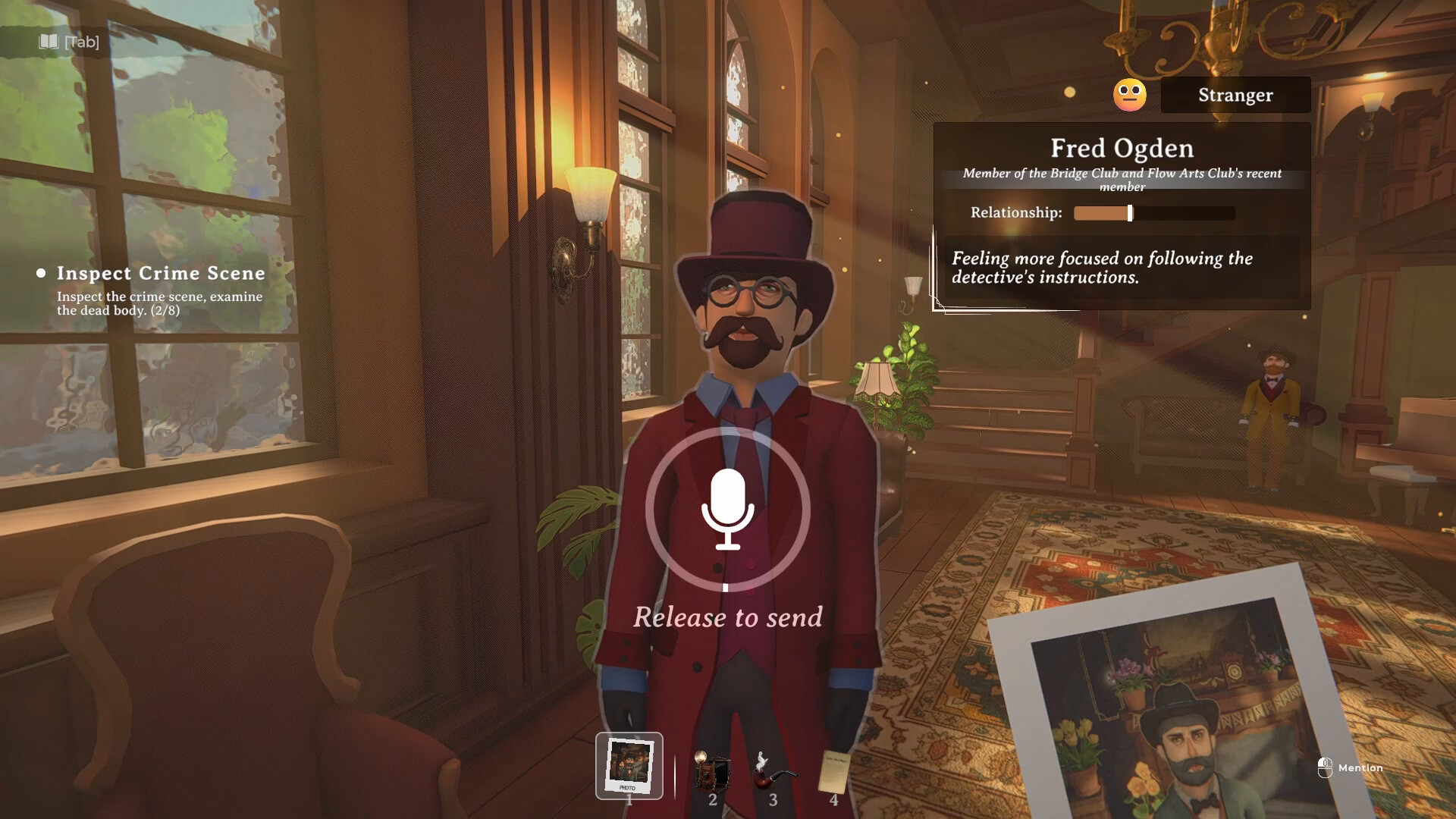
Flirt, threaten, or manipulate suspects any way you like, choosing your own path towards figuring out who did it. Every suspect thinks, lies, and remembers you. With the option to use your keyboard or your microphone, nothing is stopping you from being the detective you want to be.
Push too hard and they shut down. Get them to trust you and they share things they were never supposed to.
They Remember You
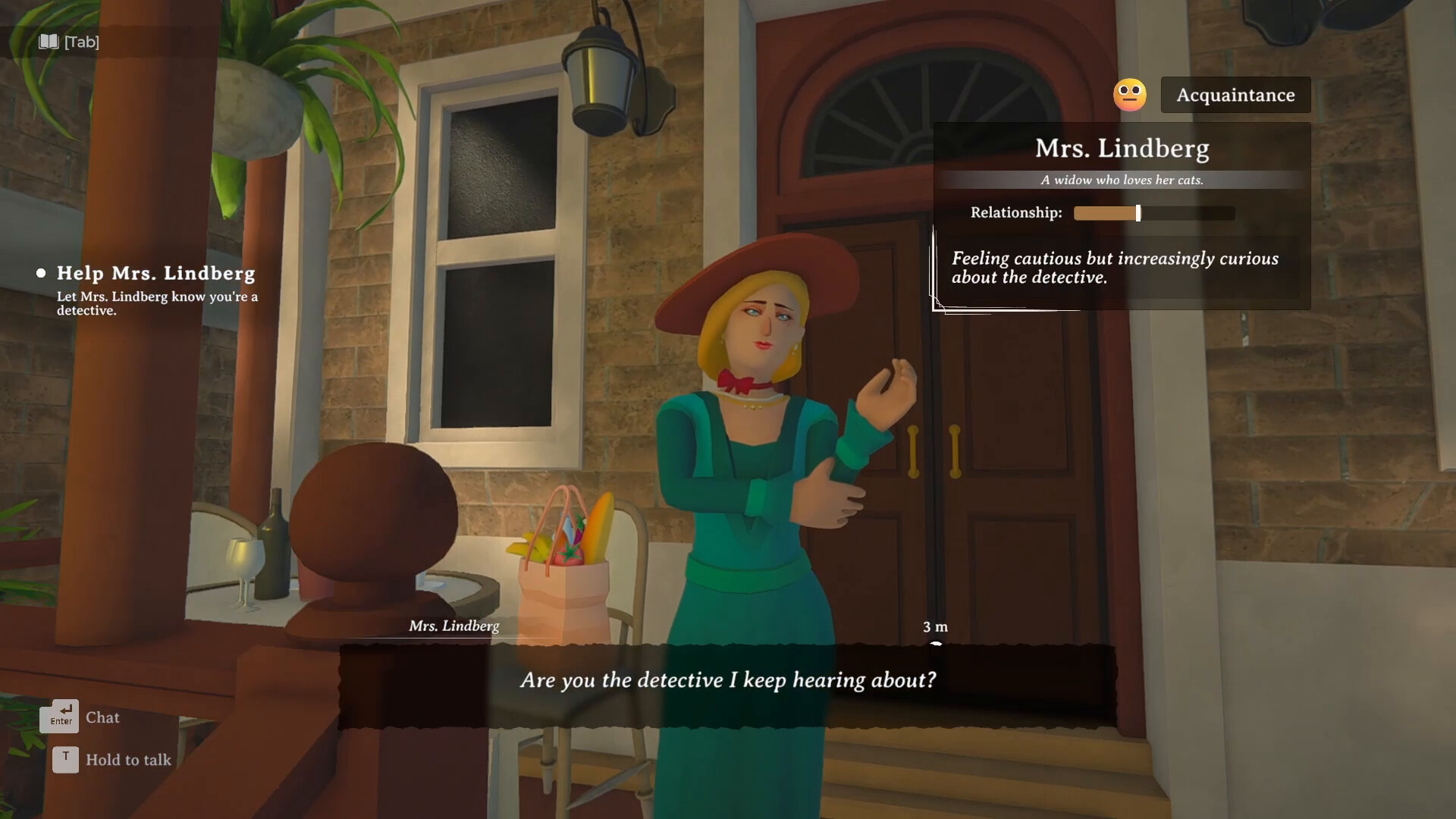
Suspects, clients, and even characters you have only spoken to once will remember you. Specific actions you have taken and topics you have discussed stay with them, making every relationship you build feel different to the last.
Come back to a witness after catching them in a lie and they react to what you said last time. Not the same scripted lines. Not a reset. One tester mispronounced their name when introducing themselves and the NPC used the wrong name for the rest of the case.
Every Case Is Different
The cases start small and get stranger. Each one takes you somewhere new, introduces characters you have not met before, and asks something different of you as an investigator.
Some cases ask you to find things. Some ask you to figure out what really happened. Some put you in situations where the obvious answer is wrong, and the town has a way of leading you somewhere you were not expecting to end up.
Investigate
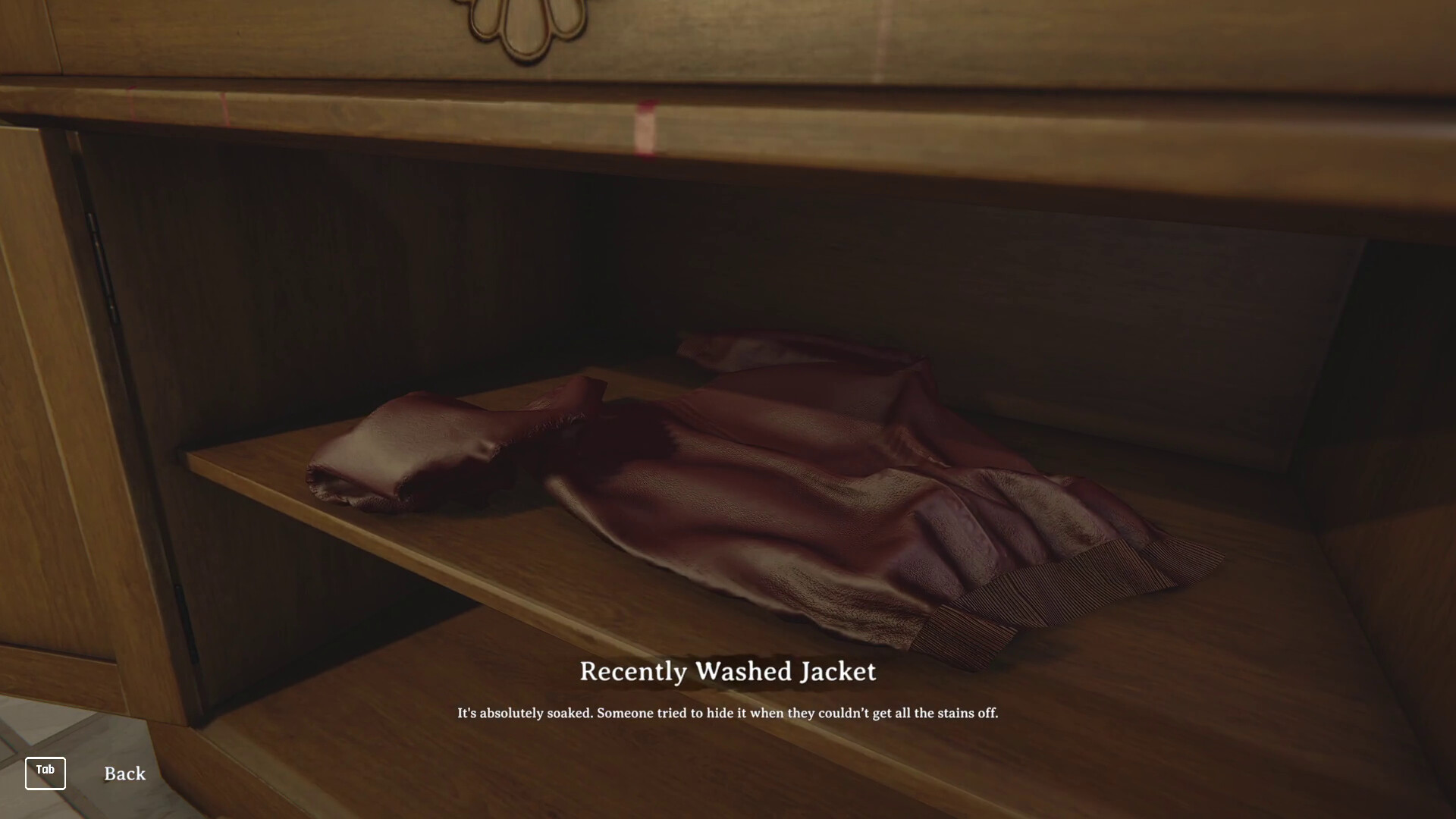
Use a keen eye to see what is out of place. Search crime scenes, photograph evidence, and use your investigation board to organize notes and testimonies. Link clues together with red string to form your theory — who, where, how, and why.
When you are ready, present your case in court and defend it. A correct accusation builds your reputation. A wrong one might ruin it, and every outcome changes how the city sees you and what opportunities appear next.
A Living Town of Secrets
Behind every door is a lead waiting to be uncovered. Explore alleys, clubs, and drawing rooms in a hand-crafted world where characters follow daily routines, form relationships, and react to your reputation.
A bartender might share gossip after a few kind words, or clam up if you have crossed the wrong people. Your agency grows as your reputation spreads. Take on increasingly complex cases, and pay attention to what the town is trying to tell you.
Grow Your Agency
Hire assistants with different skills, unlock new districts, and take on clients with deeper pockets and more dangerous secrets. The longer you stay in Almanac, the more of it opens up.
Features
Freeform Dialogue: Say anything you want to any suspect and they respond dynamically to the kind of detective you choose to be
NPC Memory: Every character remembers what you have said and done, forming levels of trust that can help or hinder your work
Hand-Crafted Cases: Each case has its own locations, characters, and mechanics. No two play the same way
Crime Scene Photography: Photograph evidence and build your case from what you find
Investigation Board: Connect clues, link suspects, and build your theory before presenting your accusation
Agency Progression: Hire assistants, upgrade your office, and unlock new areas of town
A Grand Narrative: All these cases are connected, something you will come to realize, and hopefully before someone tries to stop you…
Responsible Use of AI
At Bergamot Games, we believe AI should help people create, not replace them. Our artists and designers guide the art direction and shape how Almanac looks and feels. We use LLMs to power the conversations, so characters can respond to anything you say rather than a fixed set of options. All cases are written by our design team. We understand that AI has a real effect on how games are made, and we are careful to use it in a responsible and creative way that supports human storytellers.