—
메타크리틱
0개
DLC
Steam
플랫폼
인디, 시뮬레이션
장르
출시 예정
플랫폼별 가격 비교
가격 히스토리
차트 로딩 중...
게임 소개
Donor Zero
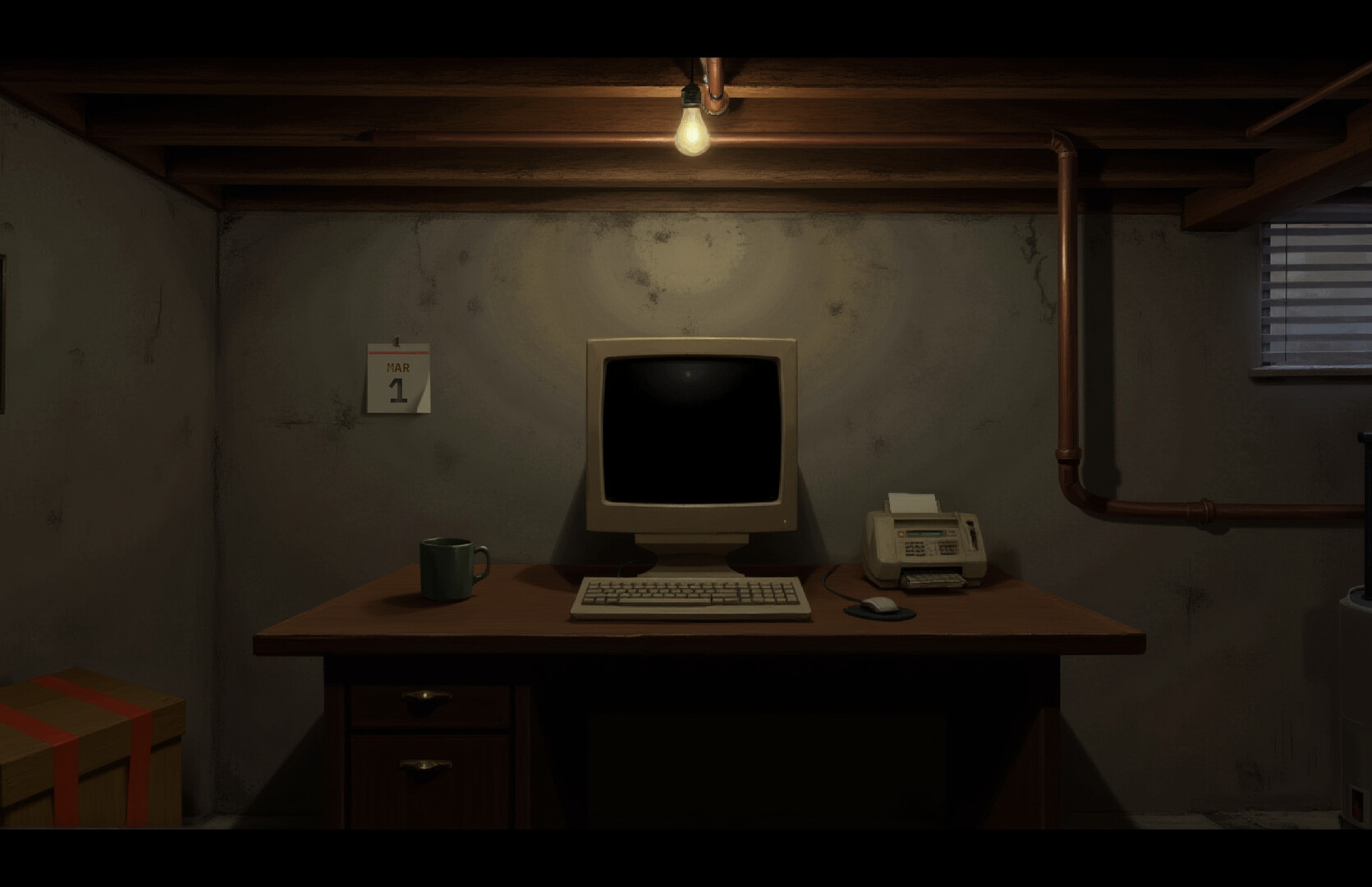
You are Frank Sheldon. Former warehouse grunt for a shadowy military outfit. Now you're running an illegal alien organ trade out of your basement in Dayton, Ohio. It's 1993. The invasion is real. So is rent.
Procure.
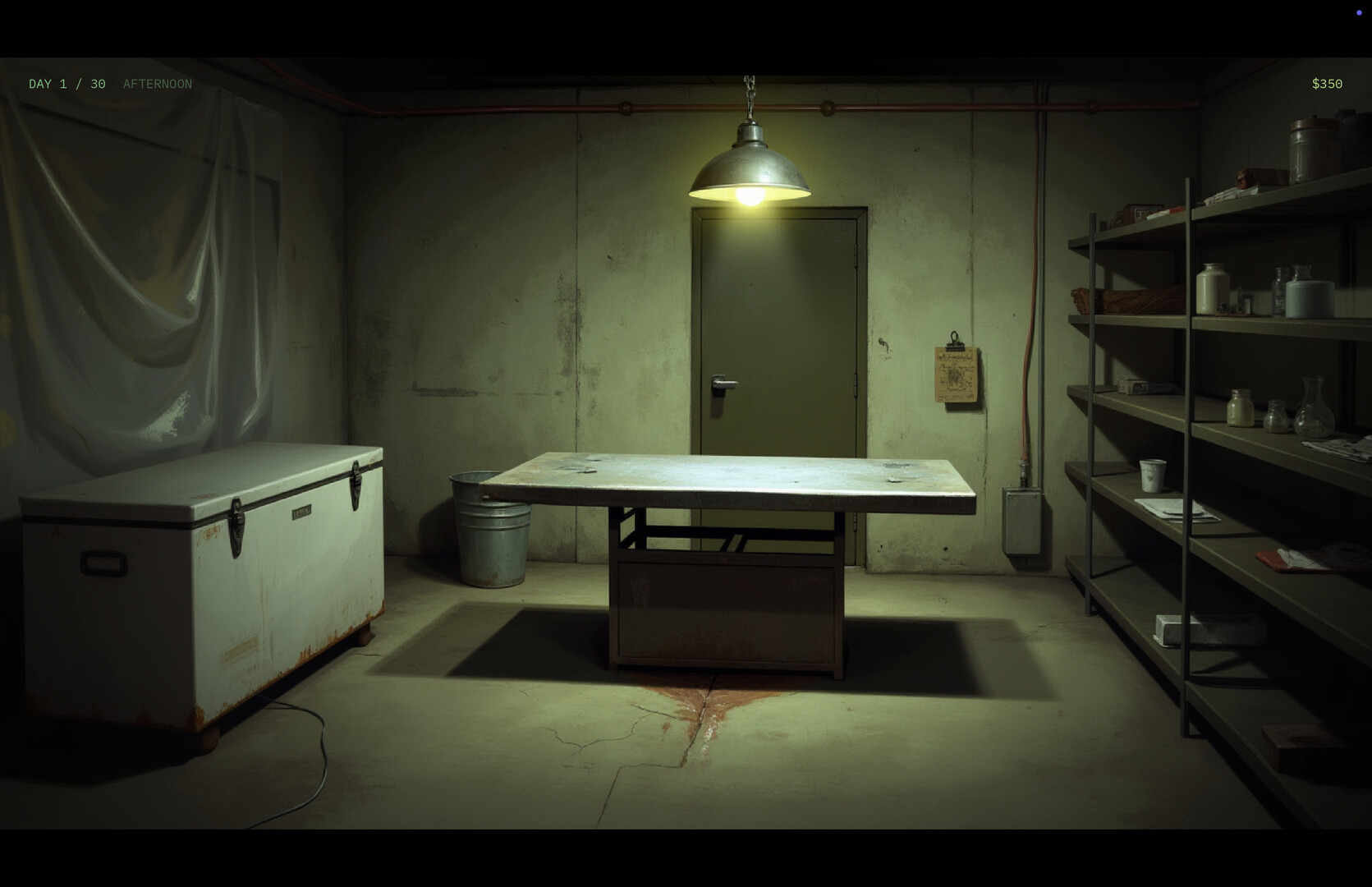
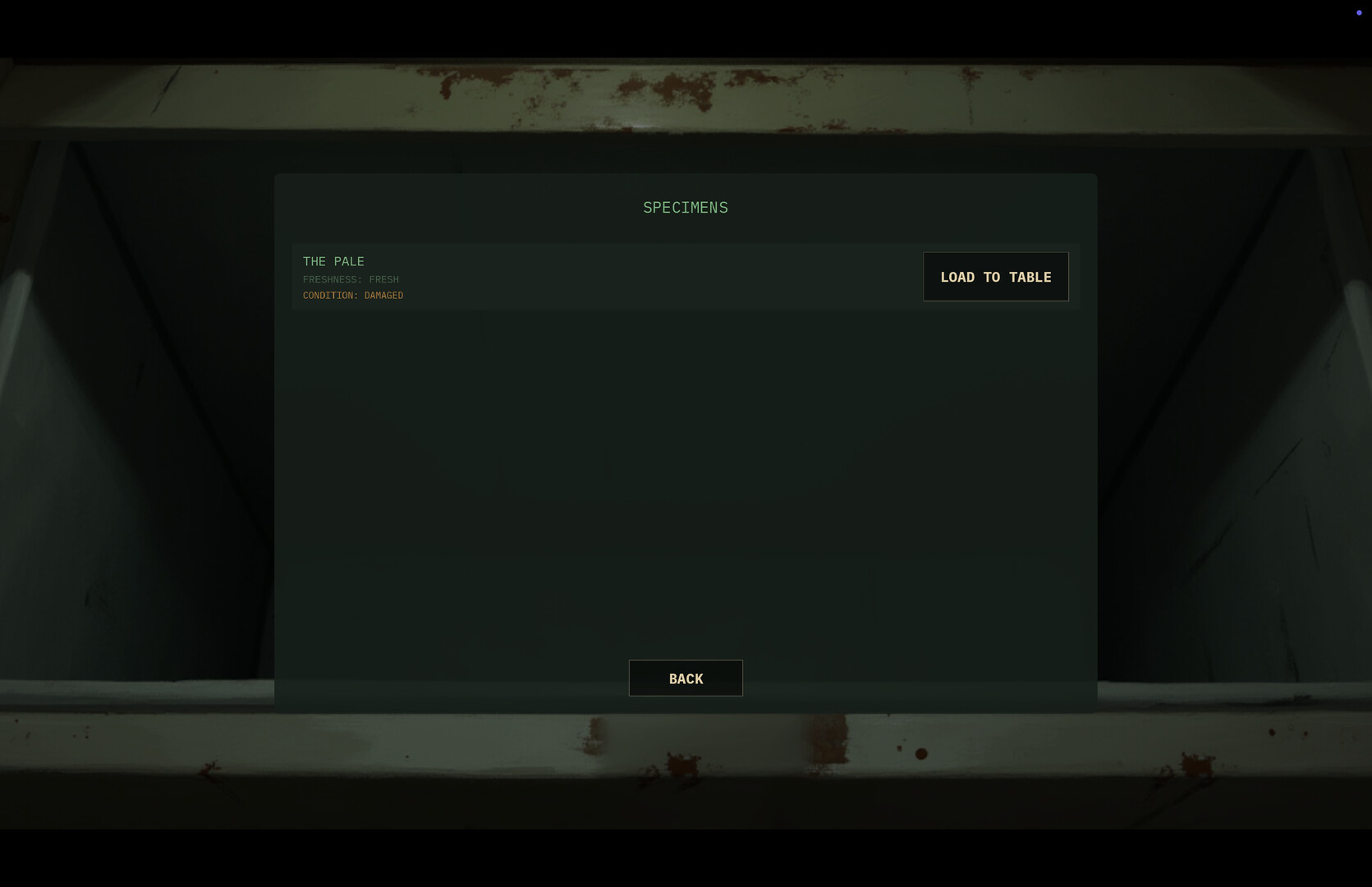
Pick up the wall phone and call your contacts. These are guys you know from the old days: drivers who cut corners, depot supervisors who look the other way. Buy intercepted alien crates. Some arrive intact. Some are missing half the body. All of them start rotting the moment they hit your freezer.
Extract.
This is the work. Put a specimen onto the table, pick your tools, and get your hands dirty. Trace incision paths with the scalpel. Pulse the laser cutter so you don't scorch the tissue. Use the scanner to find organs buried under layers of alien armor. Every body is a puzzle. Steady hands, full price. Sloppy cuts, damaged goods.
Sell.
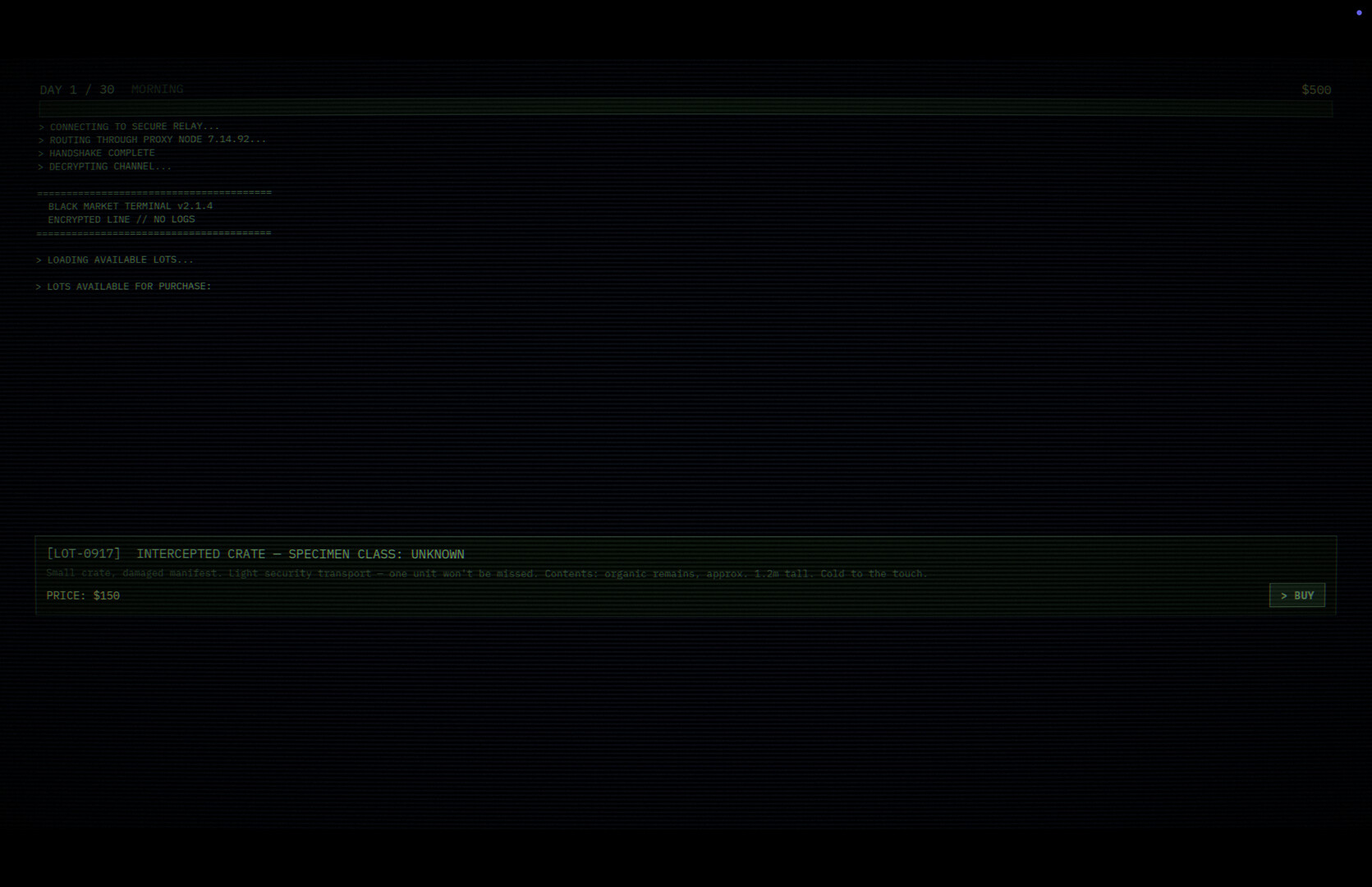
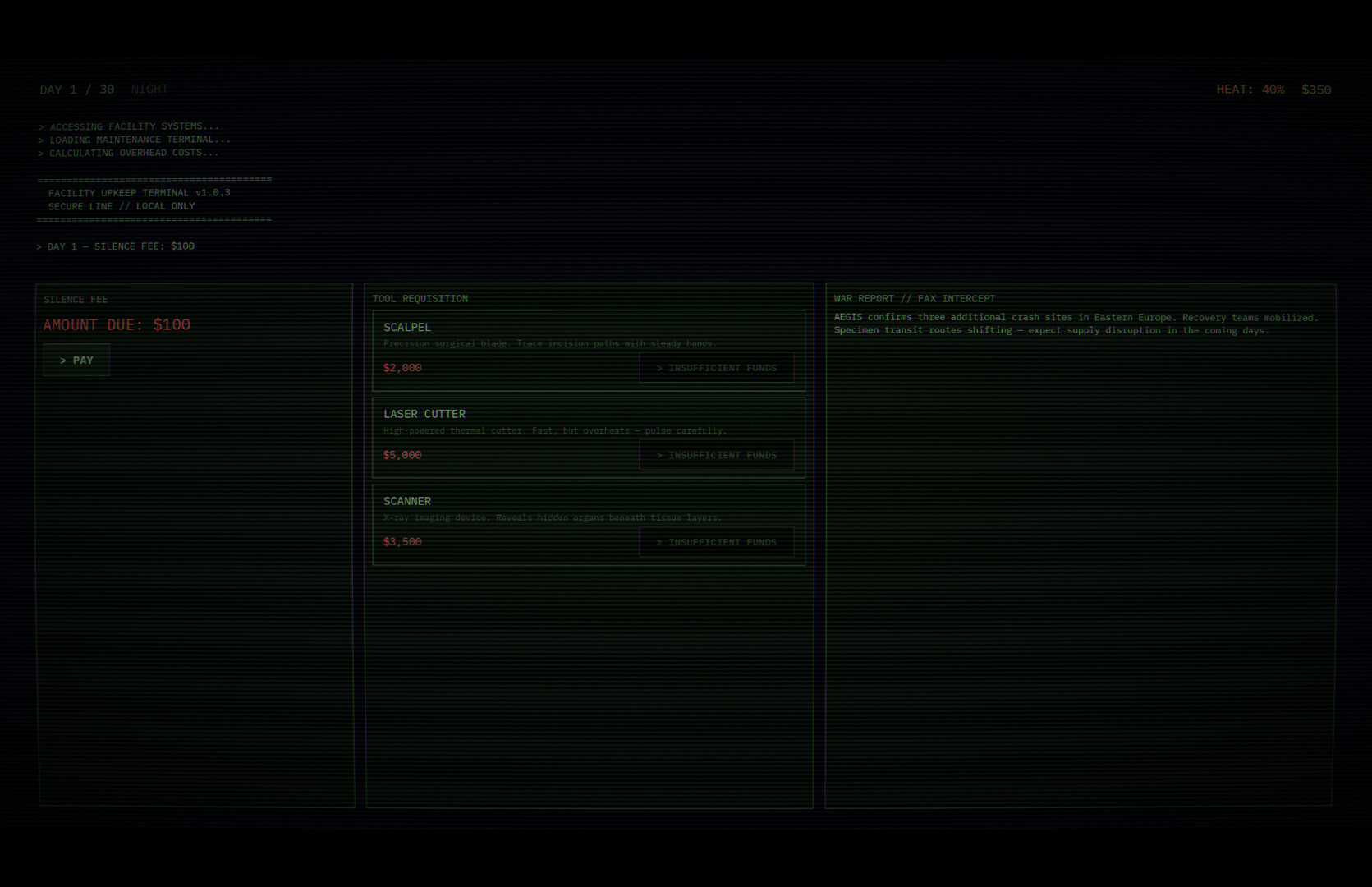
Each evening, log into the black market terminal. Three factions are buying: a weapons contractor, a doomsday cult, and a pharma giant. They all want different parts, and they all pay different rates. The bigger the payout, the more attention you draw.
Survive.
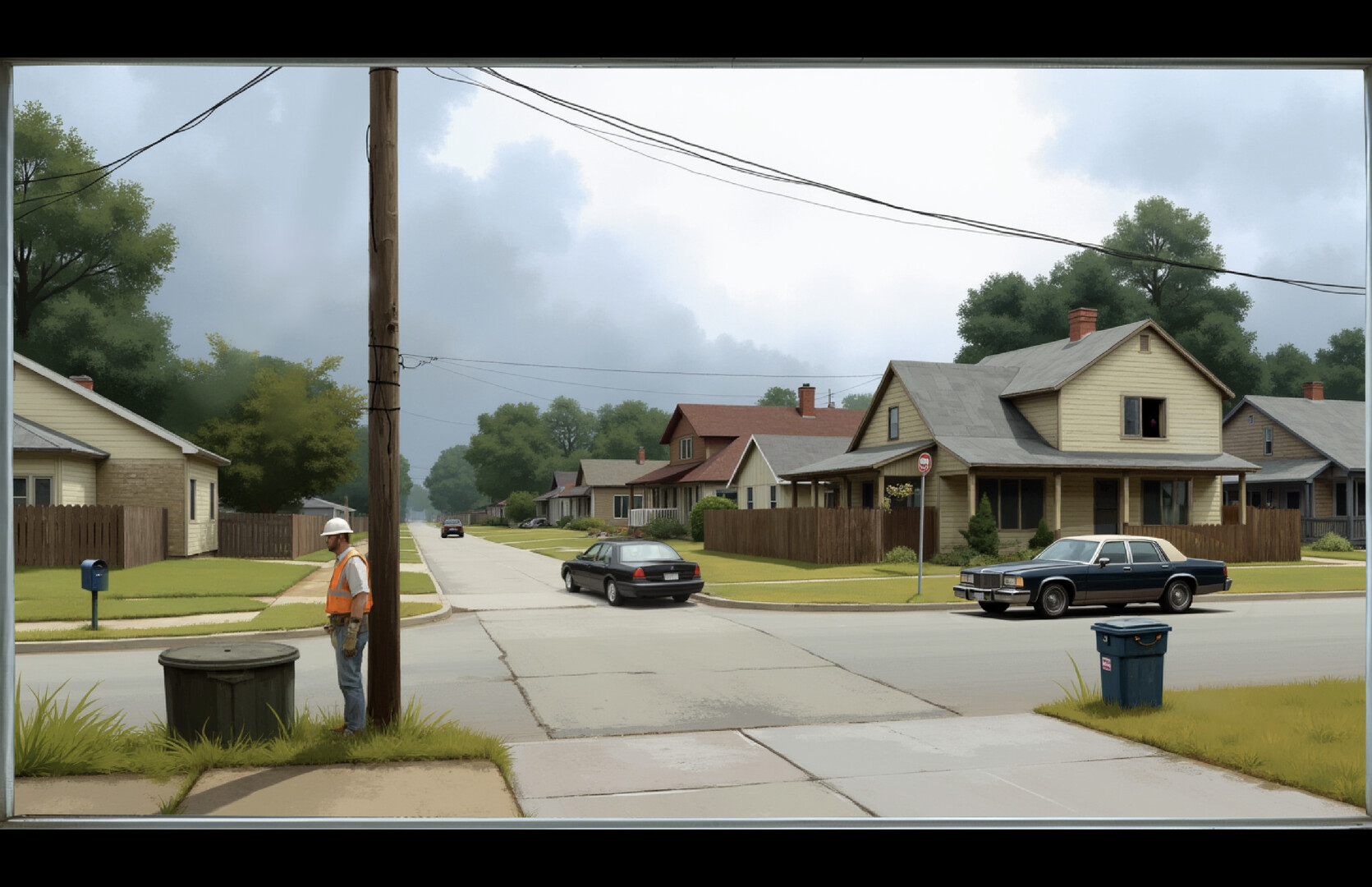
You've got 30 days to hit $1.5 million and vanish. No UI meters telling you how hot things are. Instead, look out the basement window. Notice the car that wasn't there yesterday. The guy doing maintenance who showed up this morning. The black van with tinted windows. You learn to read the street, or you don't last long.
Can't pay rent? You're done. Heat too high? They kick in the door.
What's in the box:
Hands-on extraction mechanics. You're tracing cuts, managing heat, and scanning for hidden organs. Not clicking menus.
Different alien species, each with unique anatomy, layered body systems, and extraction order puzzles.
A black market economy that reacts to what you sell, who you sell it to, and how much you flood the market.
Systems built entirely on environmental storytelling. No bars, no numbers, no holding hands.
1990s analog everything. CRT terminals, fax machines, fluorescent lighting, concrete walls.
Full gore toggle if that your thing.