—
메타크리틱
0개
DLC
Steam
플랫폼
인디, 시뮬레이션
장르
출시 예정
플랫폼별 가격 비교
가격 히스토리
차트 로딩 중...
게임 소개
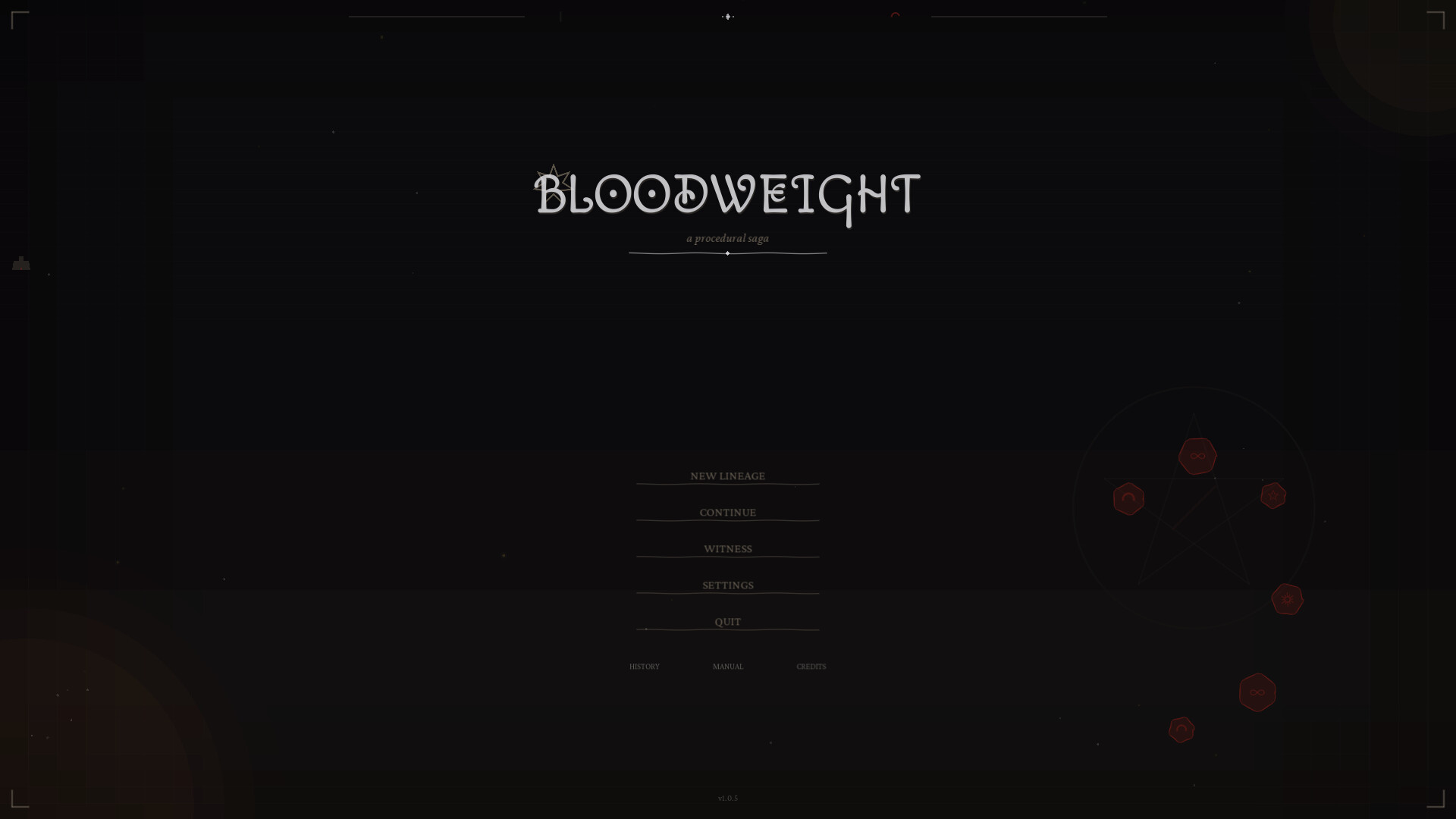
Bloodweight is not a dashboard.
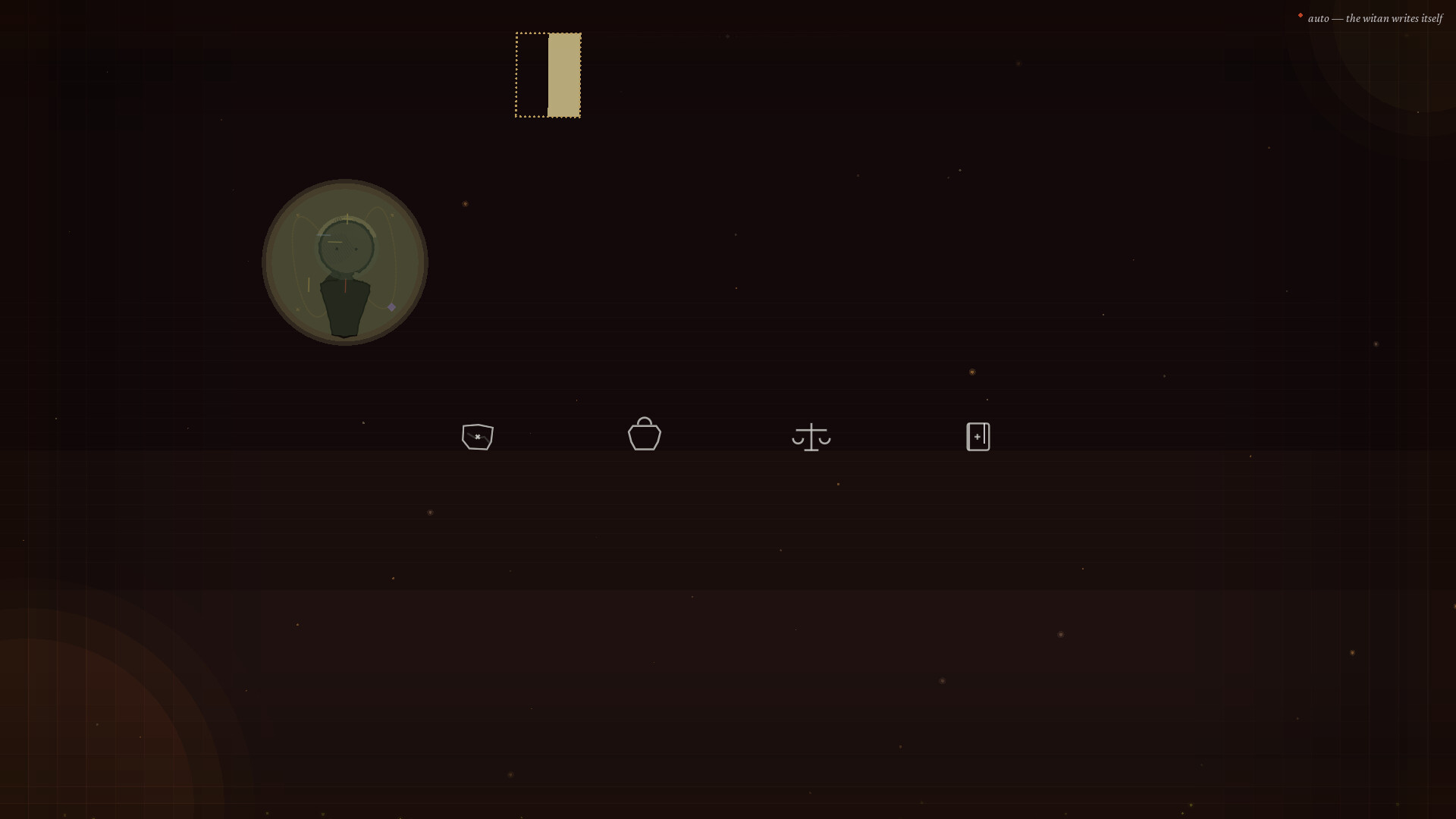
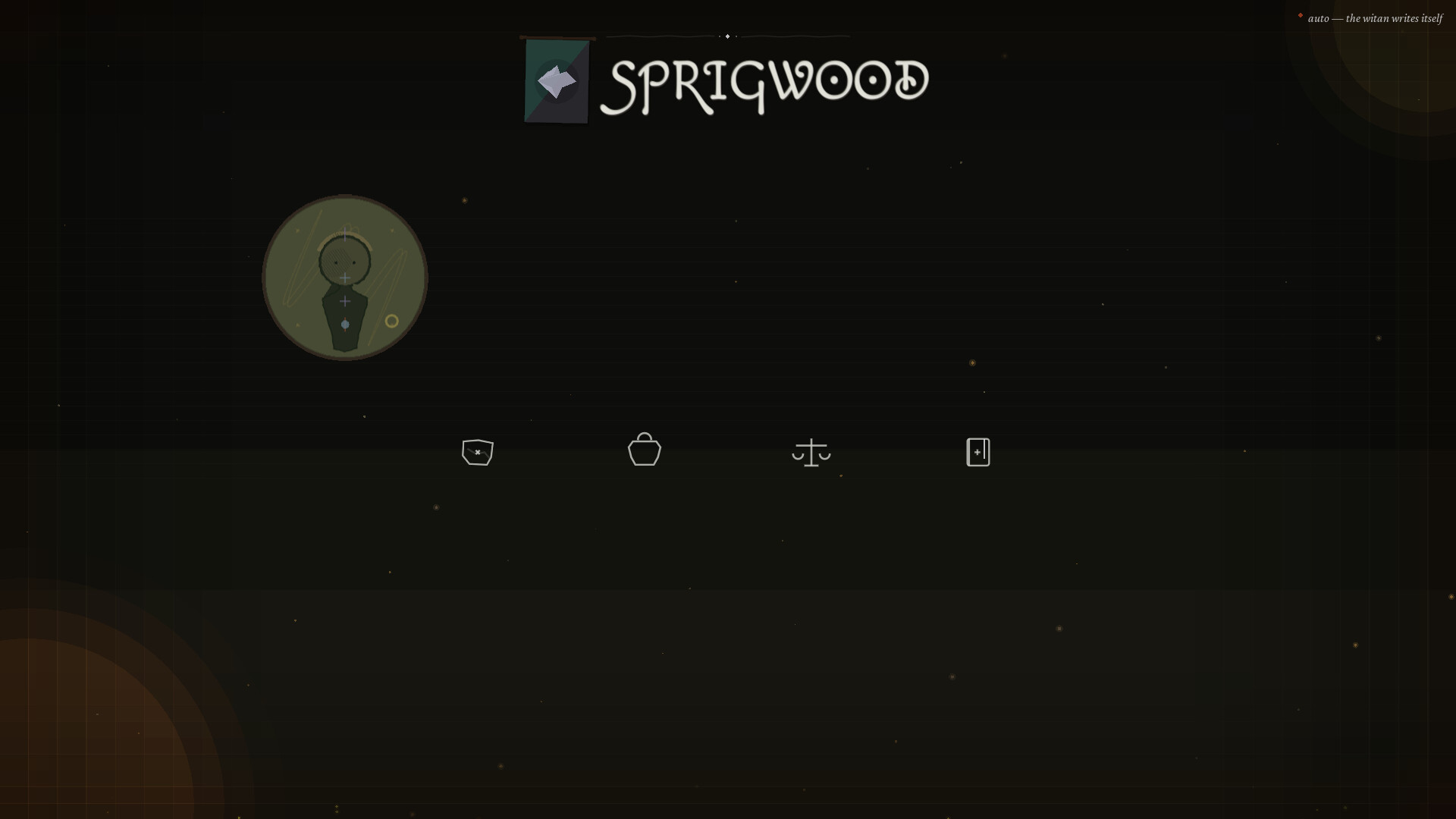
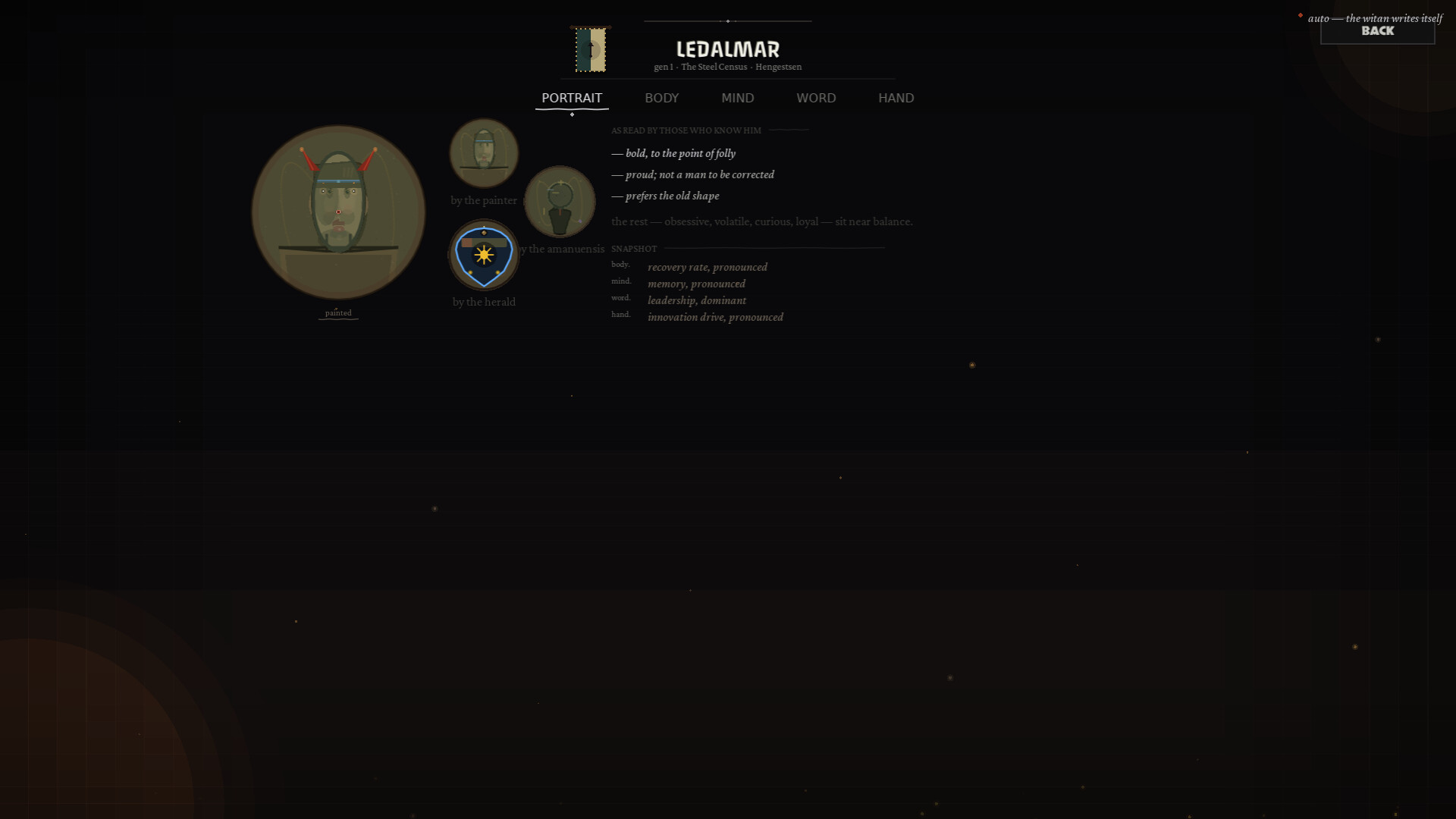
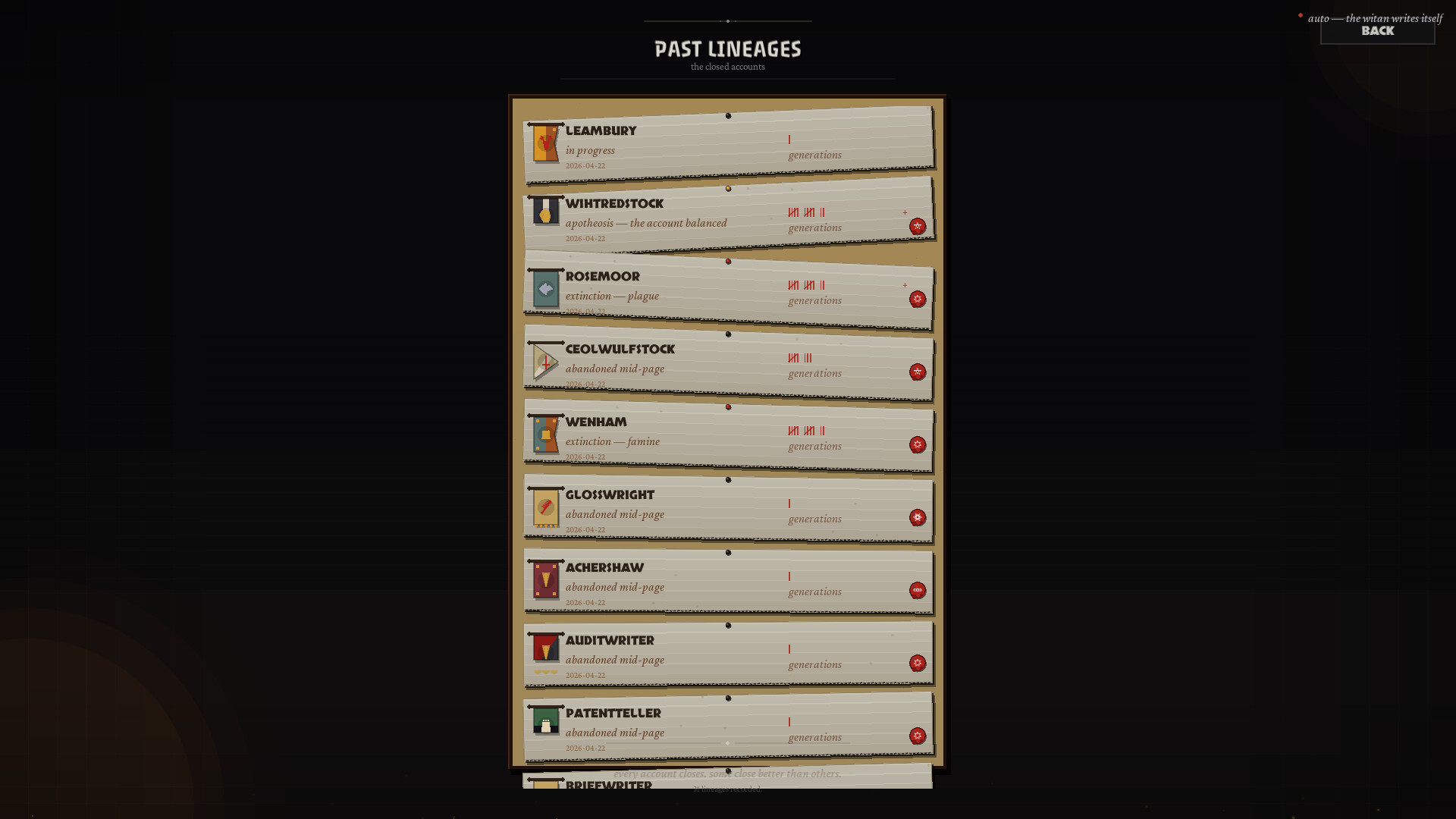
The court records your line in a leatherbound ledger: sketched vignettes of your heir's body and mind, observations written in longhand, wax seals pressed on what has been decided, tally strokes counting what has been spent. Generations pass as candlelight burns down the page.
You are the bloodline — the collective memory of a name that outlasts any one person who carries it. You do not micromanage your heirs. You manage the consequences of their decisions. Every famine was caused by a specific person. Every reputation was earned by a specific hand. Every ending is inevitable in retrospect.
THE REALM
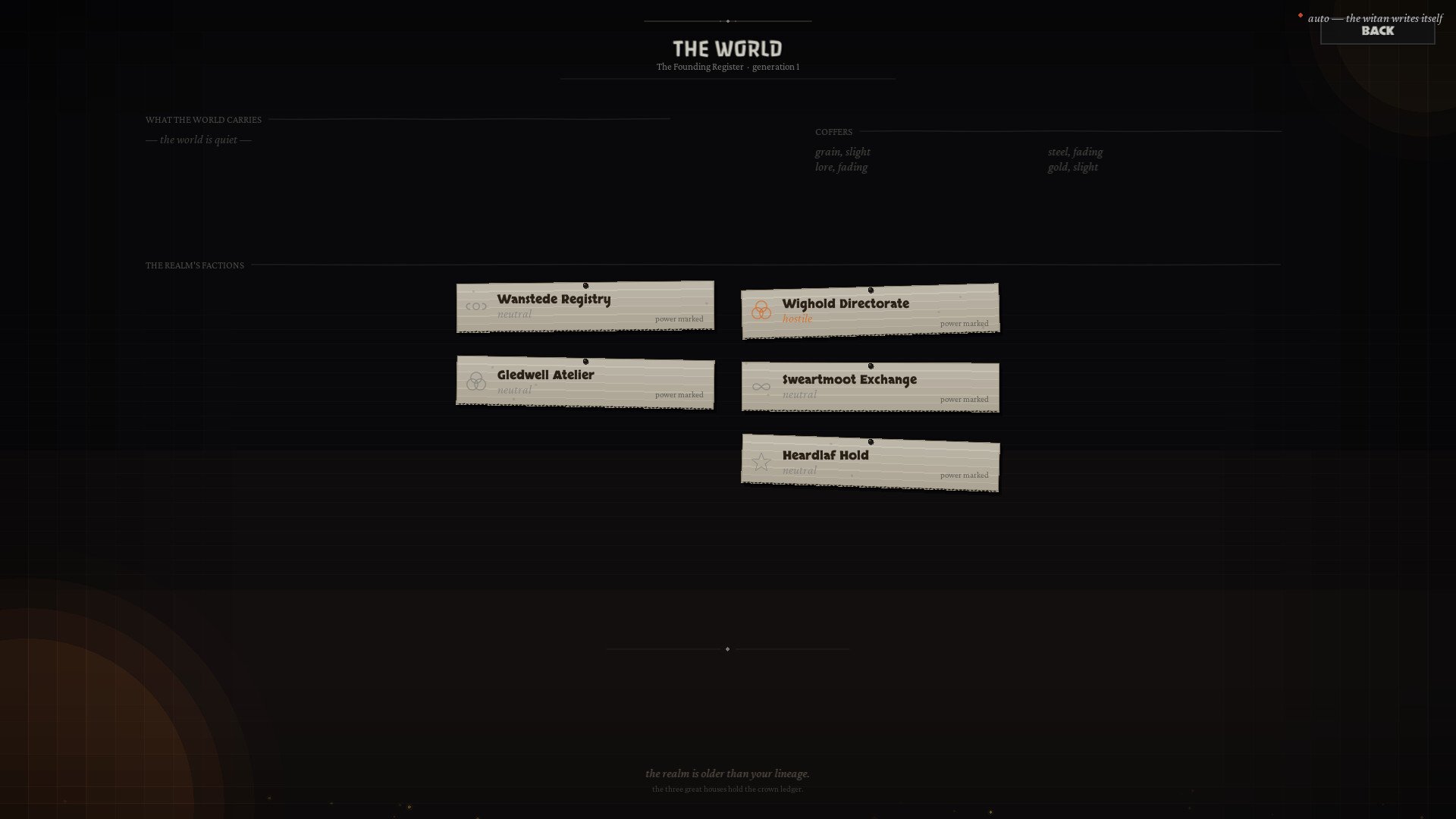
Five Great Houses outlive any dynasty:
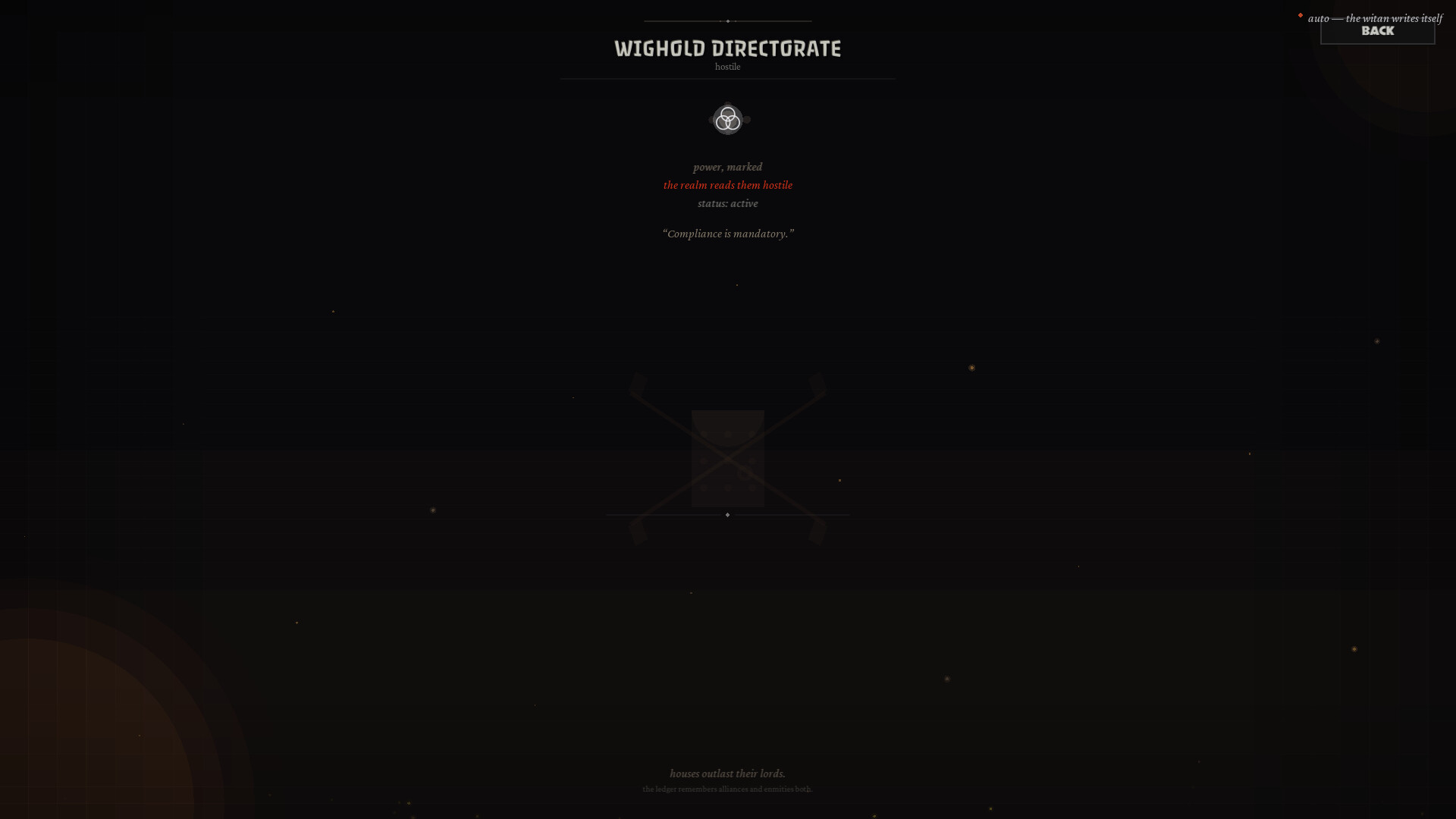
• Wighold Directorate — "Compliance is mandatory." The enforcement arm.
• Wanstede Registry — "If it is not written, it did not happen." The archive.
• Sweartmoot Exchange — "The ledger closes at dusk." The market.
• Gledwell Atelier — "The hand learns what the book forgets." The makers.
• Heardlaf Hold — "The stone remembers." The old blood.
Your line makes and breaks oaths with them. Inherits their enmities. And is ultimately remembered — or forgotten — in their records.
WHAT HAPPENS WHEN YOU PLAY
Build your world. Name the realm. Choose the Age — Founding Register, Steel Census, Contraction, or the Liminal Surge. Design your founder down to the bone. Forge a founding bequest. Establish a faith. Set the five Great Houses friend or foe.
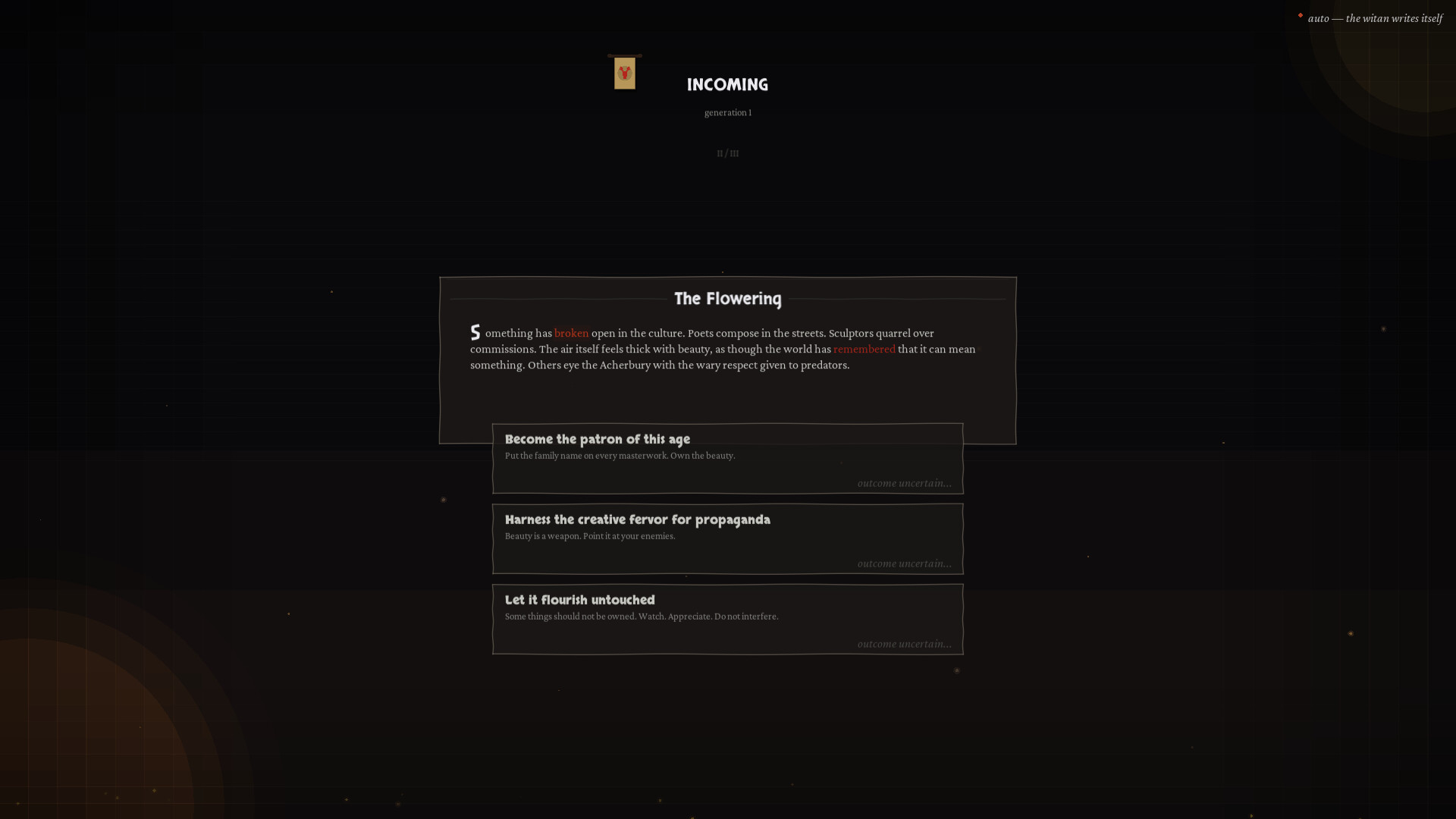
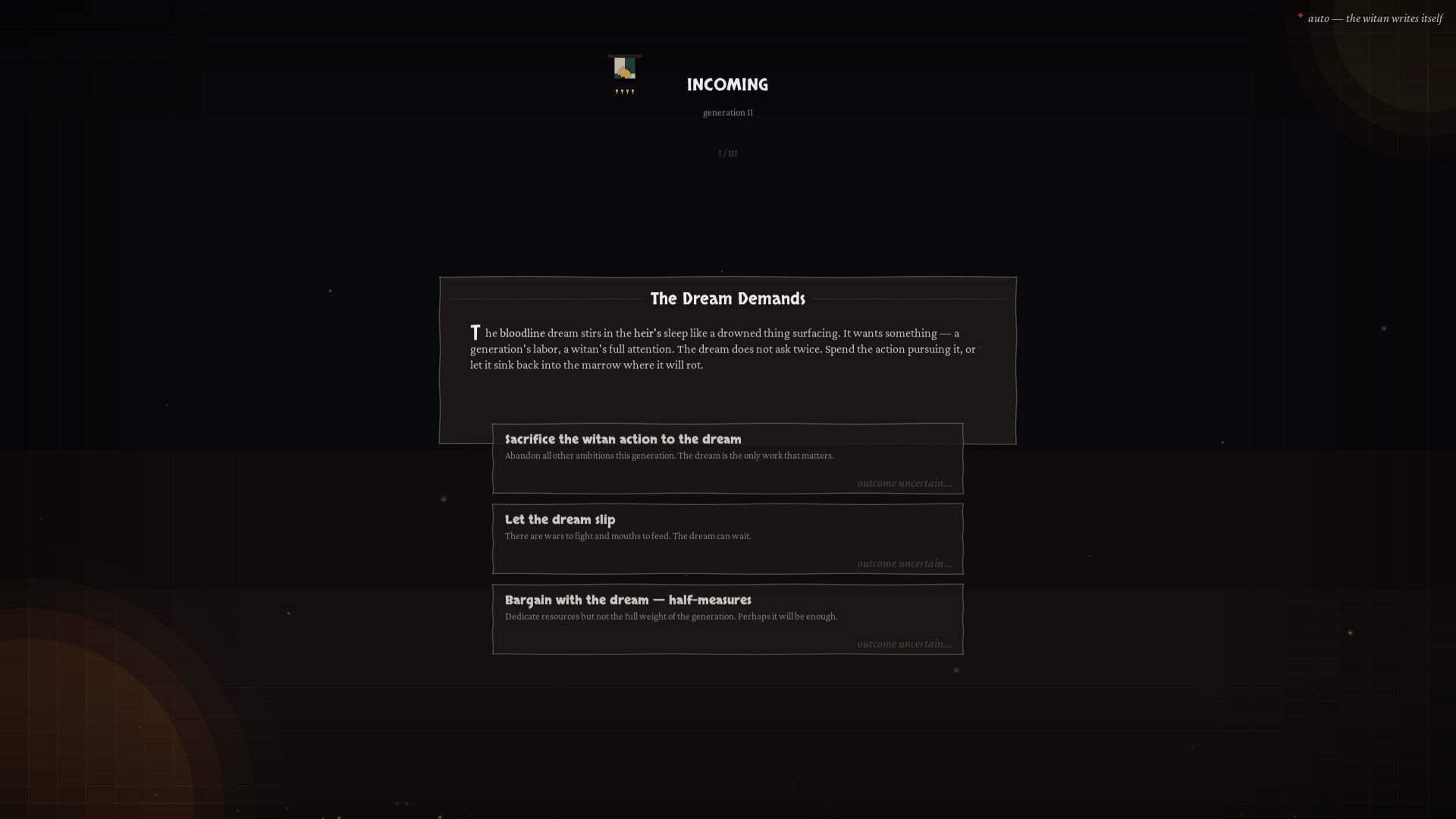
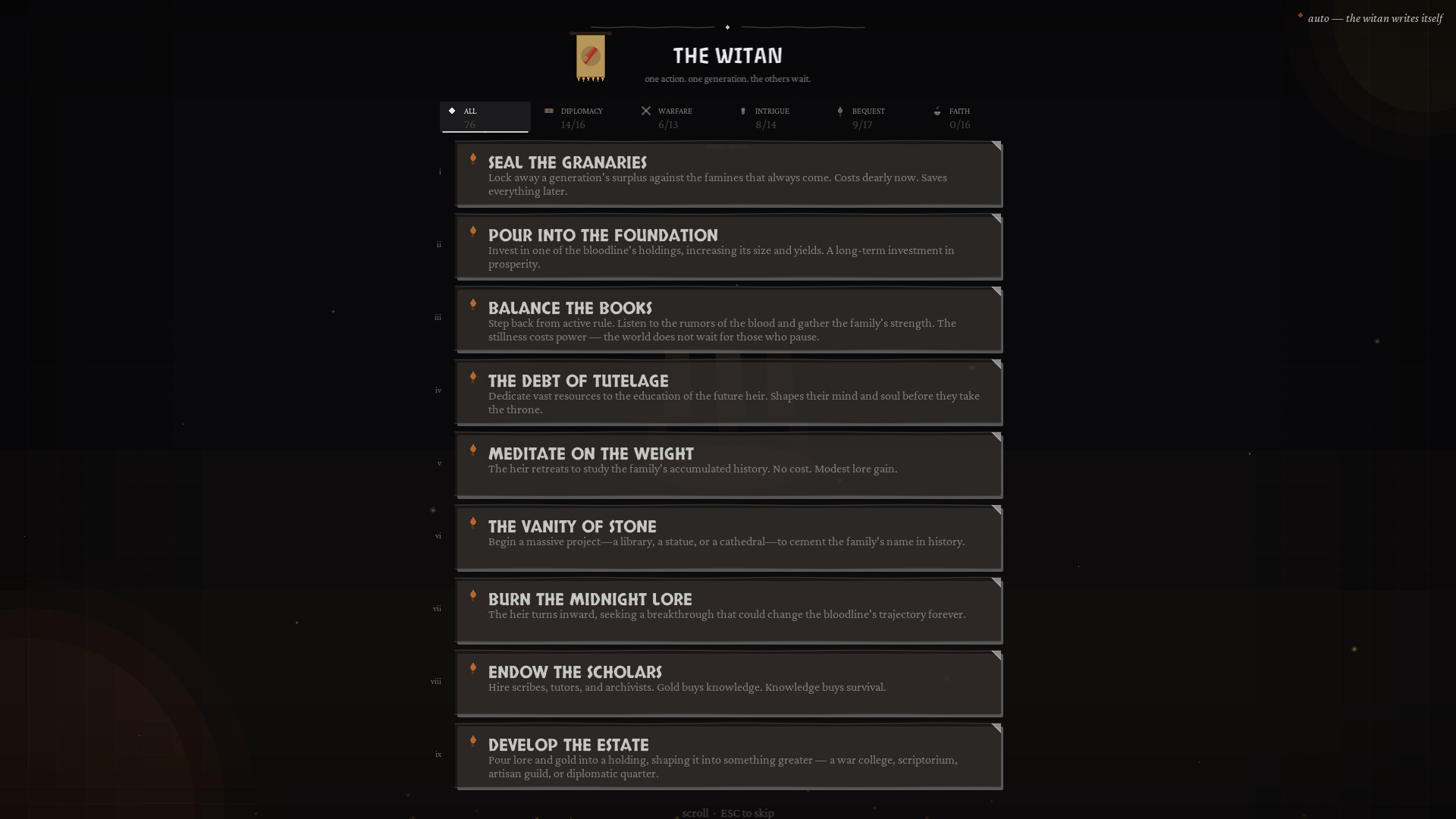
Play your dynasty. Each generation, the Witan convenes and puts writs before the heir. Locked writs wear a dried-blood wax seal. The council is not on your side by default. Conditions grip the realm — plague, famine, war — and their remaining generations are counted in tally strokes on the page.
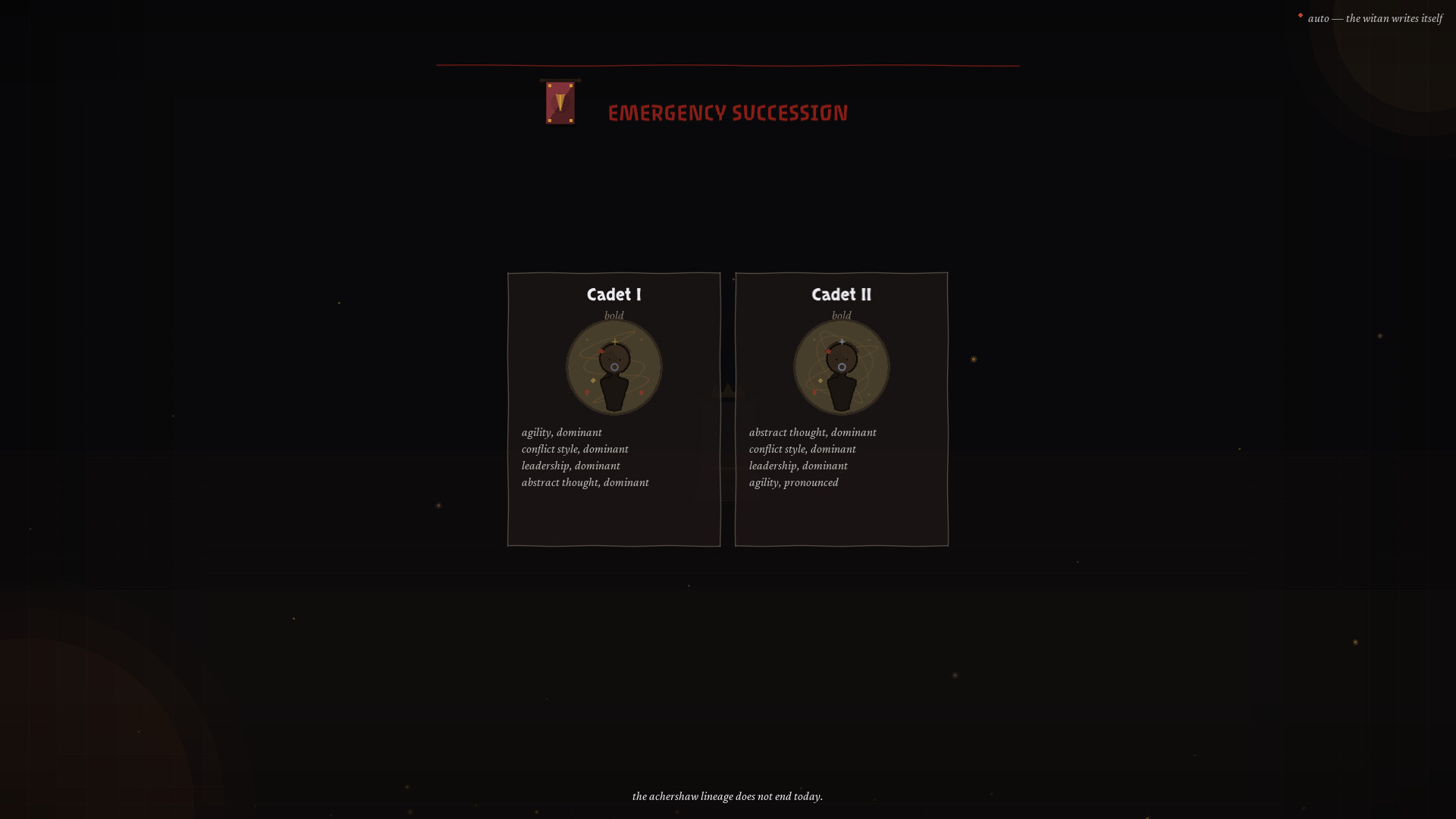
Let it end. A low-fertility heir in a plague era might produce one child. That child might die. The line ends — the way lines actually end.
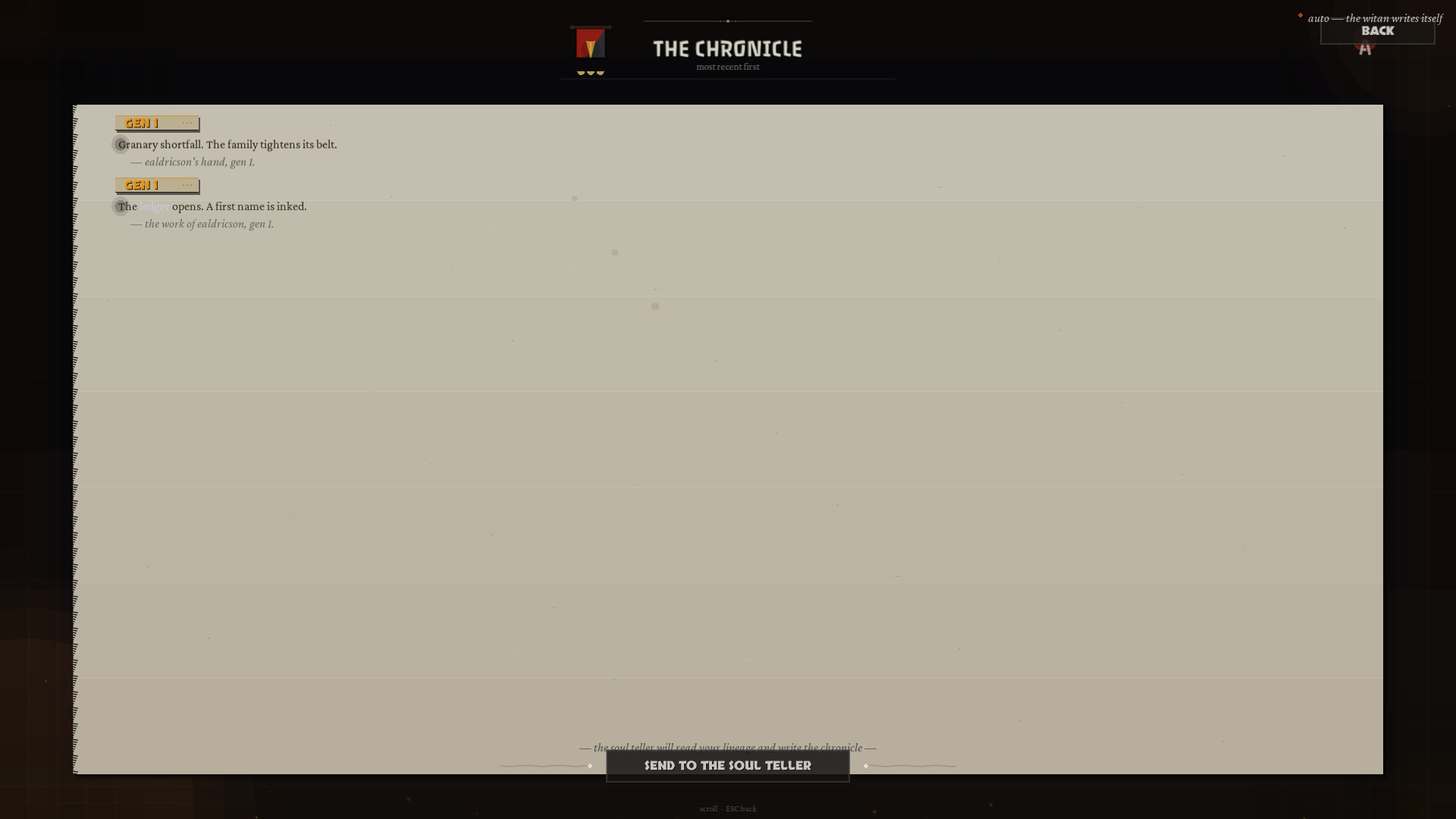
Read your chronicle. The Soul Teller — a literary AI — reads your lineage's full data and writes a shareable chronicle. Era chapters, heir spotlights, an interactive timeline. Gene Wolfe meets Cormac McCarthy meets the closing of an overdrawn account.
FEATURES
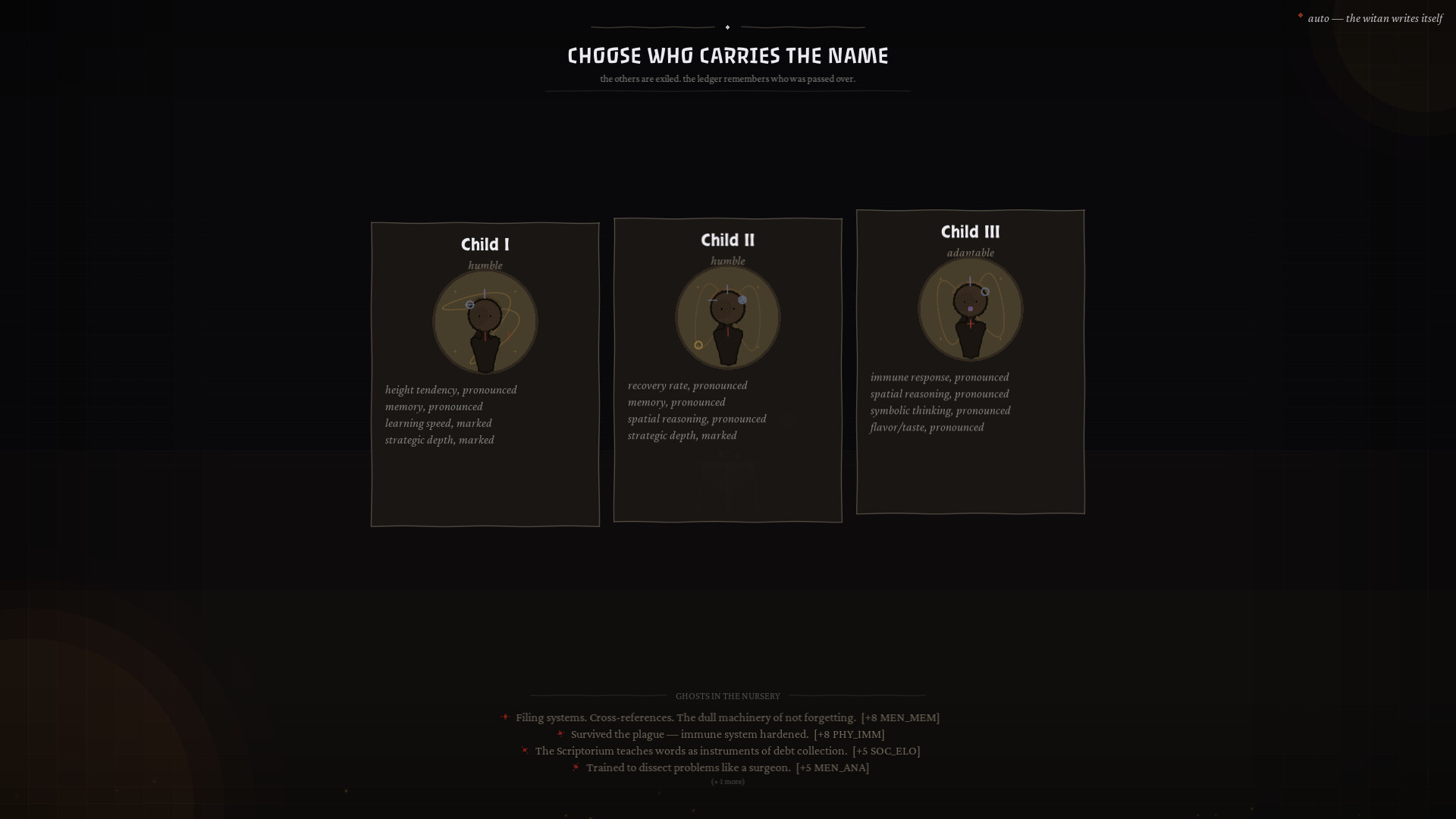
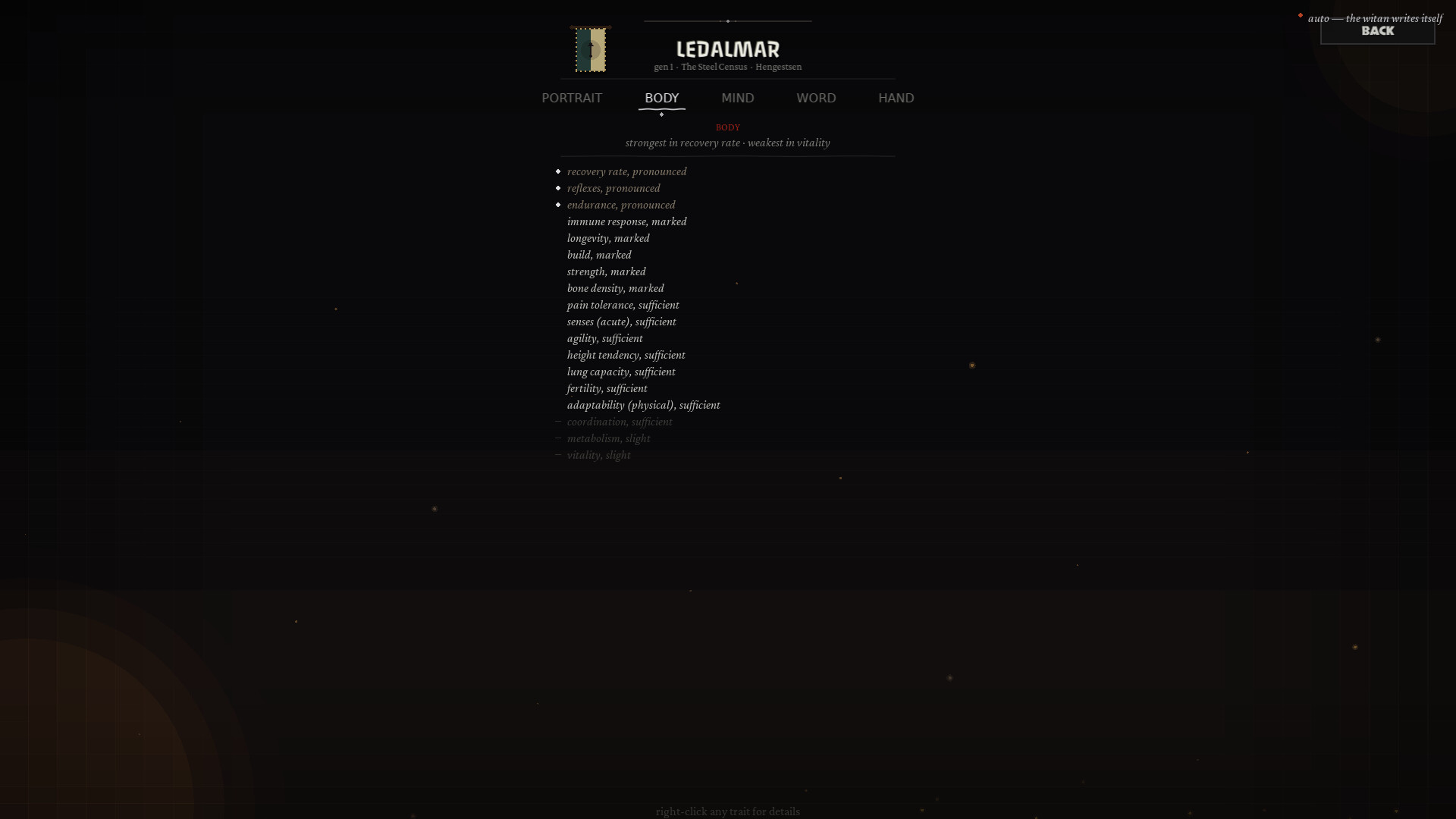
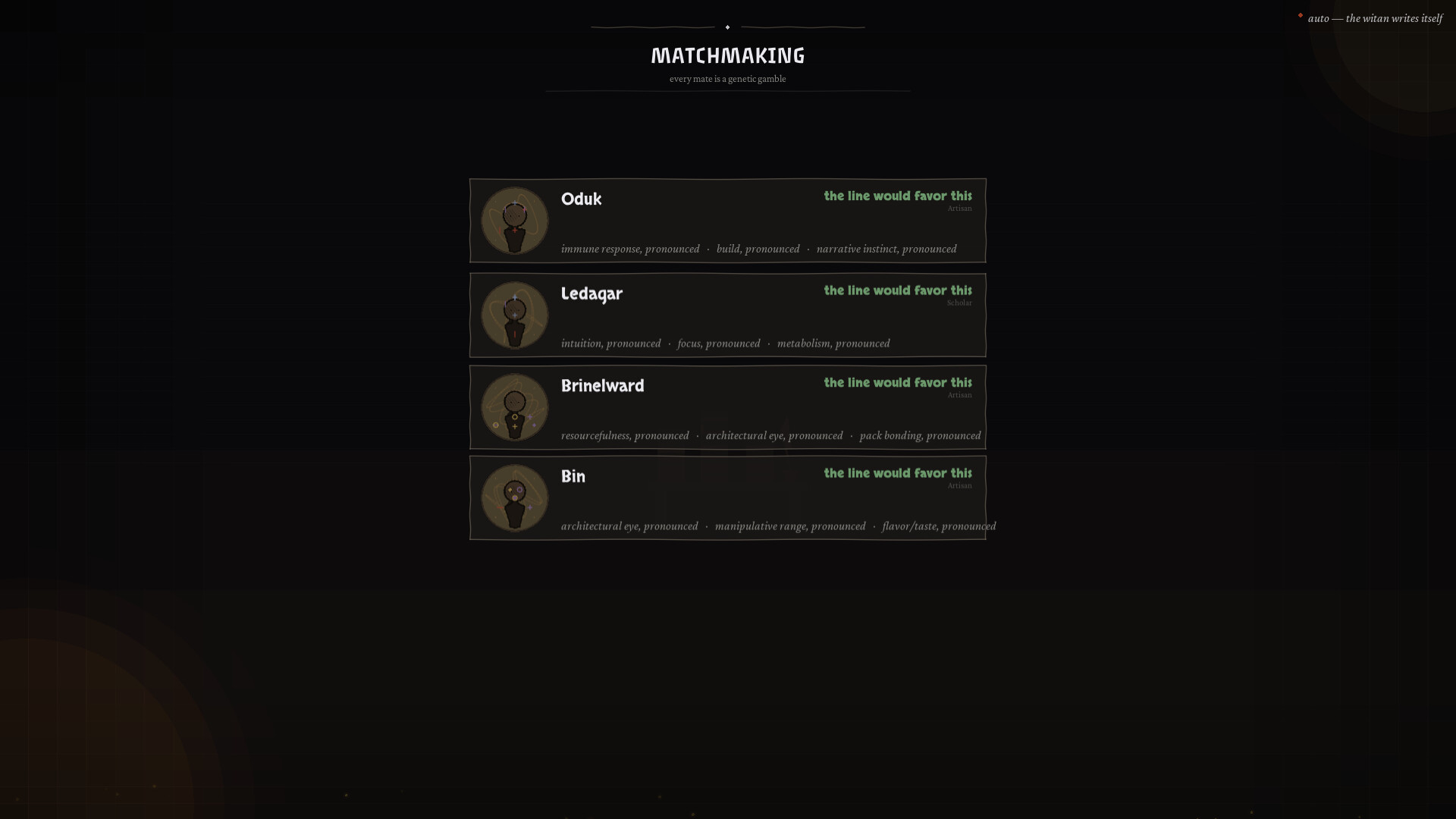
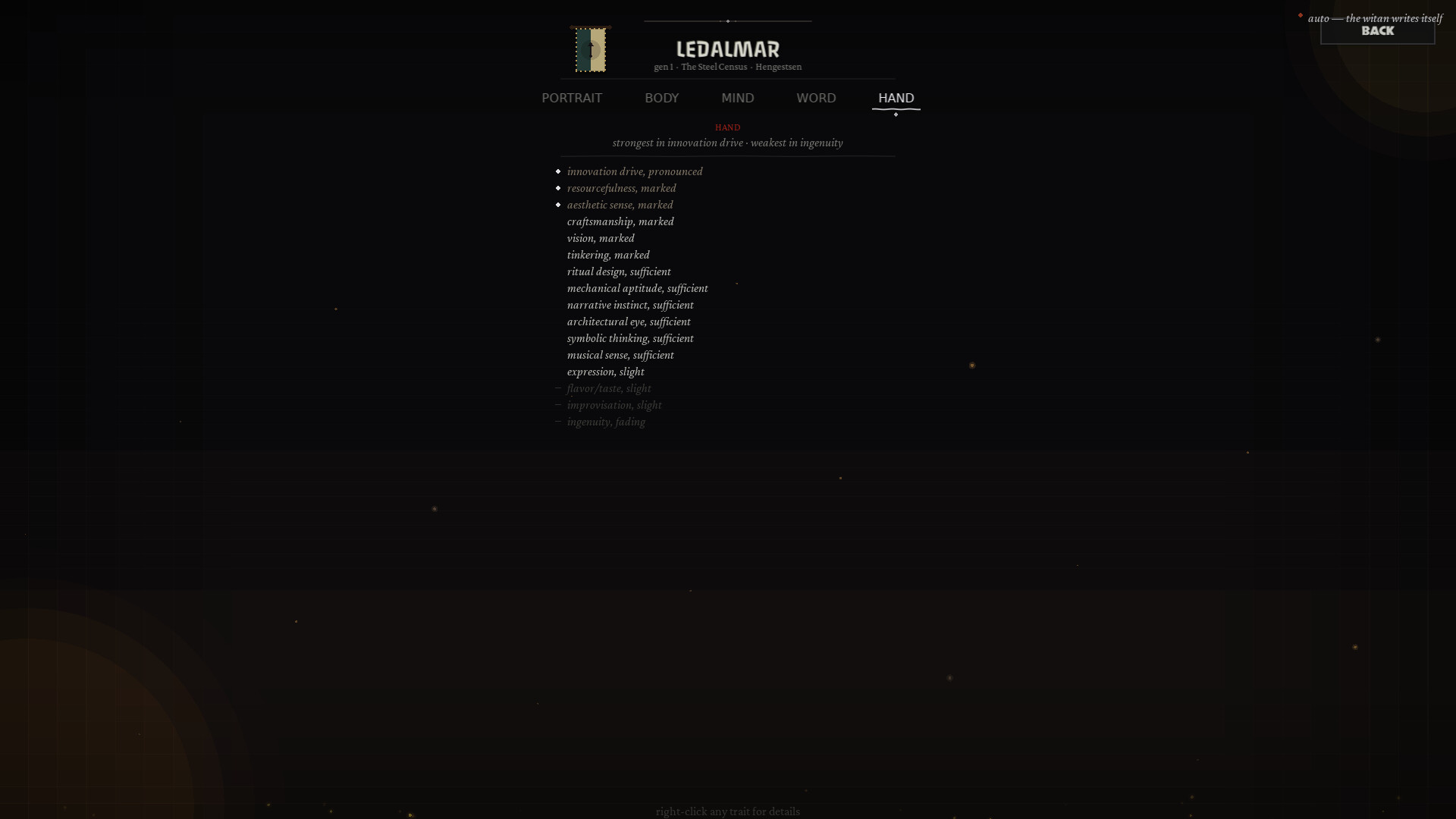
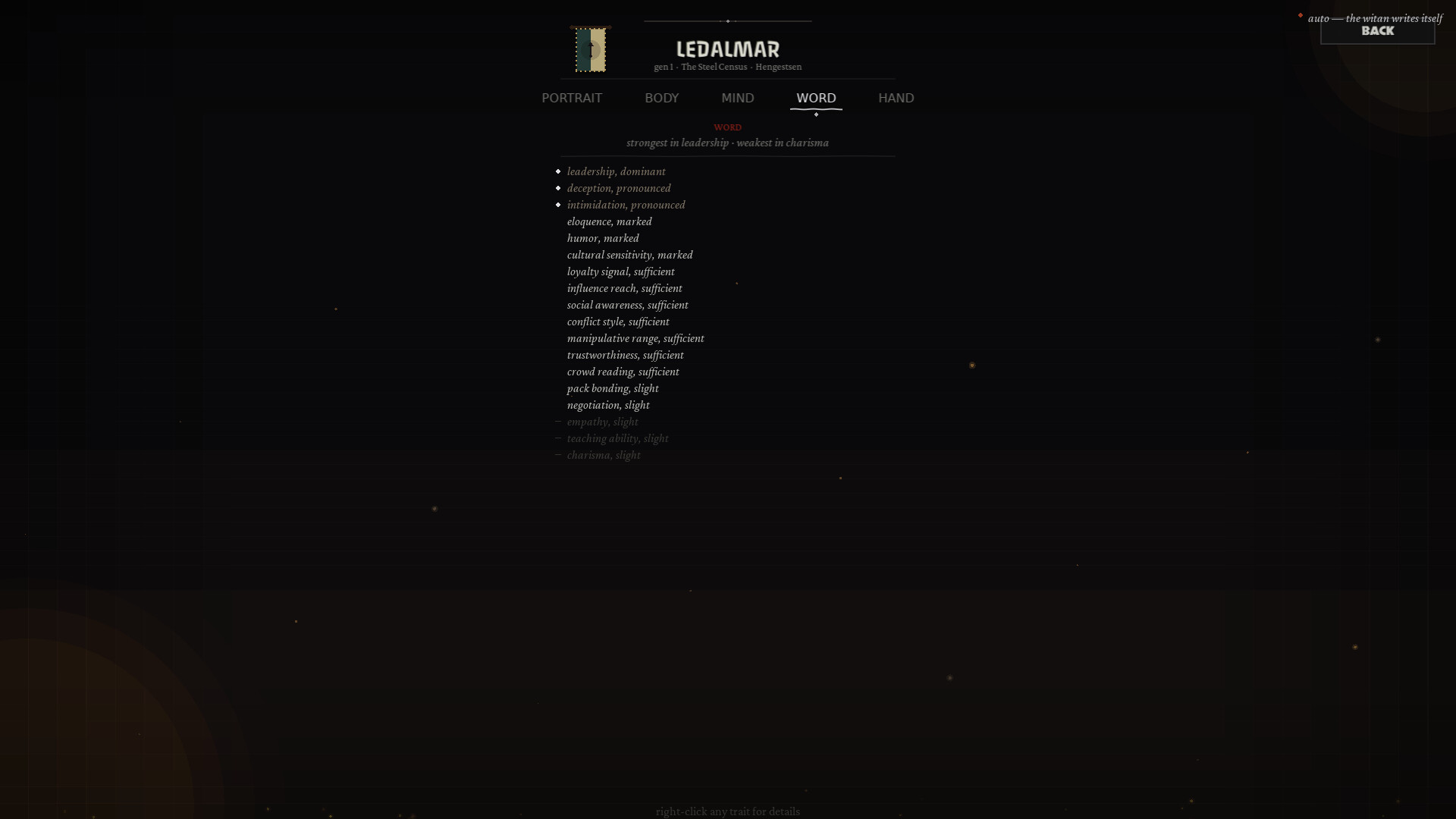
• 75-trait genetic engine with dominant/recessive crossover, mutation pressure, and physical drift across generations.
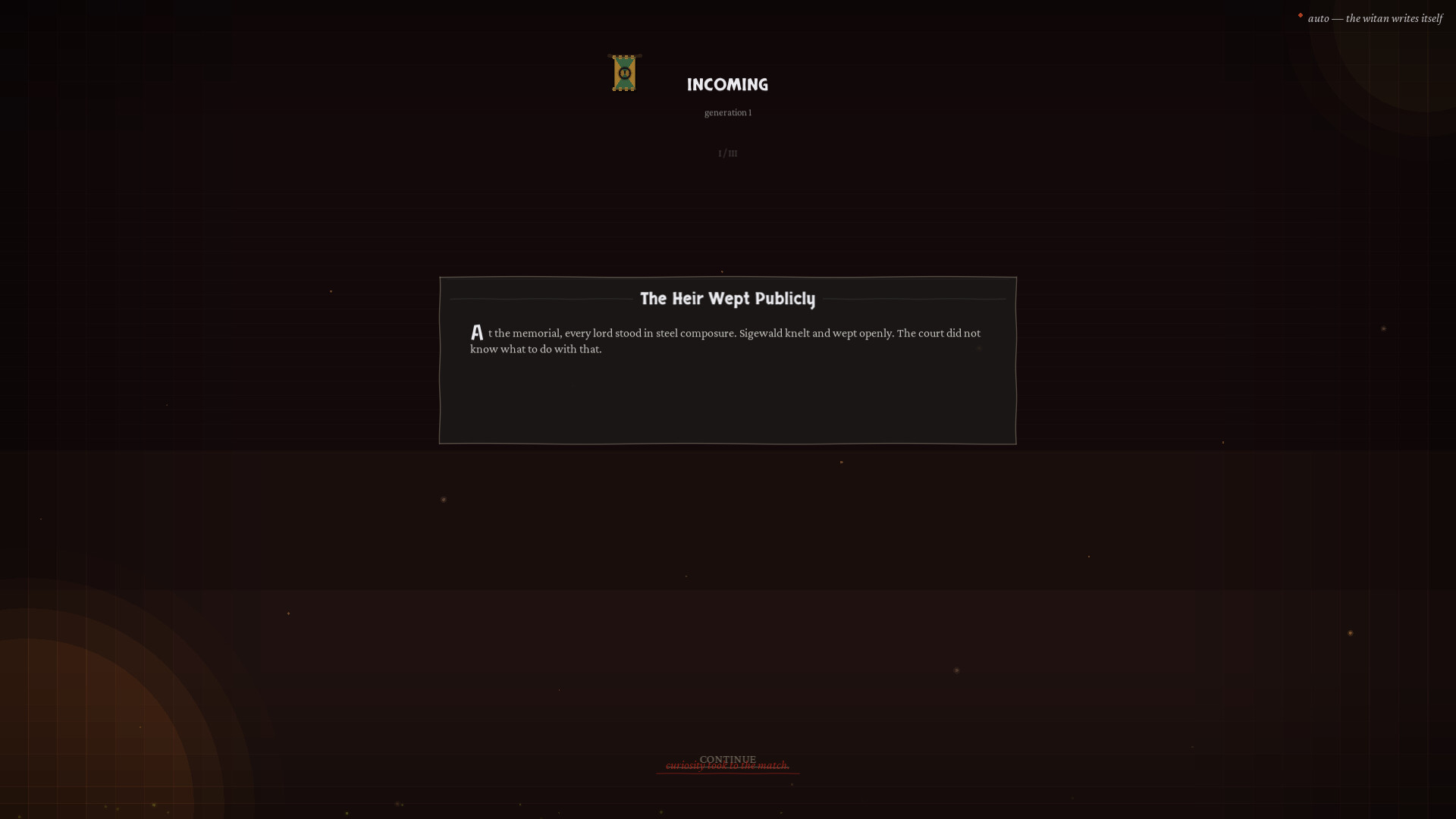
• 400+ hand-written events across 53 categories.
• The Causality Bridge — every famine, every war, every empty granary traces back to a specific heir's choice.
• 8-axis personality autonomy — heirs defy your plans on their own.
• Shadow lineages — exiled siblings don't vanish; they return as rival factions.
• Momentum & Blood Memory — generational streaks grant Ascending Blood bonuses. Break the streak and the blood cools.
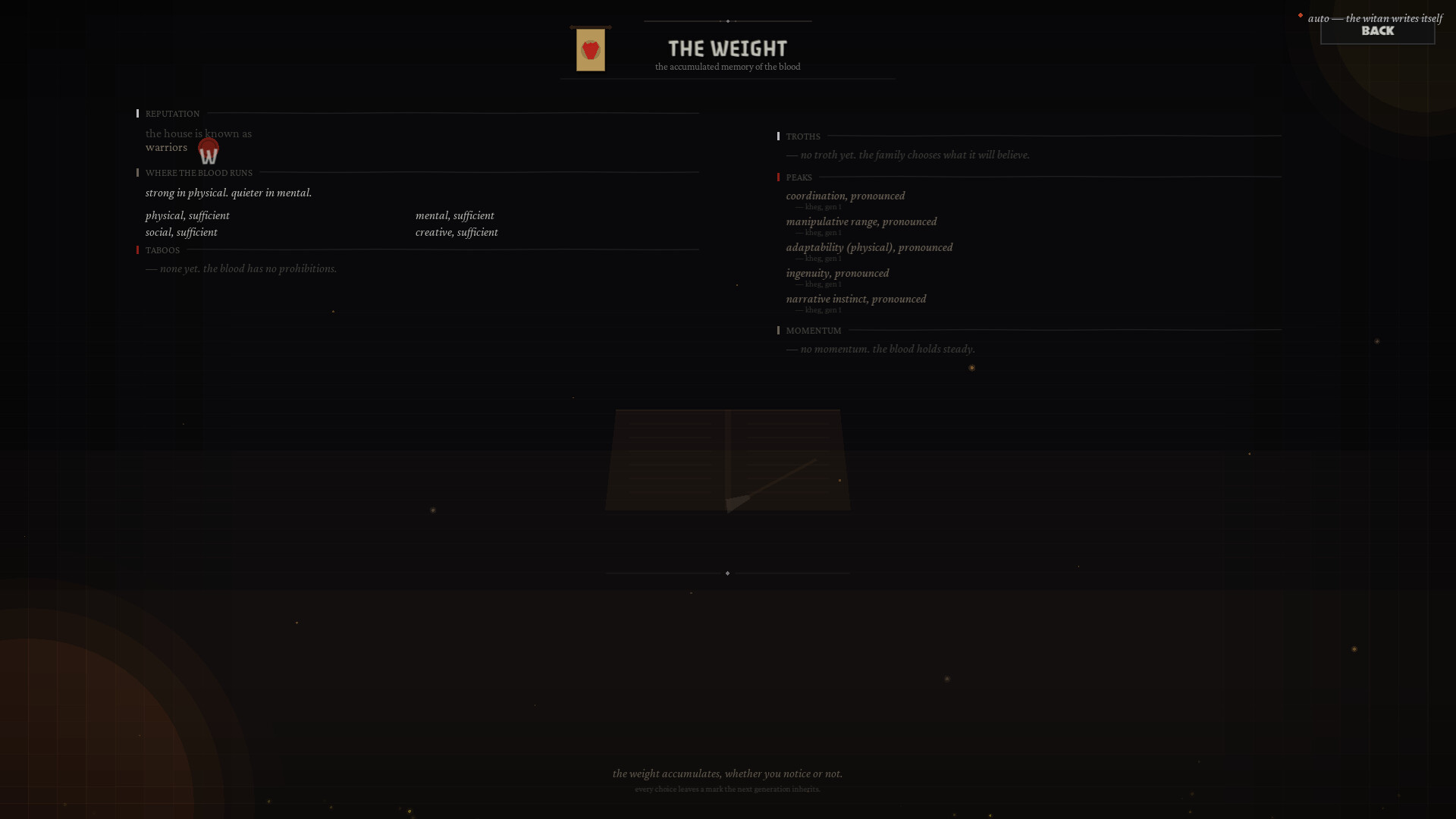
• The Weight — history accumulates. Bequests carry meaning. Taboos restrict your options.
• Witness Mode — hand the heir to the simulation and watch, with speed controls from SLOOOW to current.
• 1.1 million unique lineage banners — 40 charges × 17 fields × 10 divisions × four palettes.
• The Soul Teller — Claude-powered chronicle generator. Shareable permanent link.
WHAT MAKES THIS DIFFERENT
Most dynasty games are dashboards with a story pasted on. Bloodweight inverts that. As of v1.1 every UI surface is a diegetic artifact — sketched anatomical figures replace category bars, wax seals punctuate reputation, tally strokes count generations, traits read as "endurance, dominant" and "fertility, fading" and never as numbers. Reference aesthetics: Pentiment, Obra Dinn, Paper Please, Citizen Sleeper.The manuscript convention is not a skin. There is no stat screen underneath.
FOR THE LITERARY-MINDED
Bloodweight was built by a published author who wanted to play the kind of game he wanted to read. The genetics engine, the faction diplomacy, the artifact-pass UI — all of it exists to generate stories, not spreadsheets. Every completed run is a shareable story. Every chronicle reads like a dark historical artifact written by an unreliable archivist.
If you have ever wanted a strategy game that feels like reading Gene Wolfe while losing a war, the Ledger is open.