—
메타크리틱
0개
DLC
Steam
플랫폼
인디, 시뮬레이션
장르
출시 예정
플랫폼별 가격 비교
가격 히스토리
차트 로딩 중...
게임 소개
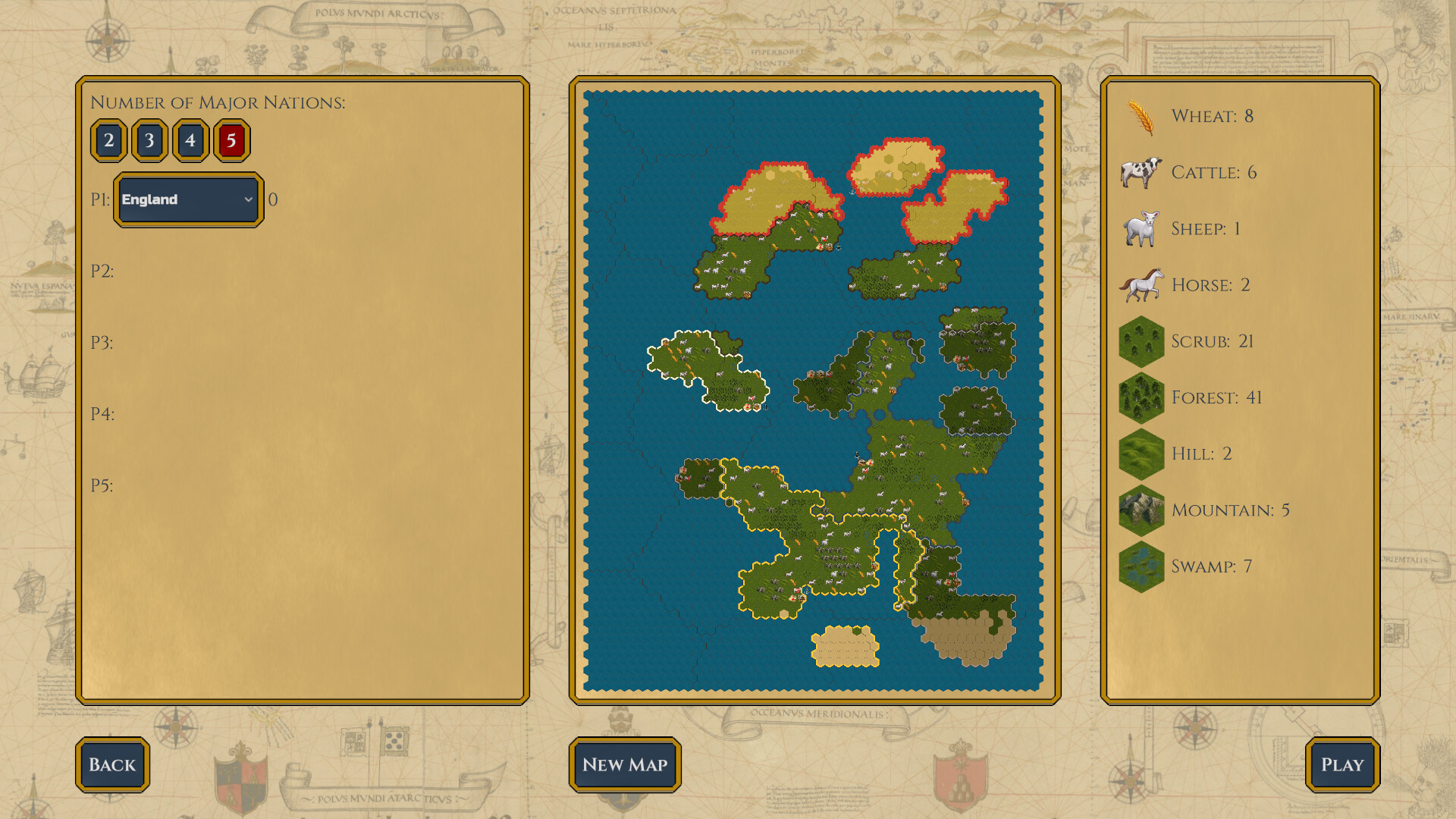
Imperialist is a colonial-era 4X Strategy game where the path to becoming a Superpower runs through logistics, governance, and the slow burn of economic dominance — not just the size of your army.
Your Capital is the Engine of Everything
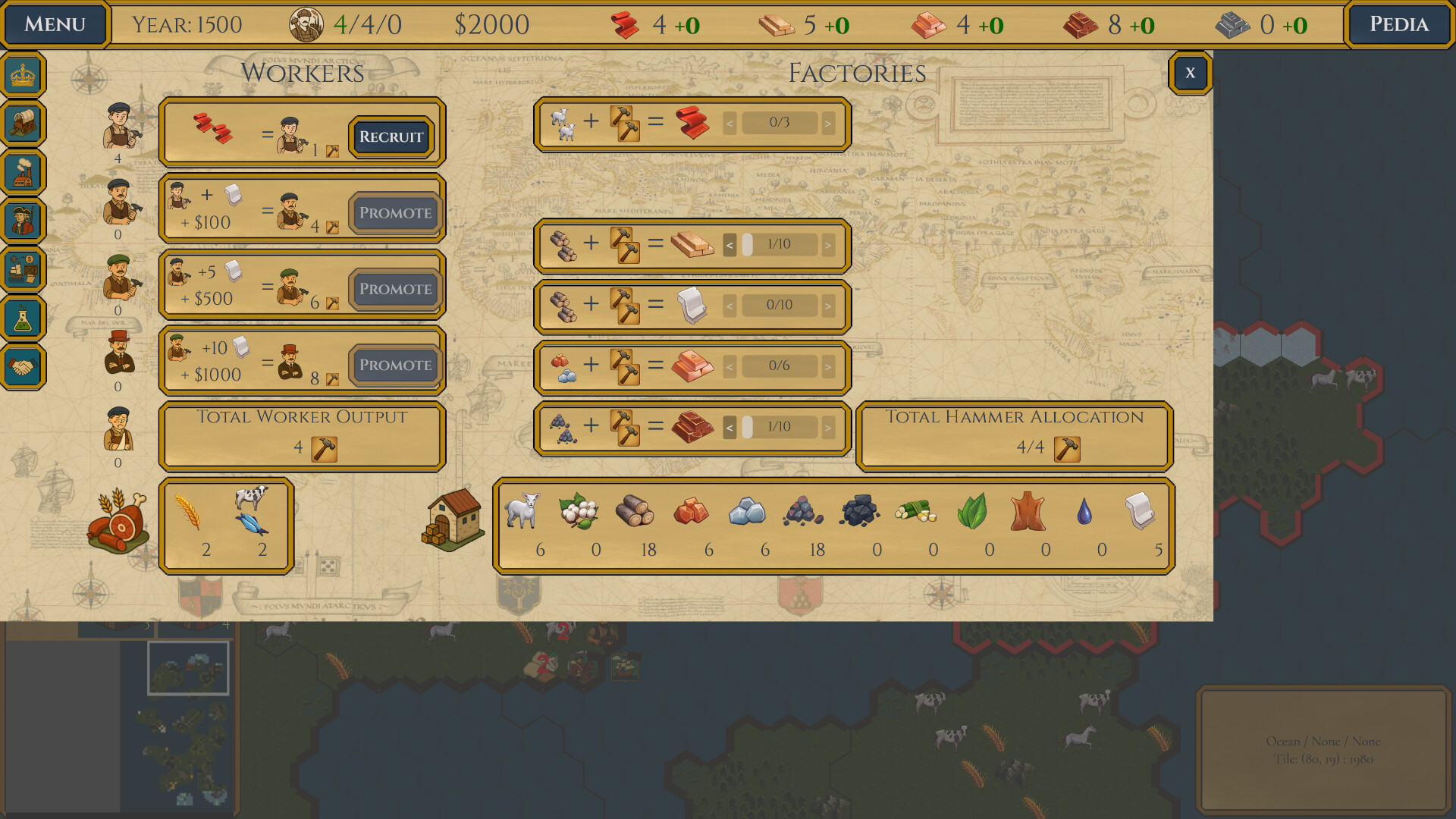
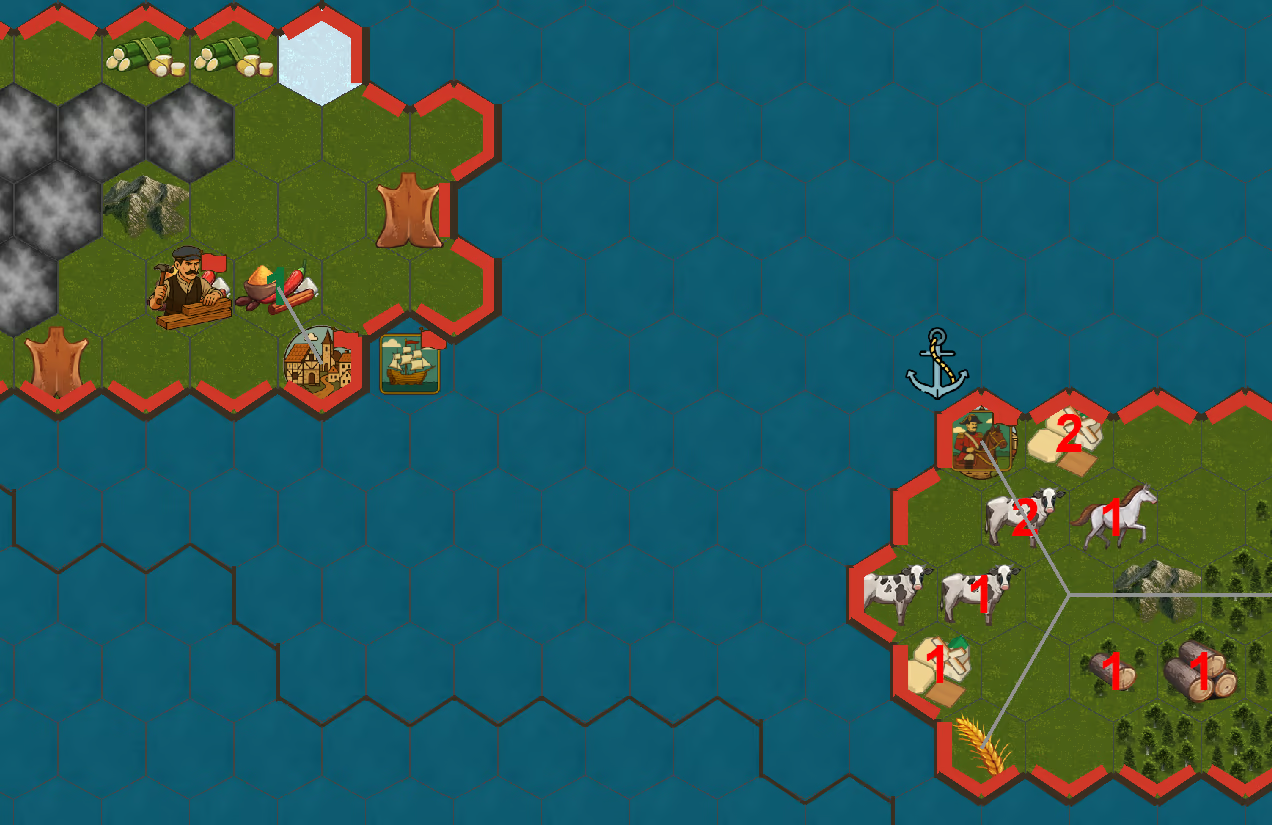
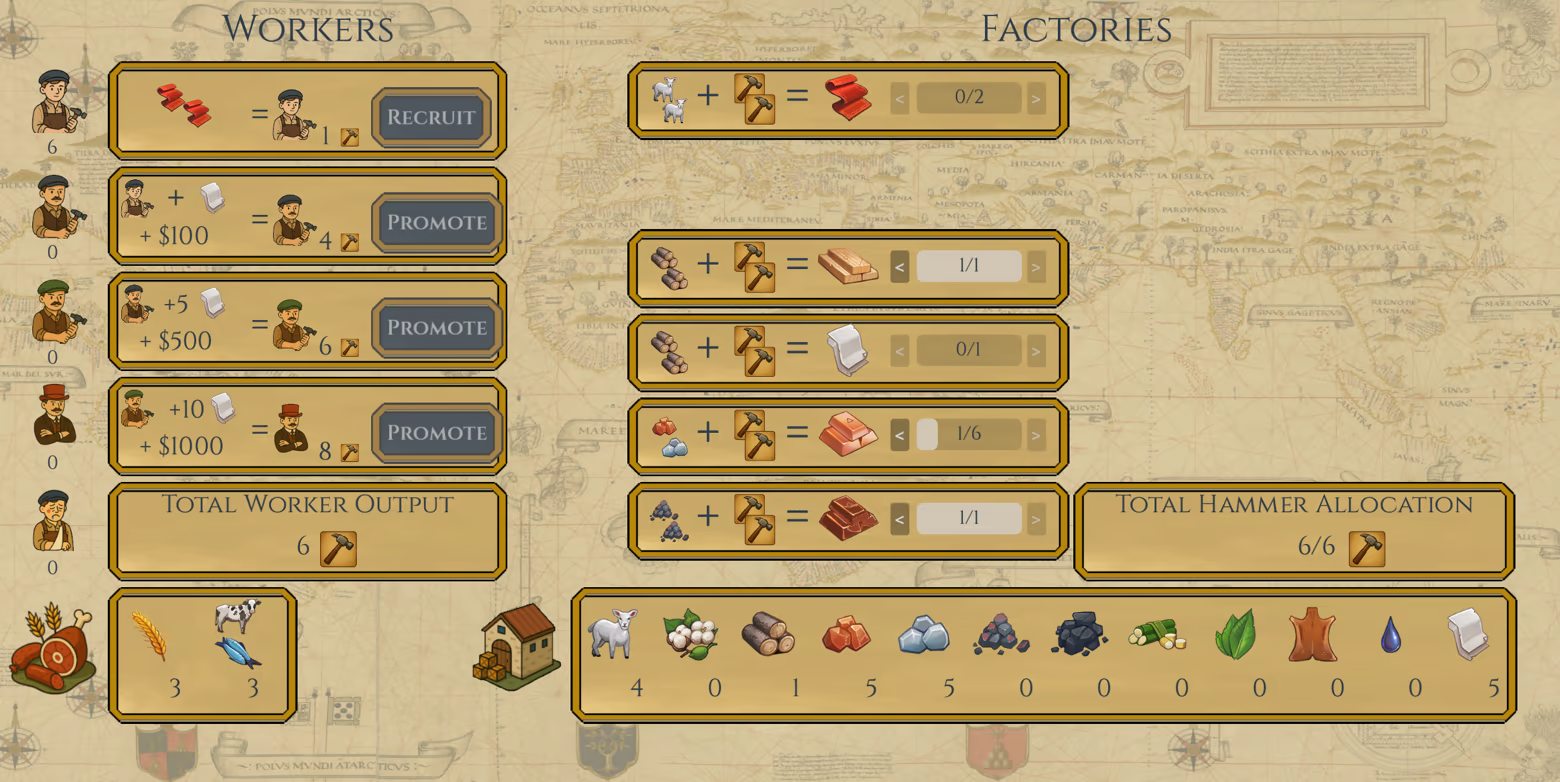
Every resource extracted from every province flows back to your Capital. Raw timber, iron ore, grain, silver — transported by wagon and cargo ship through a logistics network you build and maintain. At the Capital, workers process those raw goods into commodities: bronze, fabric, paper, steel. Those commodities fund research, equip armies, and fill trade offers. Cut off the supply chain and the whole machine stops. Every ship, every road, every factory worker is a decision — and bad decisions compound across turns.
The New World is Opportunity and Obligation
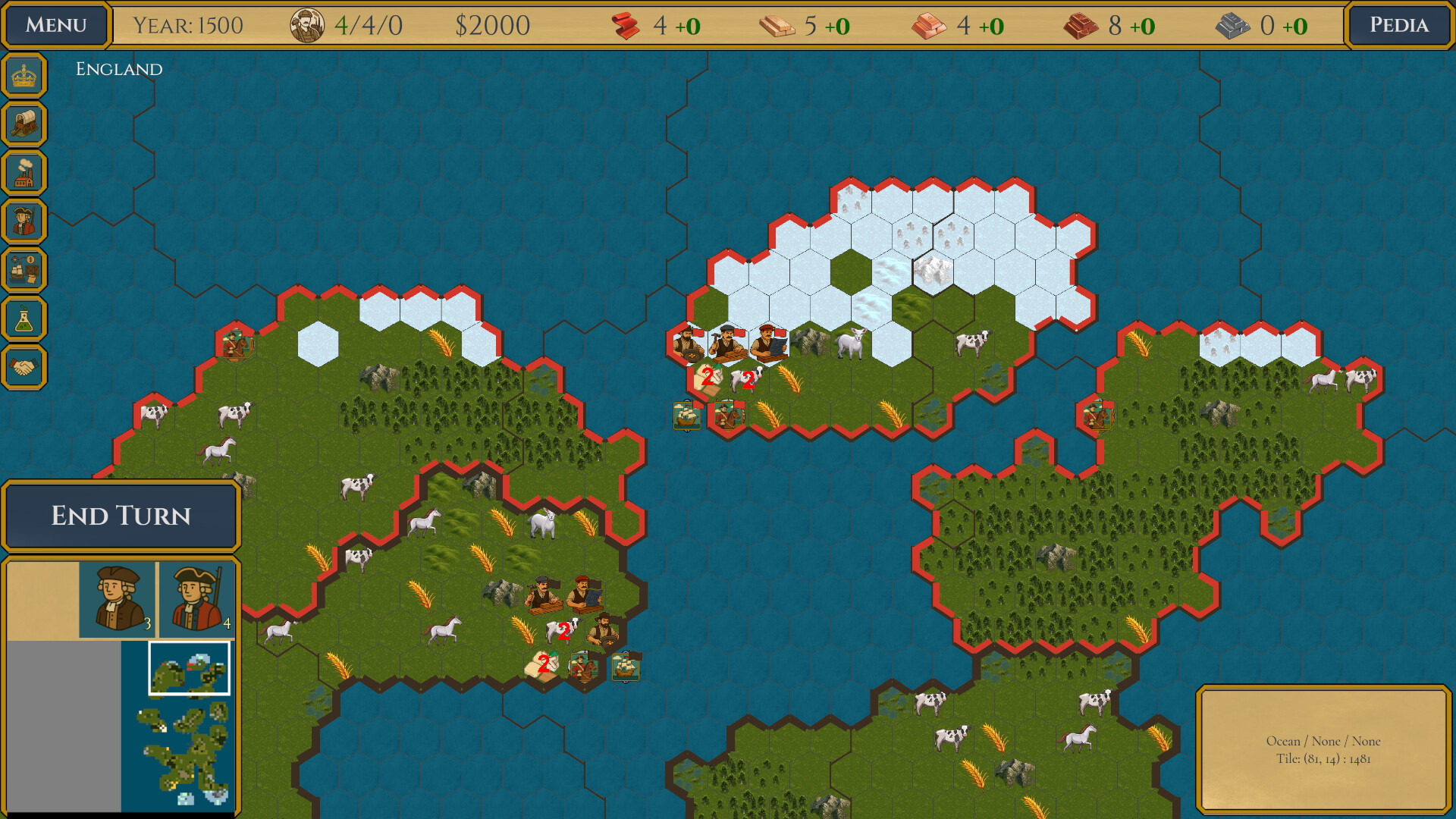
The New World is uncharted, fog-covered, and full of resources your Old World rivals can't reach without crossing the same ocean you are. Send ships to reveal the map, prospectors to find the hidden wealth, and builders and engineers to build improvements and logistics networks.
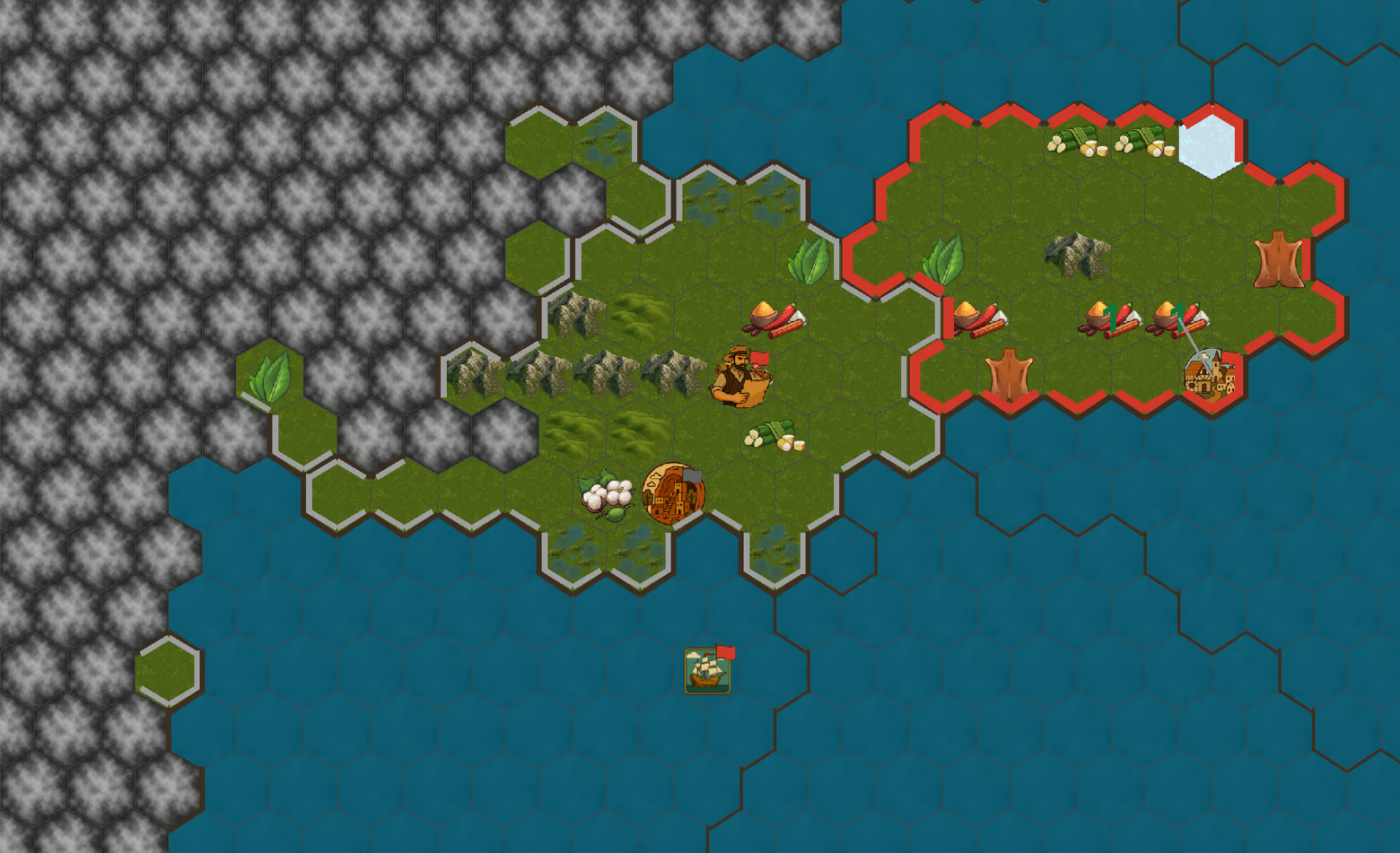
When you encounter New World tribes, you have a choice. Establish diplomatic relations, build an embassy, improve their lands, and trade with them — and in time they may choose to join your Empire willingly, entering as a State rather than a conquered holding. Or take their provinces by force and manage the consequences. Both paths are viable. Neither is without cost.
Conquest is Easy. Governance is Hard.
Every region you hold outside your home territory accumulates Autonomy Pressure — a rising desire for self-governance that doesn't stop just because you stopped paying attention to it. Colonial Holdings build pressure fastest. Grant a region Statehood and it slows, gains its own civilian workforce, and begins to industrialise independently. Grant full Federation and pressure drops to its lowest — but that Federated State now has its own army, and its own economy. If a region ever does rebel, it becomes a fully independent nation on the map that you'll need to reconquer, or relinquish.
The tension is deliberate. Extract hard and face consequences. Grant autonomy generously and you reduce direct control. There is no safe path — only trade-offs you have to live with for the rest of the game.
Rivals Don't Wait for You to Finish Building
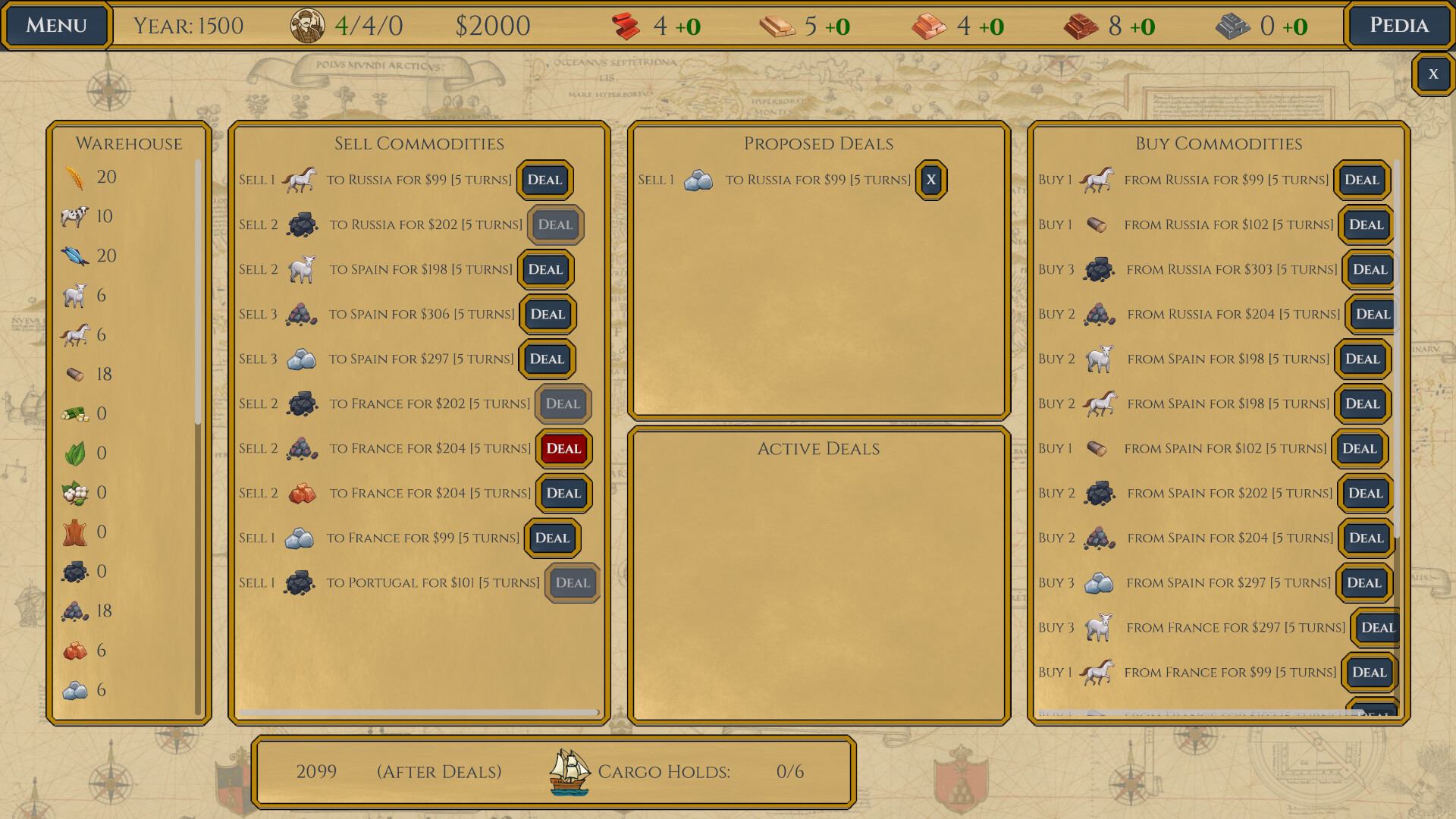
Other major powers are running the same race. They will establish embassies and make alliances with a smile, whilst spreading propaganda against you in your own regions to stir unrest. They will offer trade deals, and blockade you whilst at war. They will back your rebels when it suits them and make peace with your enemies when you can least afford it. Managing your external relationships is as important as managing your internal ones — and neglecting either will cost you.
Research Shapes the Era You're Playing In
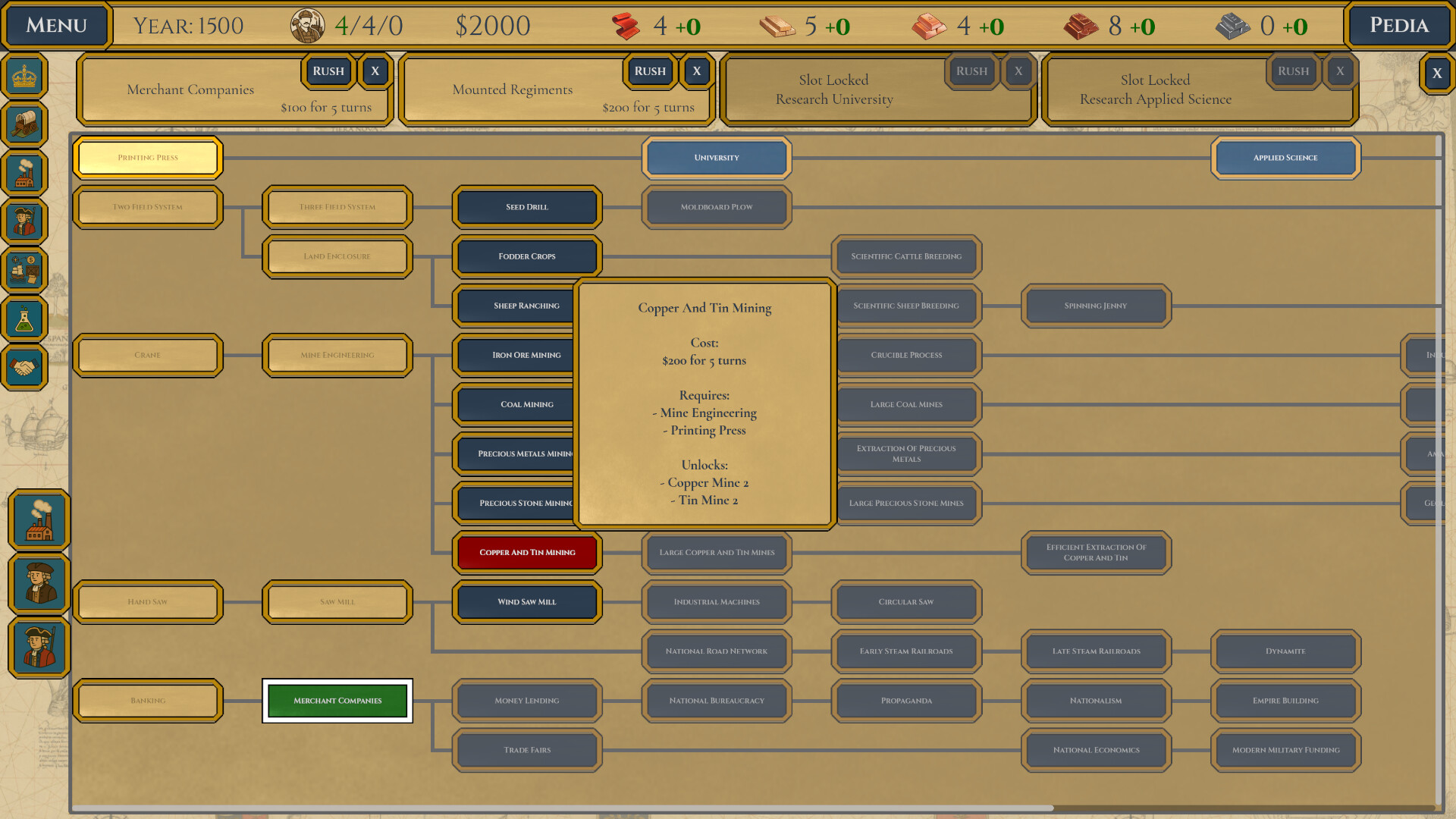
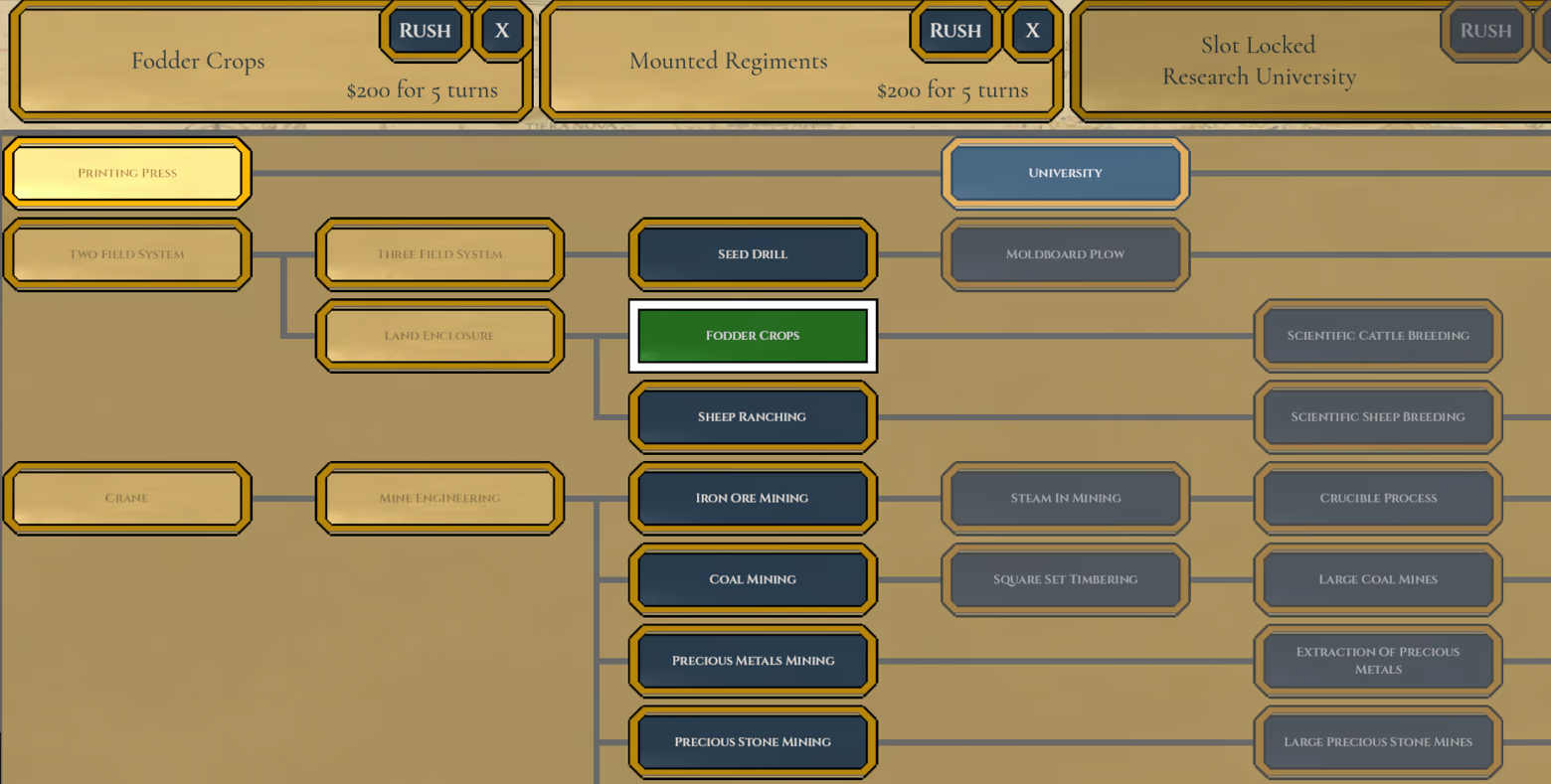
The technology tree spans the Age of Discovery through Industrialisation to the beginning of the Modern Era — from the Printing Press and Two Field System to Oil Drilling, Machine Guns, and the Combustion Engine. Up to four technologies can be researched simultaneously, each unlocking new improvements, units, ships, and diplomatic options.
When Diplomacy Fails, Tactics Decide
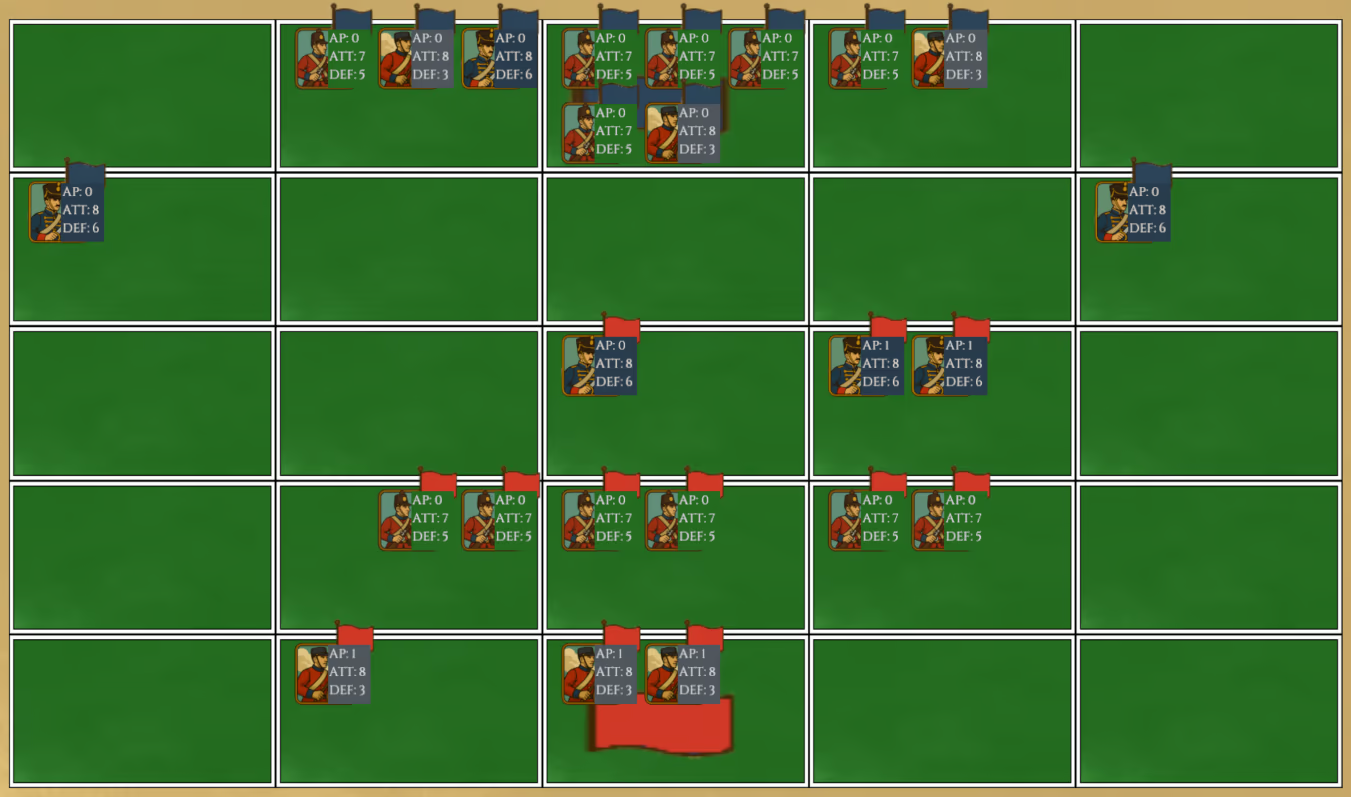
When opposing armies and navies meet, combat resolves on a chess-like tactical battlefield. Infantry, cavalry, and artillery units manoeuvre for position, with the enemy flag as the decisive objective. Capture the enemy flag and the battle is won. Auto-resolve is available for players who prefer to stay at the strategic level.
Classically Inspired. Deliberately Distinct.
Imperialist draws from the golden era of PC strategy games, and the interlocking systems and consequential decisions that made those games endure. It brings that classic strategy design philosophy into a modern package, with controller support, Steam Deck compatibility, accessibility, scalable UI, and a fresh perspective on empire, power, and what it actually costs to build one.
Your empire won't fall in a single battle. It will fall one bad decision at a time.
Can you exploit the New World to control the Old?