—
메타크리틱
0개
DLC
Steam
플랫폼
시뮬레이션
장르
출시 예정2026-05-19T00:00:00.000Z
플랫폼별 가격 비교
가격 히스토리
차트 로딩 중...
게임 소개
Watch creatures invent themselves.
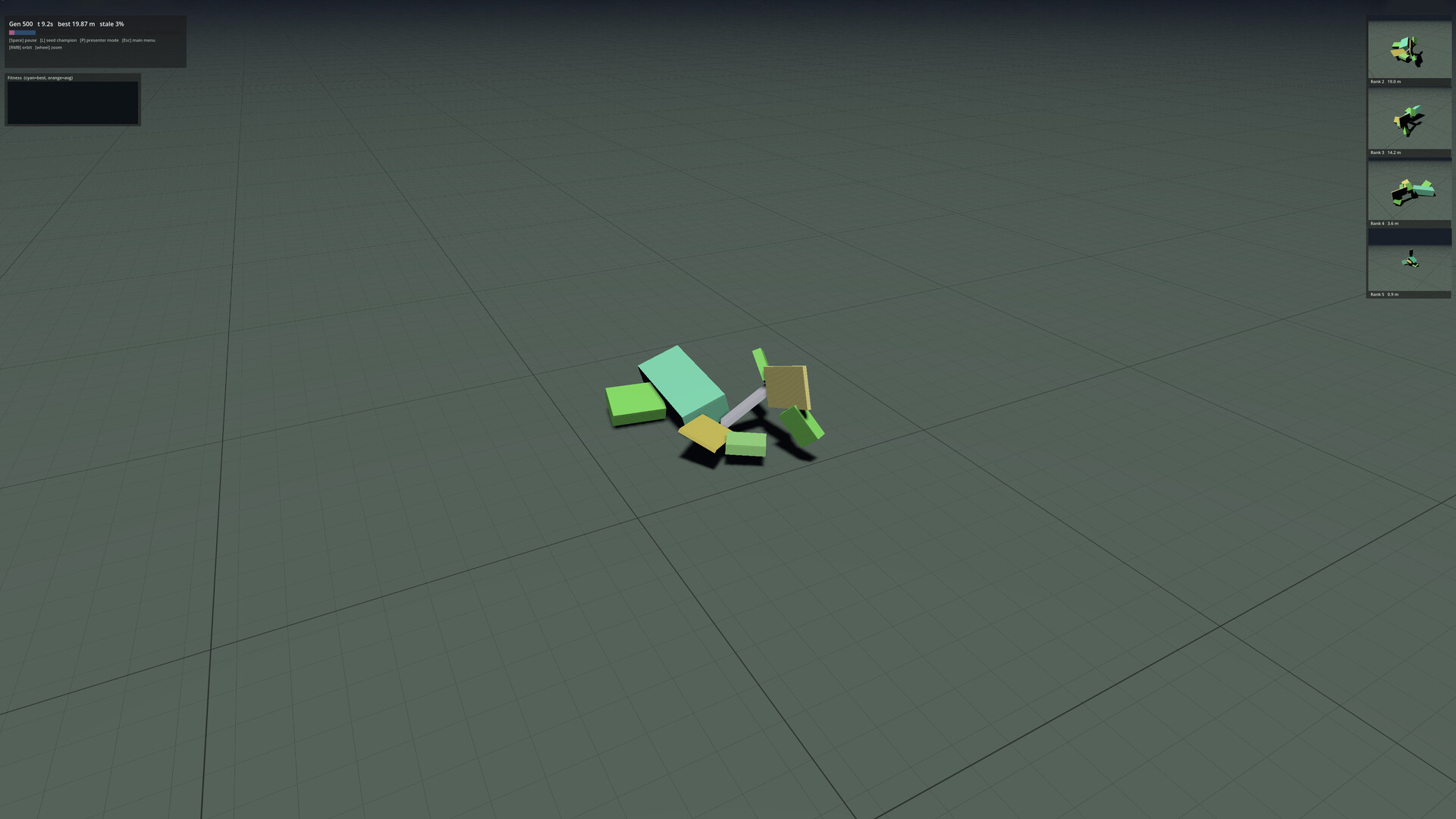
LIT Creature Forge is an evolution simulator based on Karl Sims' 1994 paper "Evolving Virtual Creatures."
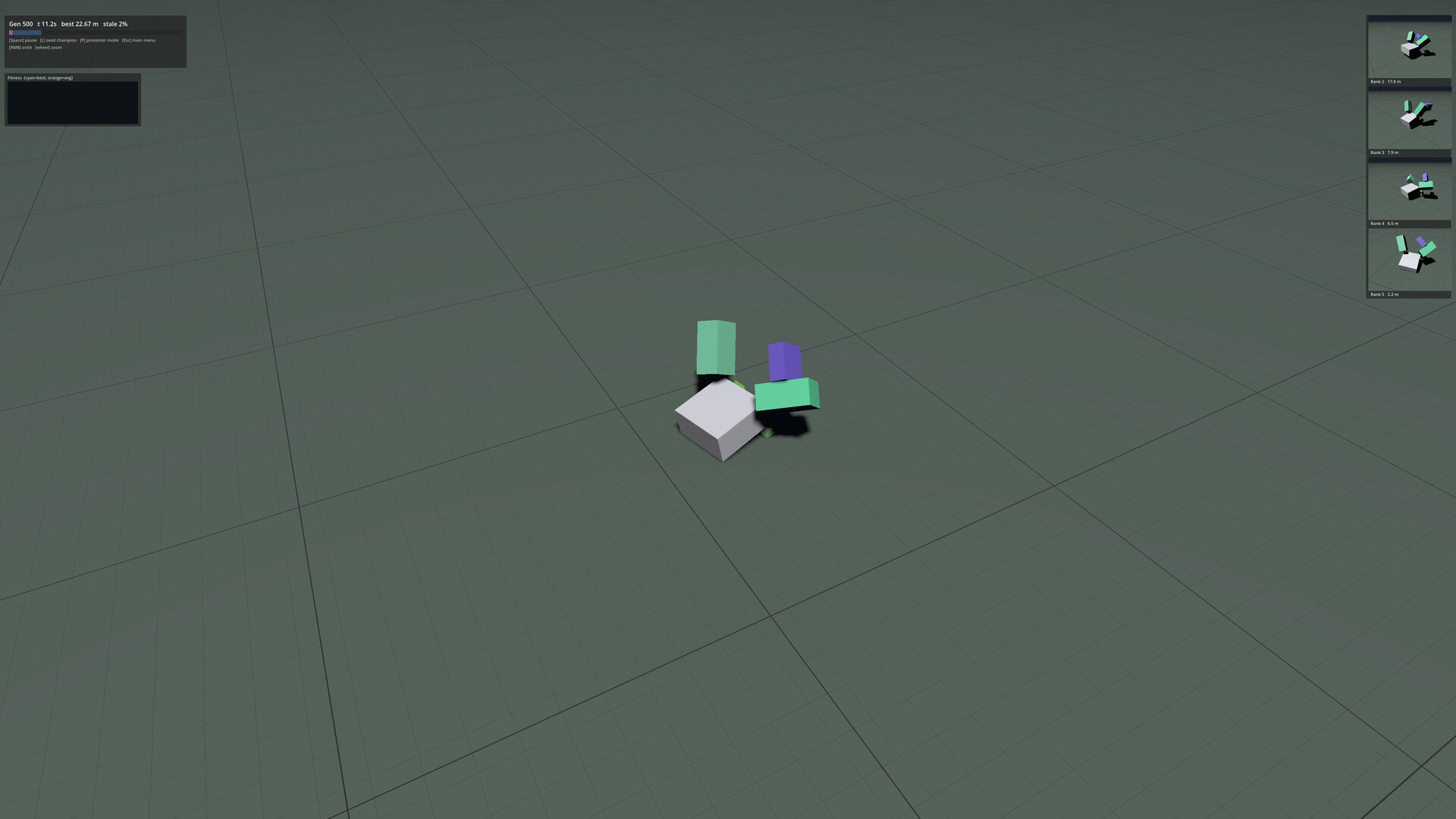
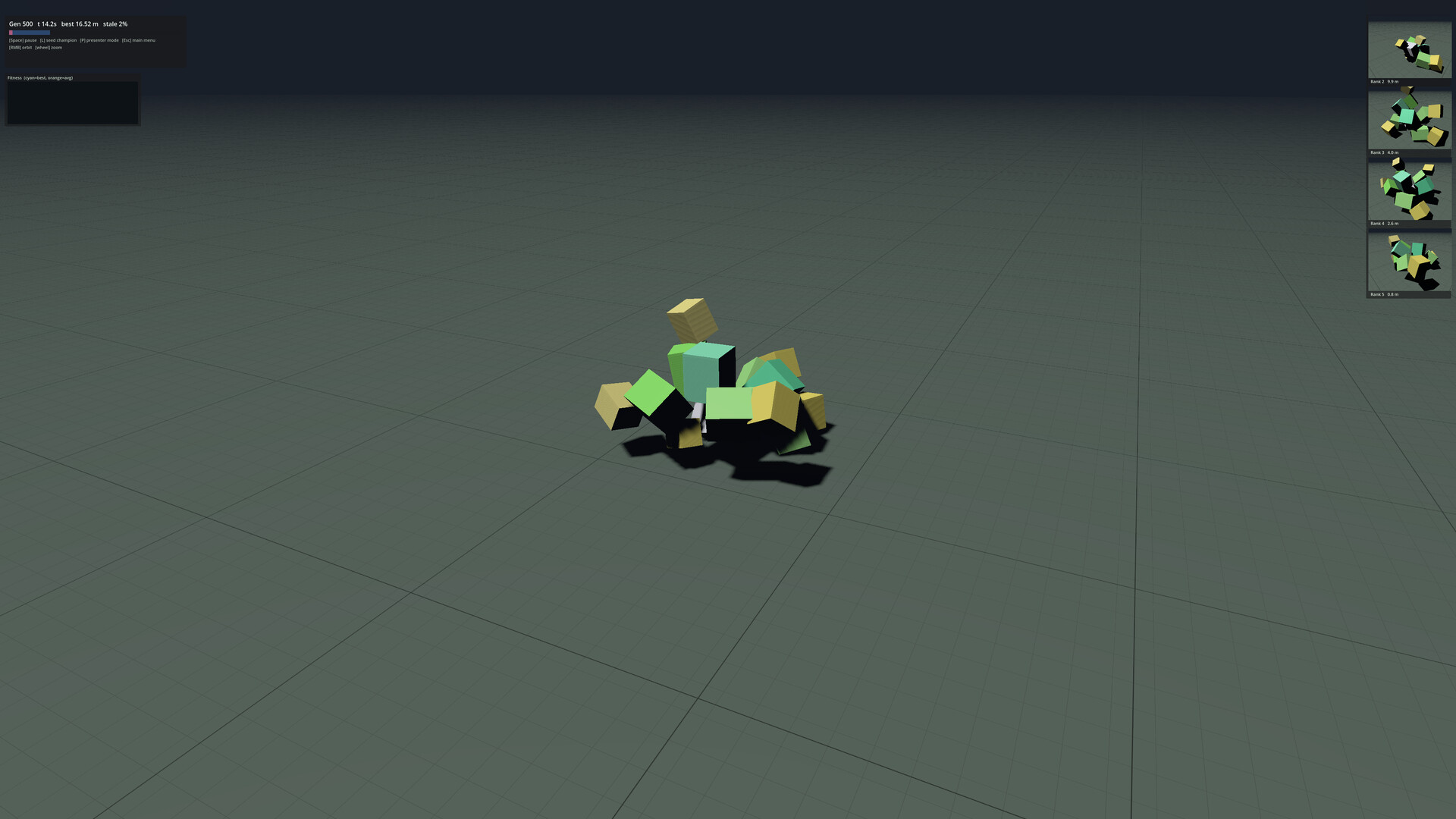
Run generation. Watch 200 random body plans try to walk. The ones that move farthest reproduce, with mutations. Run another generation. Repeat until something organic crawls out of the chaos.
There is no design tool. There is no creature editor. Bodies, sensors, brains, and gaits all evolve together — no human input.
What you'll see
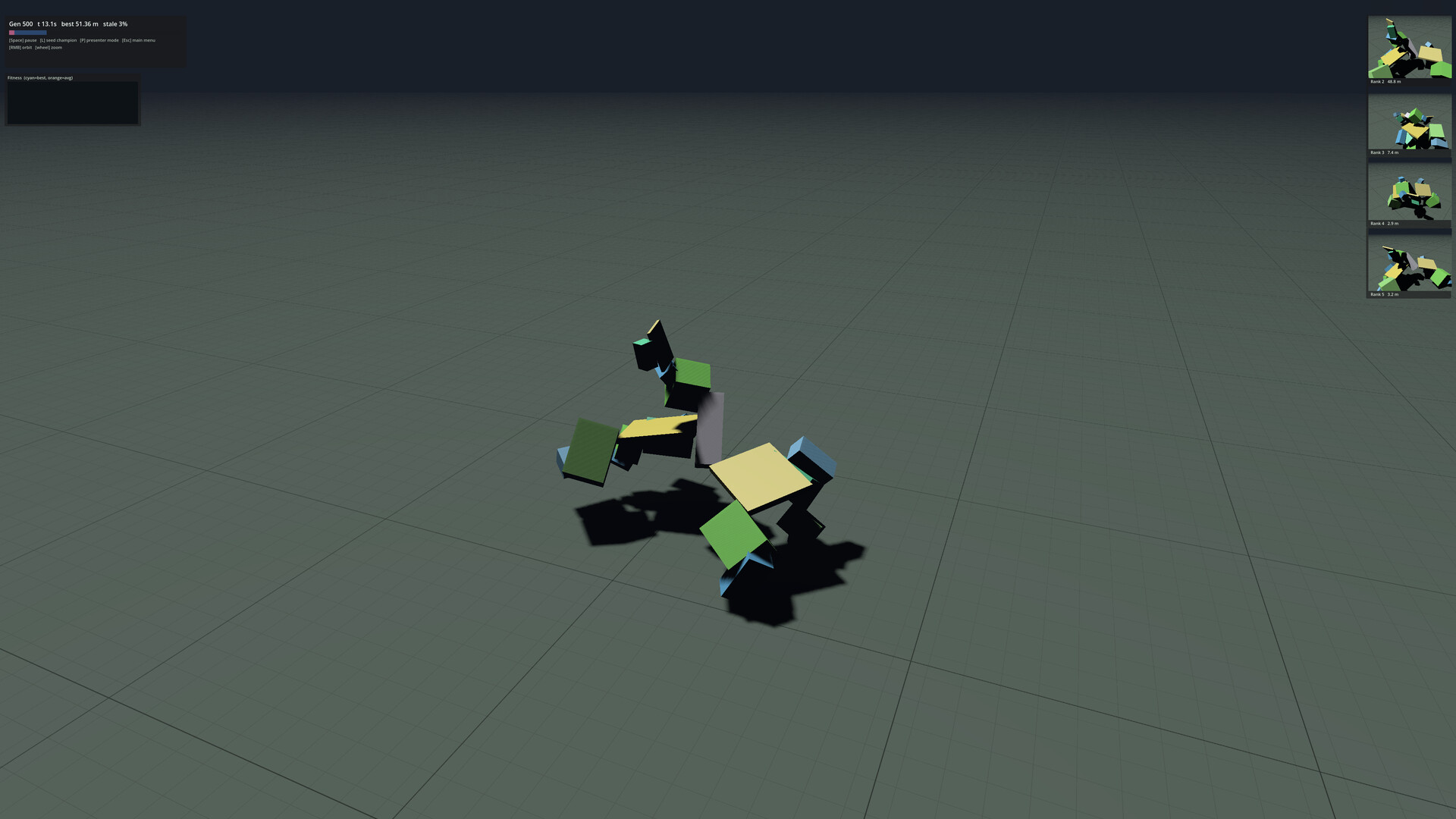
- Body plans that lurch, hop, tumble, slither, and occasionally do something physically reasonable.
- Gaits that develop personality — a cautious shuffle here, a casually-swinging trot there.
- Asymmetric creatures that shouldn't work but absolutely do — quadrupeds with their rear legs attached to their head, bipeds that lean into a permanent forward fall.
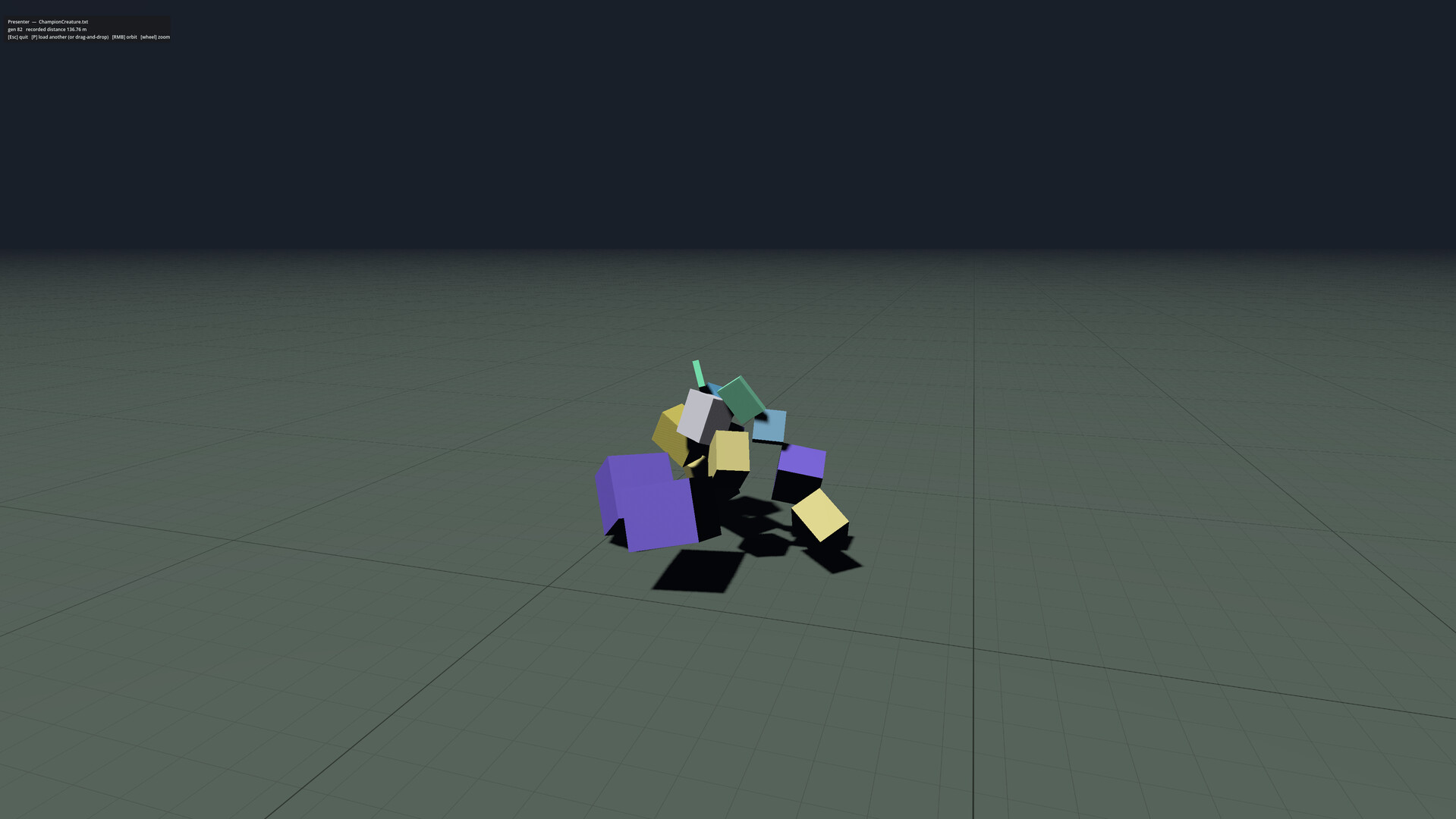
- Champions that emerge over a few hundred generations and look like
deliberately-designed animals (they aren't)
Why this version
The 1994 paper has been replicated many times. Most replications either run on stiffer physics solvers that produce visibly robotic motion, live in academic codebases not meant for hands-on use, or skip the genetic-programming controllers in favor of simpler oscillators.
LIT Creature Forge is a Sims-faithful recreation built on MuJoCo (modern constraint physics). The result reads as organic motion — not stepped, not buzzy, just creatures moving the way creatures move.
Tunable, not over-engineered
- Population size, trial duration, gravity — adjust and watch what evolves differently.
- Lower gravity opens up jumpers, rollers, and ballistic-phase gaits; higher gravity rewards stable grounded walkers.
- Save any champion and replay them in an isolated showcase arena with free camera — for footage, for showing friends, or just to watch your favorite creature trot indefinitely
- No tutorial-driven progression, no "unlock new biomes." It's a sandbox. You watch evolution.
What this isn't
- Not a creature designer. (You don't make the creatures. Evolution does.)
- Not a goal-based game with progression or winning conditions.
- Not realistic biology — Sims-style evolution is dramatic, weird, and indifferent to whether limbs make anatomical sense.
- Not a research tool.
The 1994 thesis, delivered with 2026 fluidity
The original paper produced creatures that walked, swam, fought, jumped, and looked alive. Modern hobbyist replications mostly hit the same emergent diversity. What's been hard is producing creatures that look organic — not just kinematically valid. LIT Creature Forge targets that gap.