—
메타크리틱
0개
DLC
Steam
플랫폼
캐주얼, 인디
장르
출시 예정
플랫폼별 가격 비교
가격 히스토리
차트 로딩 중...
게임 소개
Description / 游戏简介
Found a software company, start from a garage, and build it into a tech empire. Hiring, management, R&D, and launching—every single decision is entirely yours.
You're Not Just Leading a Team, You're Running a Business
Start from a literal garage with a handful of people. Rent desks, purchase hardware, recruit talent, and scale up step by step—or push your luck on bank loans and gamble everything on the next release. From big-picture market positioning to choosing between a coffee maker or instant ramen in the breakroom—you call the shots. Do it right, and reap both wealth and reputation. Screw it up, and face mass resignations, a mountain of debt, and a collapsed brand. There is no preset path to victory, only your judgment and its consequences.
Crafting Products: From Concept to Market
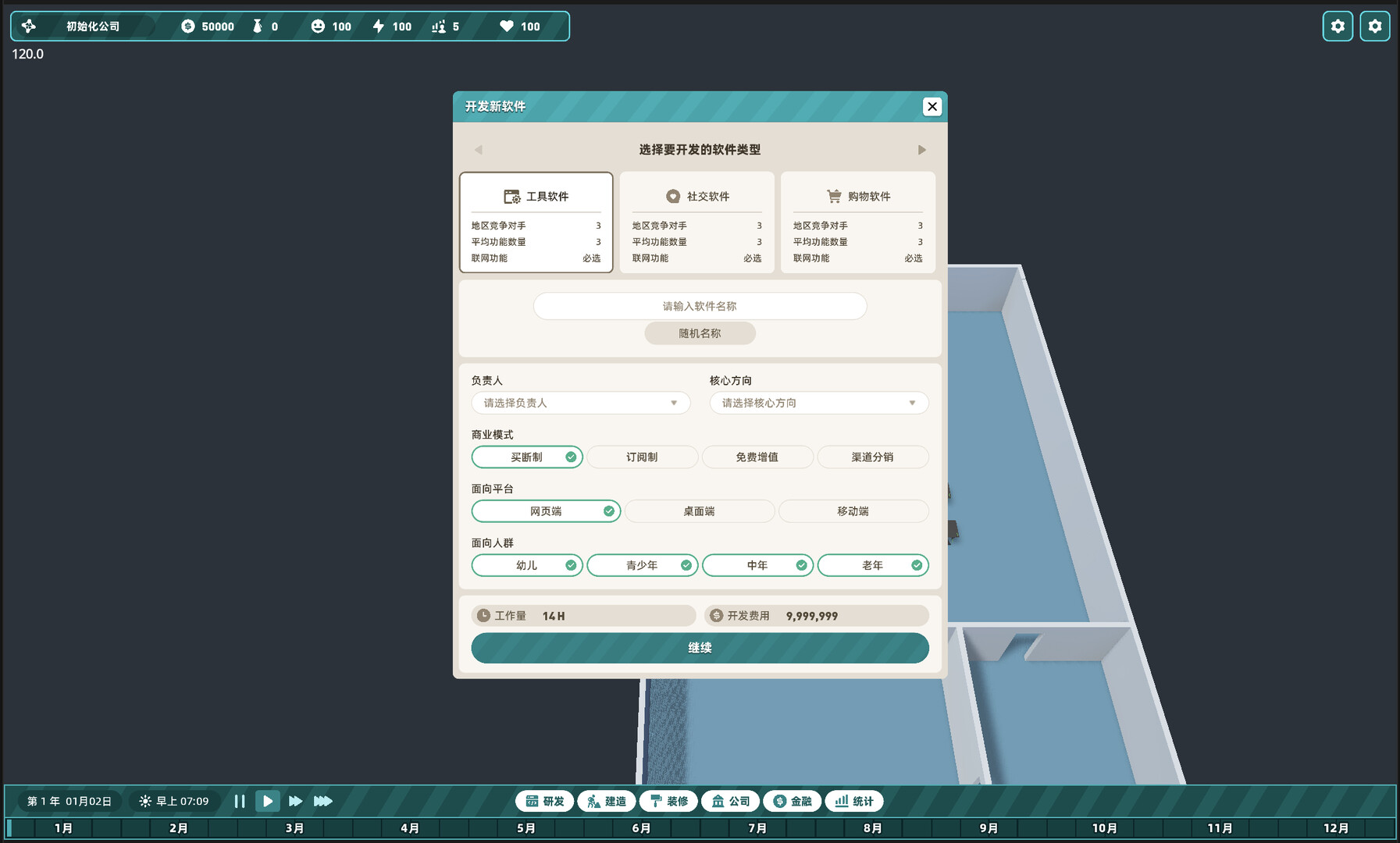
Pick your market sector (Utilities, Social Media, Gaming, Cybersecurity, or Video Streaming), select platforms and monetization models, target specific demographics, and allocate your technical focus. During R&D, your employees will contribute points based on their skill sets—but they’ll also ship nasty bugs if they lack expertise or burn out. When it comes to QA and testing, the ultimate dilemma arises: crunch to patch every single bug, or ship it early to seize the market window? Polishing takes time, but waiting too long means missing out. There is no golden answer; every playthrough is different.
Employees Are Not Just cogs in a Machine
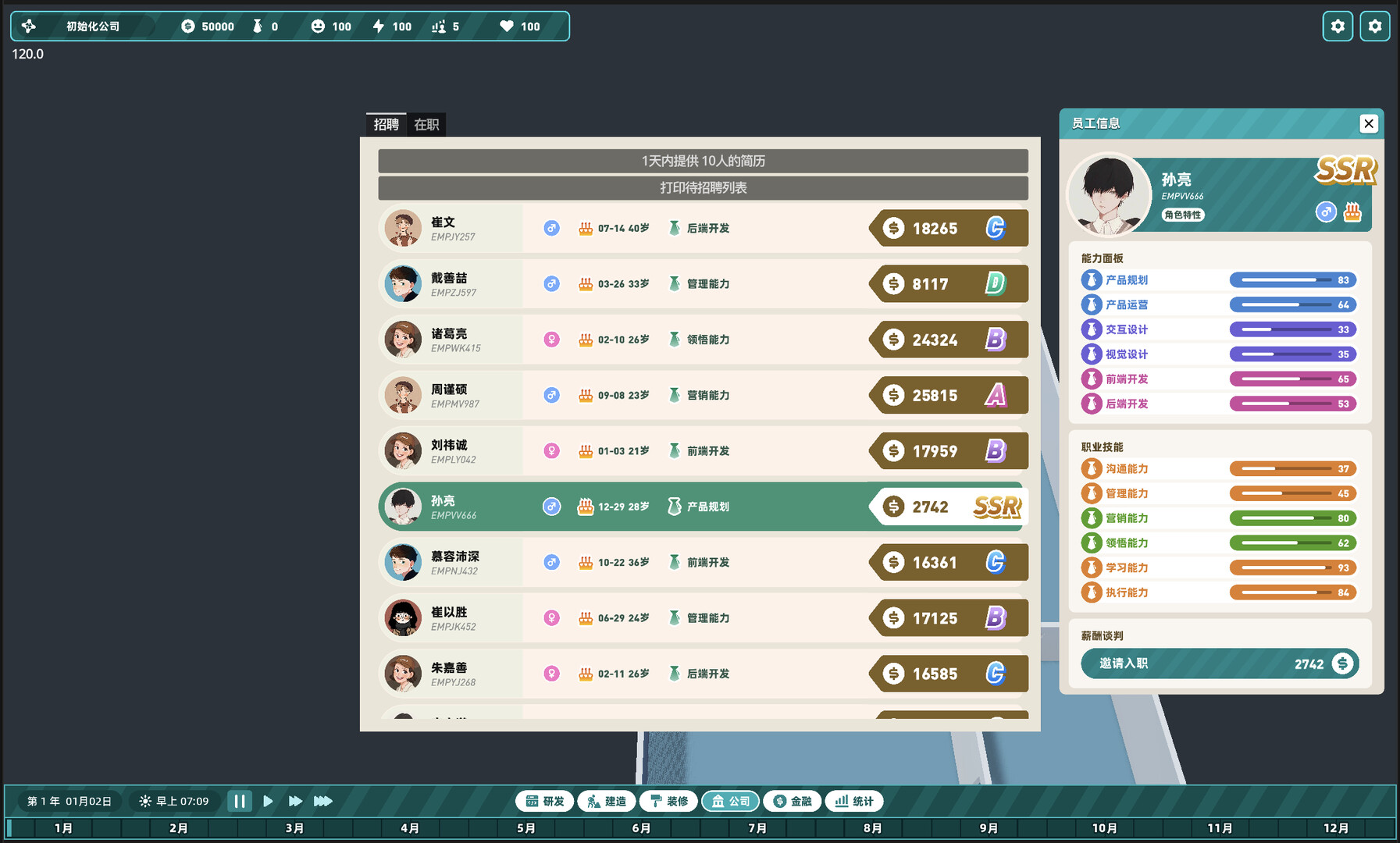
They have names, ages, skill caps, and individual needs like energy and hunger. Everyone follows their own daily routine—hunting for snacks when hungry, slacking off in the lounge when exhausted, or demanding a raise when morale drops. Push them too hard, and they will walk out the door, tanking office morale and damaging your brand's public image on their way out. Thus, workstation configurations matter: customize desks, chairs, monitors, rigs, and peripherals across multiple tiers. Breakroom upkeep matters: keep coffee, snacks, and instant ramen stocked, or watch employee productivity nose-dive. Lounge zones matter: arrange couches, arcade cabinets, and music corners—your devs are humans, not machines, and they need a place to catch their breath.
The Market Will Not Coddle You
Every single game dynamically generates random consumer demographics and media outlets—each with distinct ages, income levels, purchasing power, category preferences, and piracy tendencies. A product that sold like hotcakes in your last run might completely flop in this one. Media reviews directly dictate consumer purchase intentions; some critics are merciless towards bugs, while others are more forgiving. Brand prestige is your ultimate long-term asset—built slowly through stellar products and ethical management, but easily ruined by crunch culture or botched launches. Prestige directly dictates your loan interest rates and your attractiveness to top-tier talent.
It’s All About the Money—Use Your Brain
Revenue goes beyond software sales, and expenses aren't just limited to payroll and rent. When cash runs short, take out a bank loan—the banks evaluate your credit rating based on your brand prestige; higher prestige unlocks lower interest rates. Fail to pay on time, and you'll trigger a full-blown debt crisis, skyrocketing your interest rates across the board. Got surplus cash? Put it in the bank. Savings accounts compound interest weekly, with various fixed-term options available—though early withdrawal will cost you your interest gains. Managing cash flow is just as vital as managing code.
Technology Doesn't Advance by Magic
Unlock a tech tree spanning three distinct eras—from old-school Waterfall to modern Agile, from monolithic architecture to distributed caching. Unlocking new tech grants raw attribute bonuses, introduces cutting-edge monetization models, and upgrades department sizes and R&D queue limits. However, research points cannot be manually assigned; they are generated naturally by your team during their daily grind. You set the vision—they build the future.