—
메타크리틱
0개
DLC
Steam
플랫폼
캐주얼, 인디
장르
출시 예정
플랫폼별 가격 비교
가격 히스토리
차트 로딩 중...
게임 소개
The rules start familiar: HIT to draw, STAND to hold, and try to beat the table without going too far. The twist is that every choice is also a threat. Blood is your health, your pressure, and the price of losing control.
Learn The Table
Each round starts with your hand, blood, items, and opponents watching. Take a card, stand, or use an item when the timing is right.
Every action is a signal: confidence, panic, trap, or bluff.
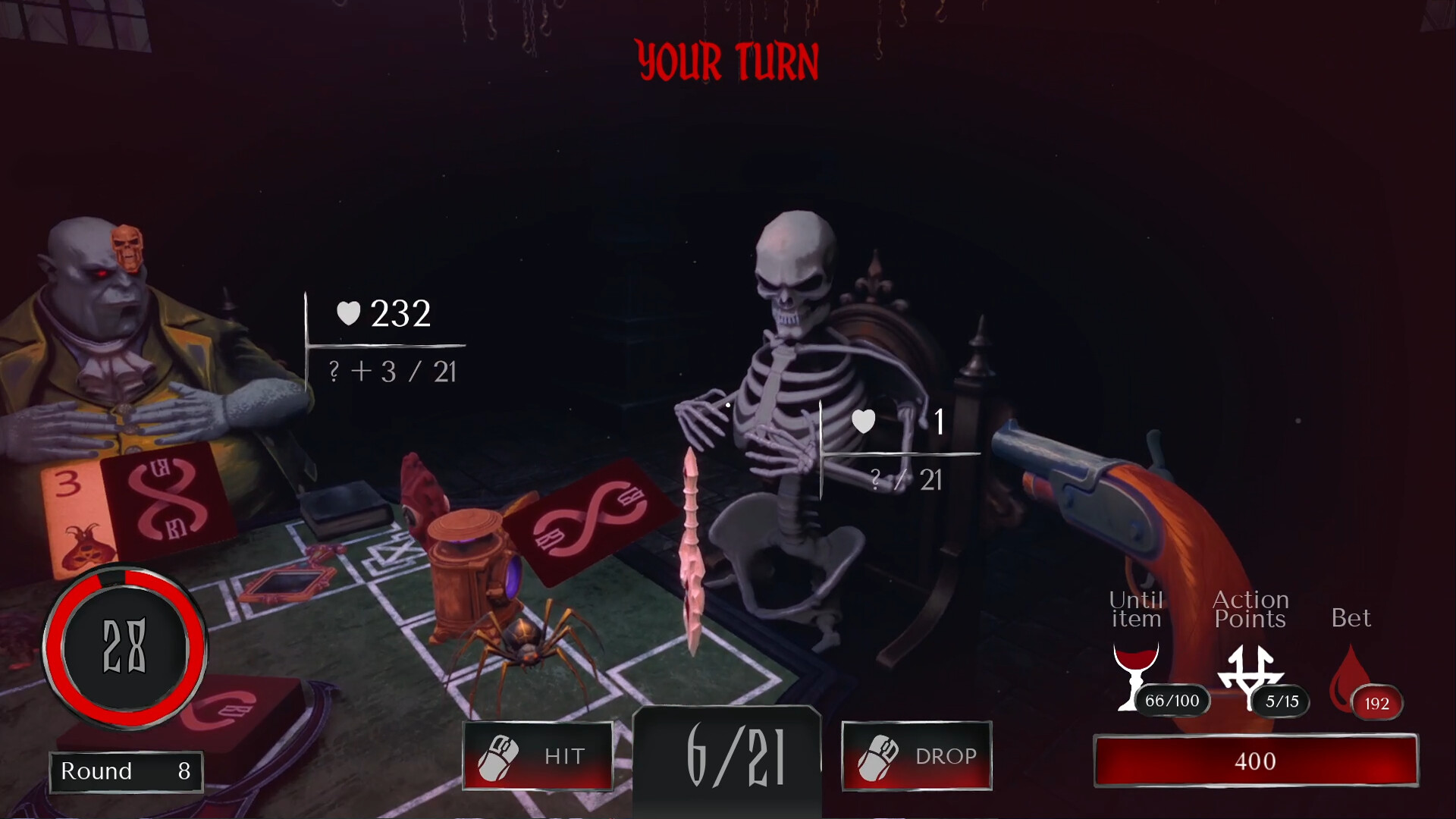
Spend Action Points
You start with AP, and every HIT gives more up to a limit. More cards mean more item power, but also more risk.
Items spend AP to reveal, attack, protect, skip turns, or force bad choices.
Bluff Around a Hidden Card
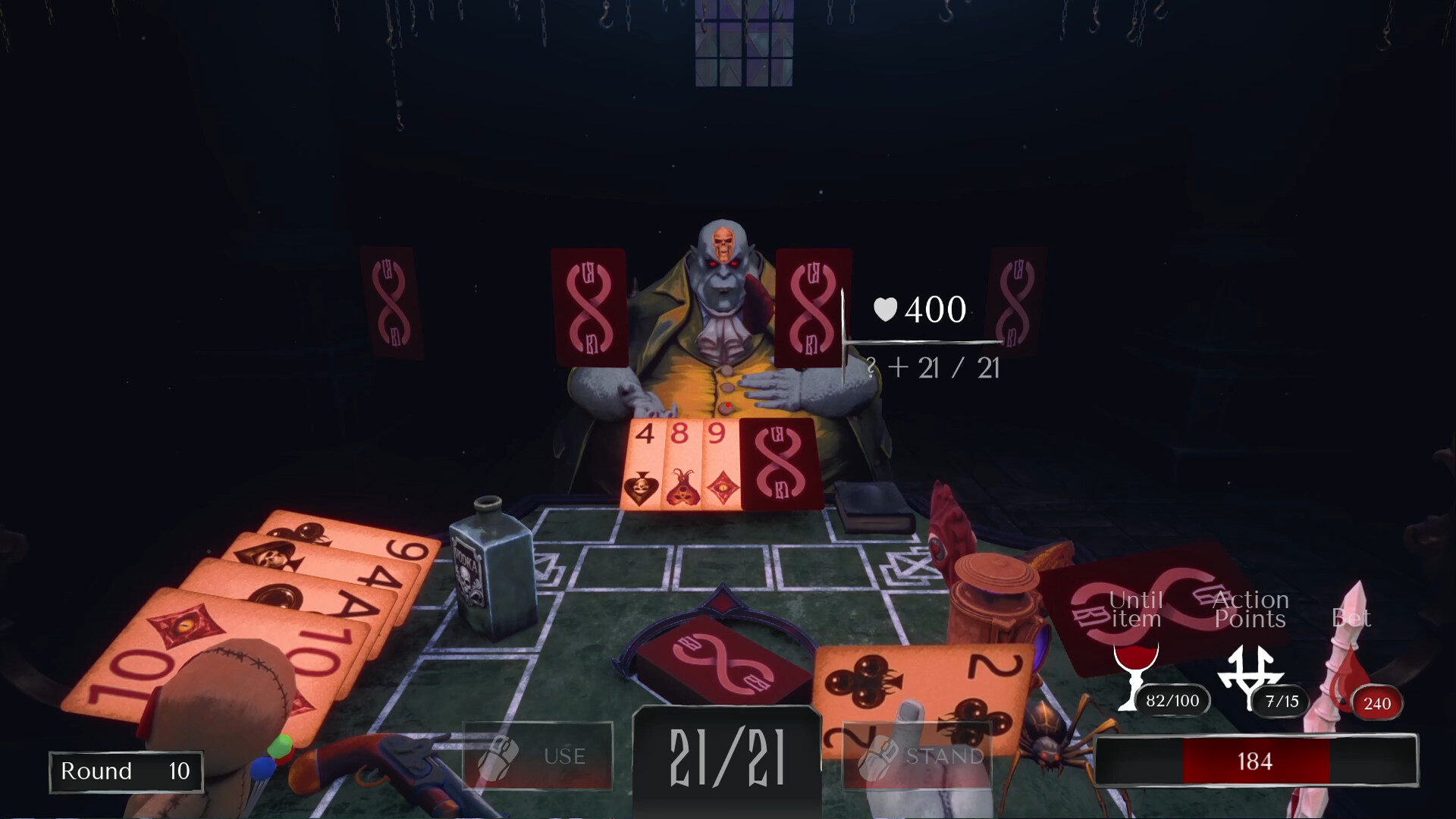
Your first card is hidden from everyone else. You know part of the truth, and the table has to guess the rest.
A stand, hit, or item can look safe, desperate, or like a trap.
Blood is Health and Stake
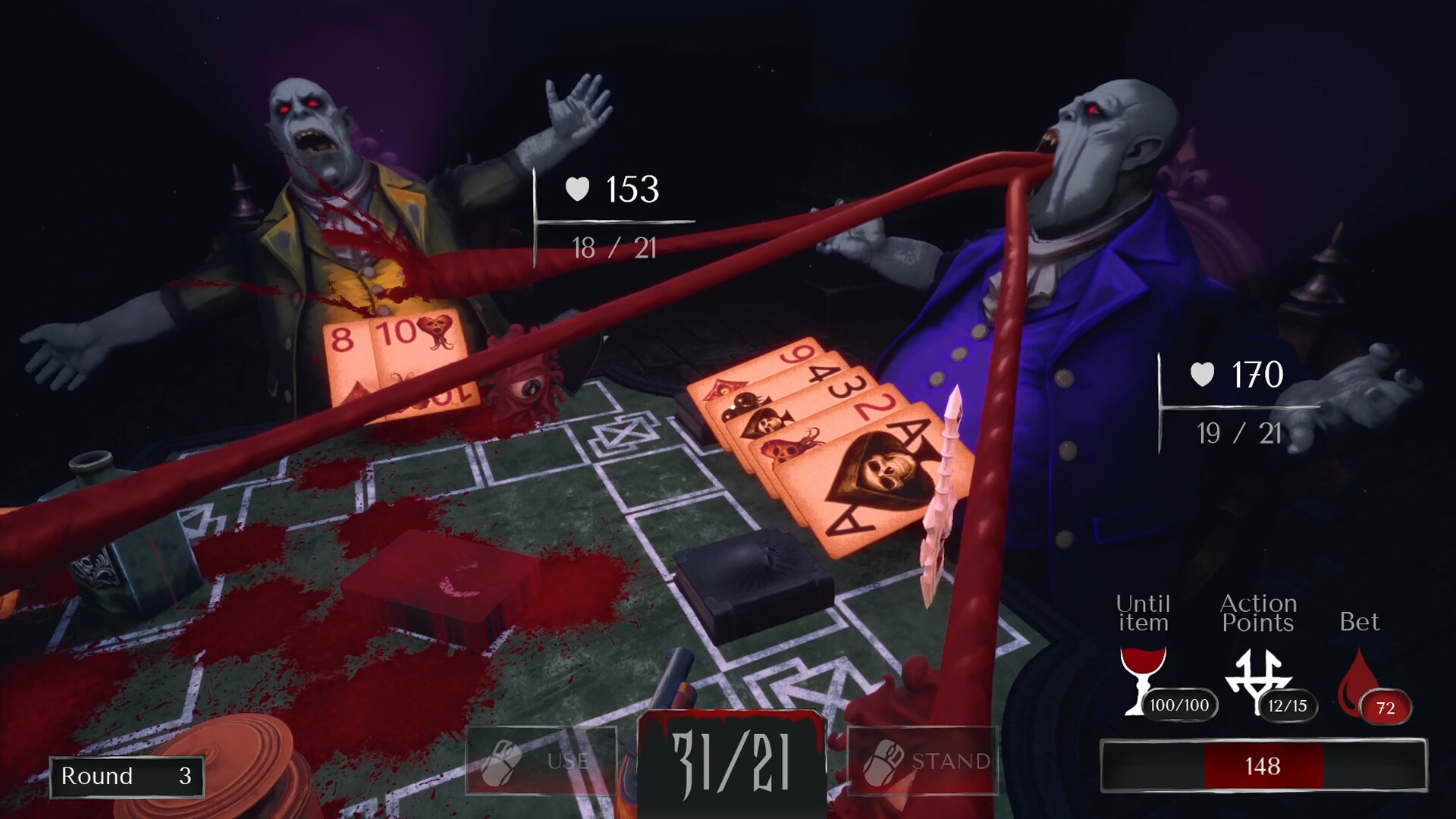
Blood is your life total and the pressure behind every round. Win hands to drain others; lose too much and you leave the table.
The longer the match goes, the more dangerous each mistake becomes.
Know When to Stop
Chasing 21 is powerful, but greed has a cost. If you overdraw, the hand can turn against you fast.
Sometimes the best move is to stand, let the table doubt you, and make someone else take the risk.
Break BlackJack with Items
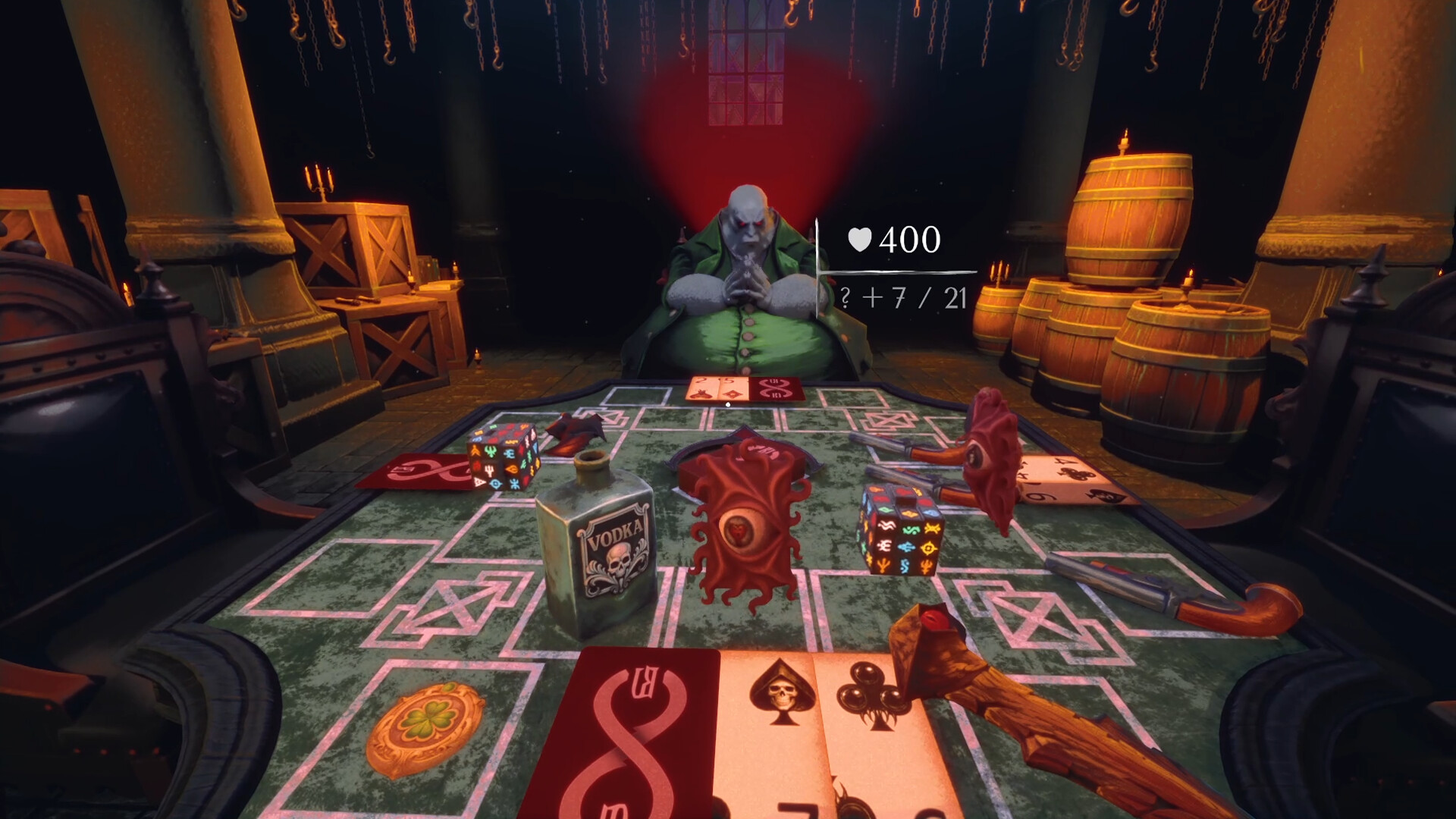
Items are one-shot tools that bend the hand. They can reveal, attack, protect, skip turns, pressure opponents, or create comebacks.
Timing is the lesson: survive now, save power for later, or force a worse decision.
Attack and Disrupt
Some items turn the table into a fight. A pistol can punish a target; a stake can take away their next turn.
Damage matters, but tempo can matter just as much.
Fight Friends
Play online in 2-4 player PvP matches where short rounds, table talk, panic hits, and sudden betrayals decide who survives.
Short Matches, Sharp Decisions
BloodJack is built for tense 10-15 minute sessions. The rules are familiar, but the pressure changes fast. Hidden information, rising blood stakes, and unpredictable items make every hand dangerous.
Future Updates
- Additional items that expand the range of available offensive, defensive, bluffing, and card-manipulation strategies
- New playable characters with unique abilities that support different approaches to risk, pressure, survival, and table control
- New locations with gameplay modifiers that affect match conditions, tab le events, and tactical decisions
- Additional table events designed to increase match variety and create new tactical situations
- Balance updates informed by live matches, player feedback, and observed gameplay patterns