—
메타크리틱
0개
DLC
Steam
플랫폼
캐주얼, 인디
장르
출시 예정
플랫폼별 가격 비교
가격 히스토리
차트 로딩 중...
게임 소개
You run the MMO. They play it.
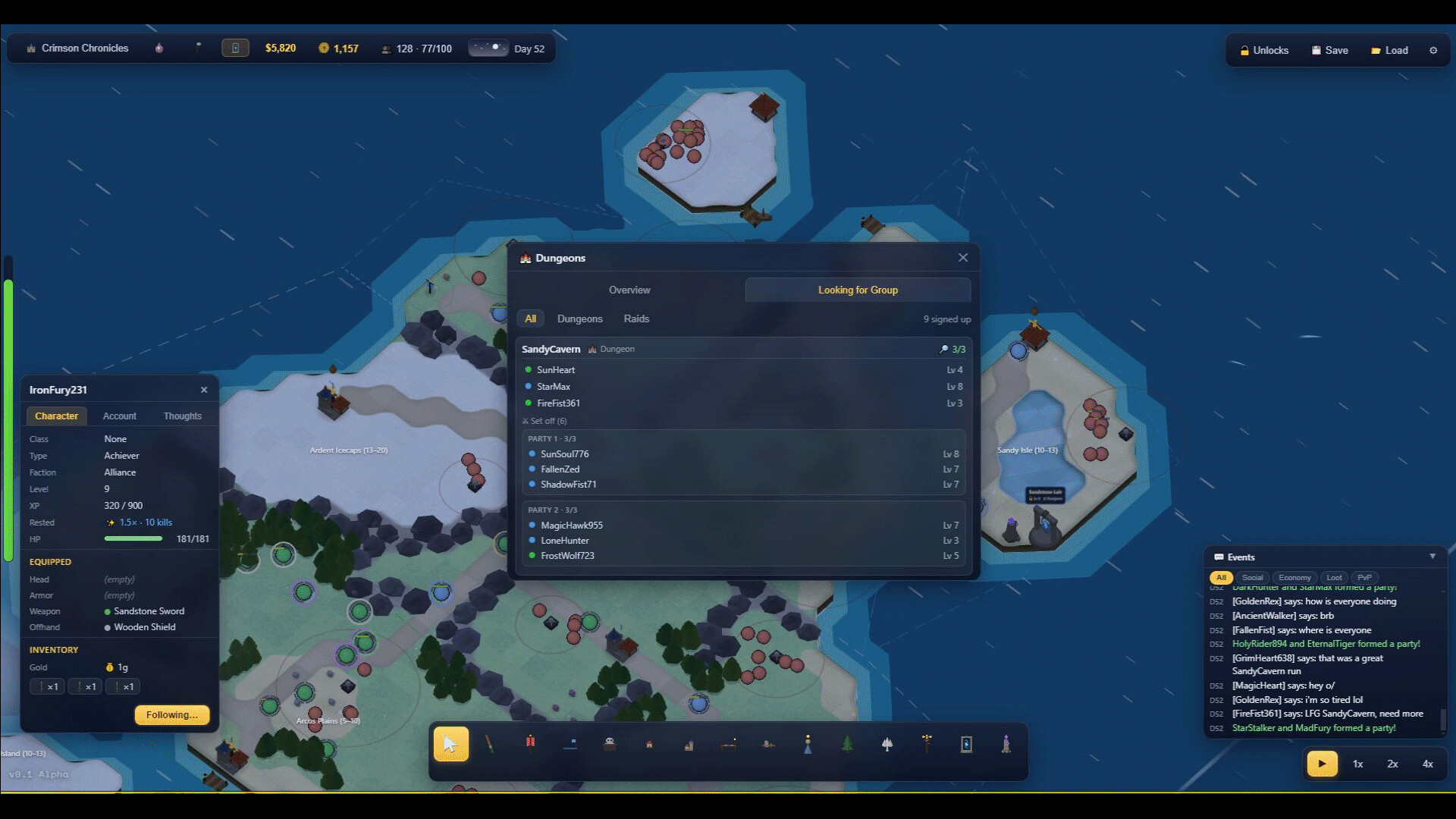
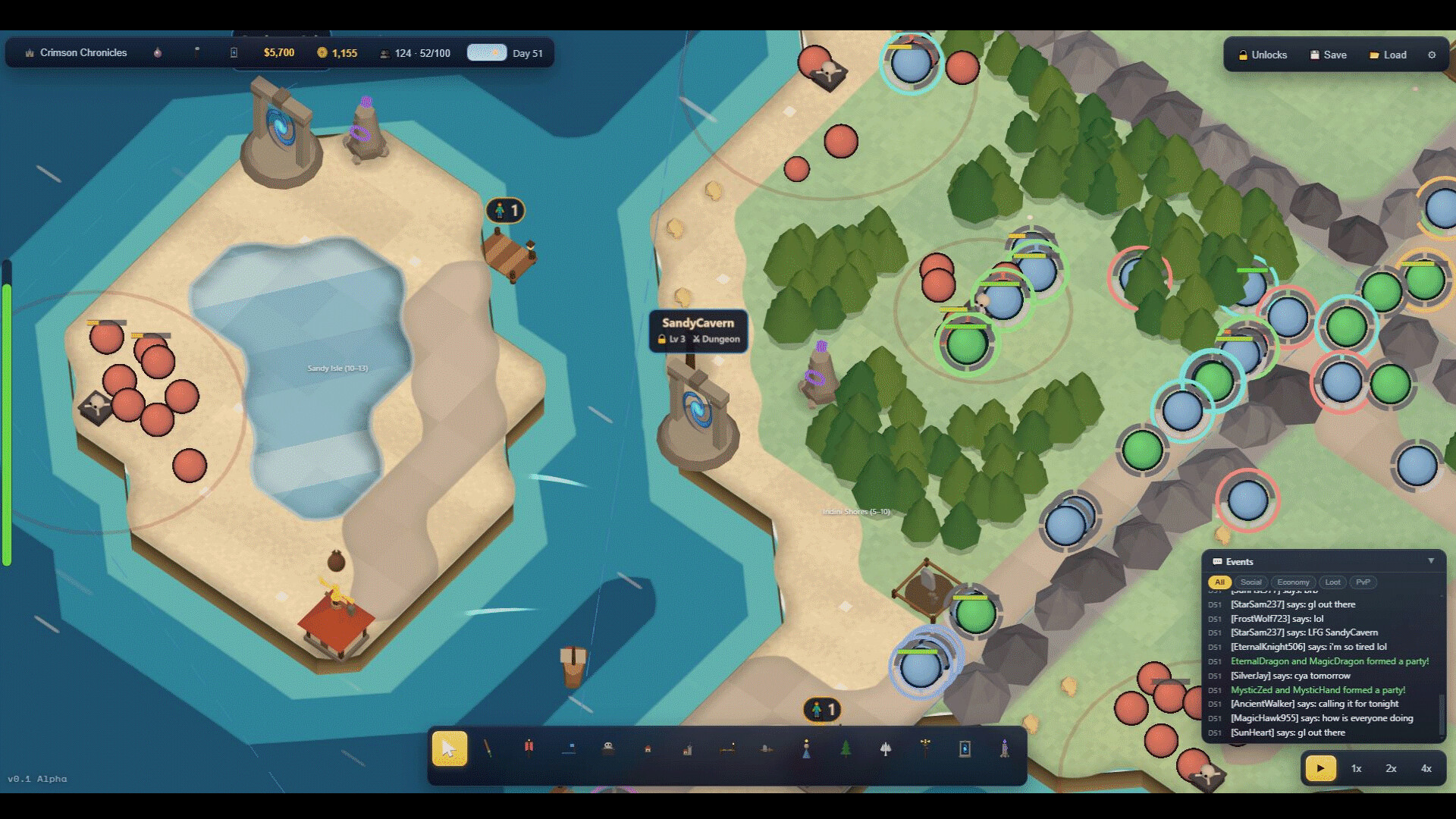
Most games put you inside the MMORPG. This one puts you in the chair behind it. You are the studio, the live team, and the world designer all at once: you build the zones, stock the dungeons, author the loot, set the prices, and open the systems. Then you step back and watch thousands of fully autonomous adventurers move into your world, form parties, grind levels, chase gear, haggle on the auction house, die to your monsters, and — if your world is good enough — keep paying the monthly subscriptions that fund everything you do.
It's SimCity meets WoW, with a pinch of RollerCoaster Tycoon: a top down living-world management sim where every subscriber is a simulated player with their own goals, and your job is to build a world worth playing.
The core loop
Build the world. Paint terrain, carve zones, lay roads, plant the wilderness, and place the monsters, towns, and points of interest that give your MMO a shape.
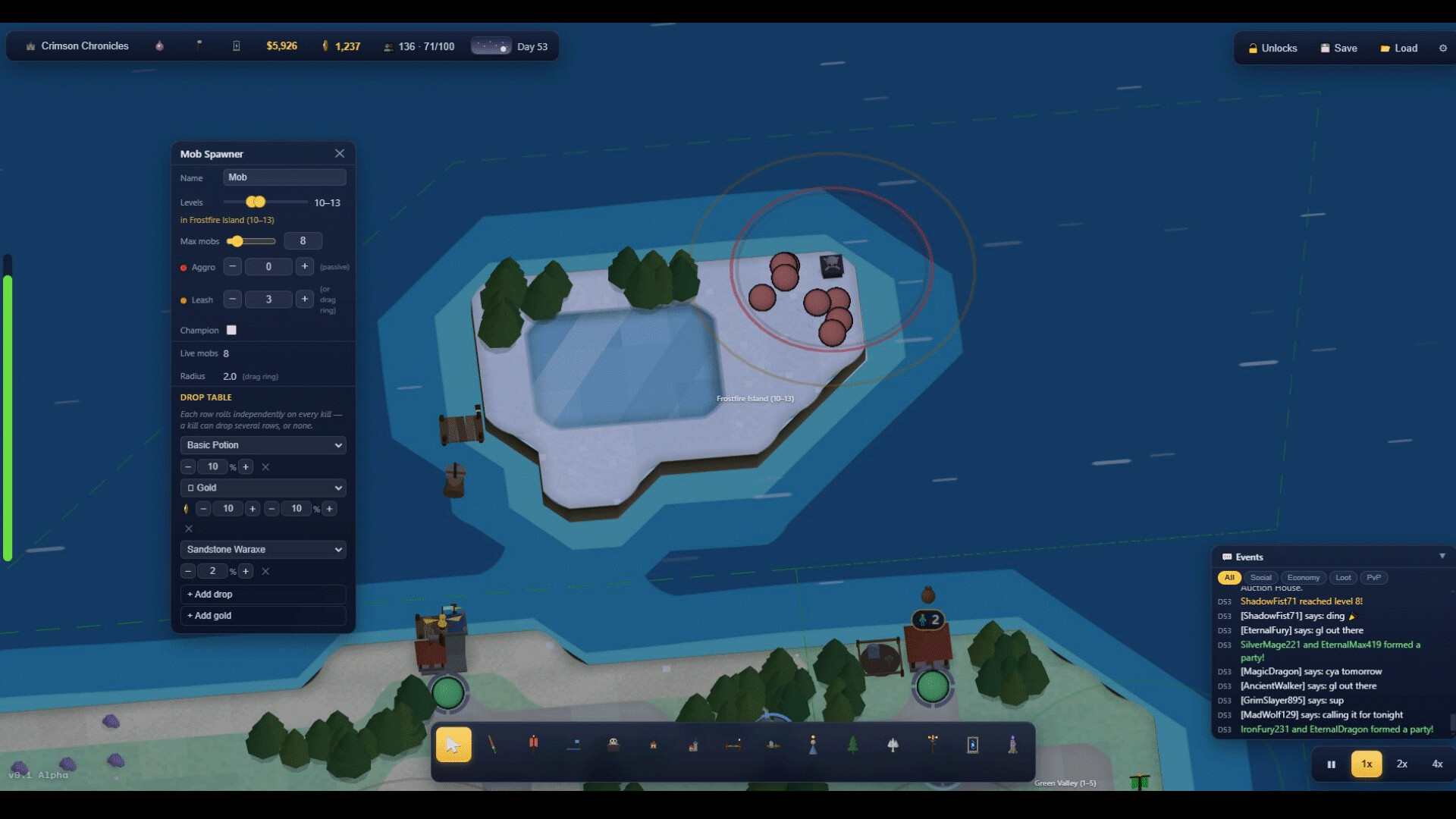
Stock the content. Author monsters, loot tables, gear, consumables, quests, and gathering nodes. Decide what drops, where, and how rare it is.
Run the economy. Open vendors, an auction house, and a flight-path network. Set fares, prices, and policies. Manage the flow of gold so your world stays healthy instead of inflating into chaos.
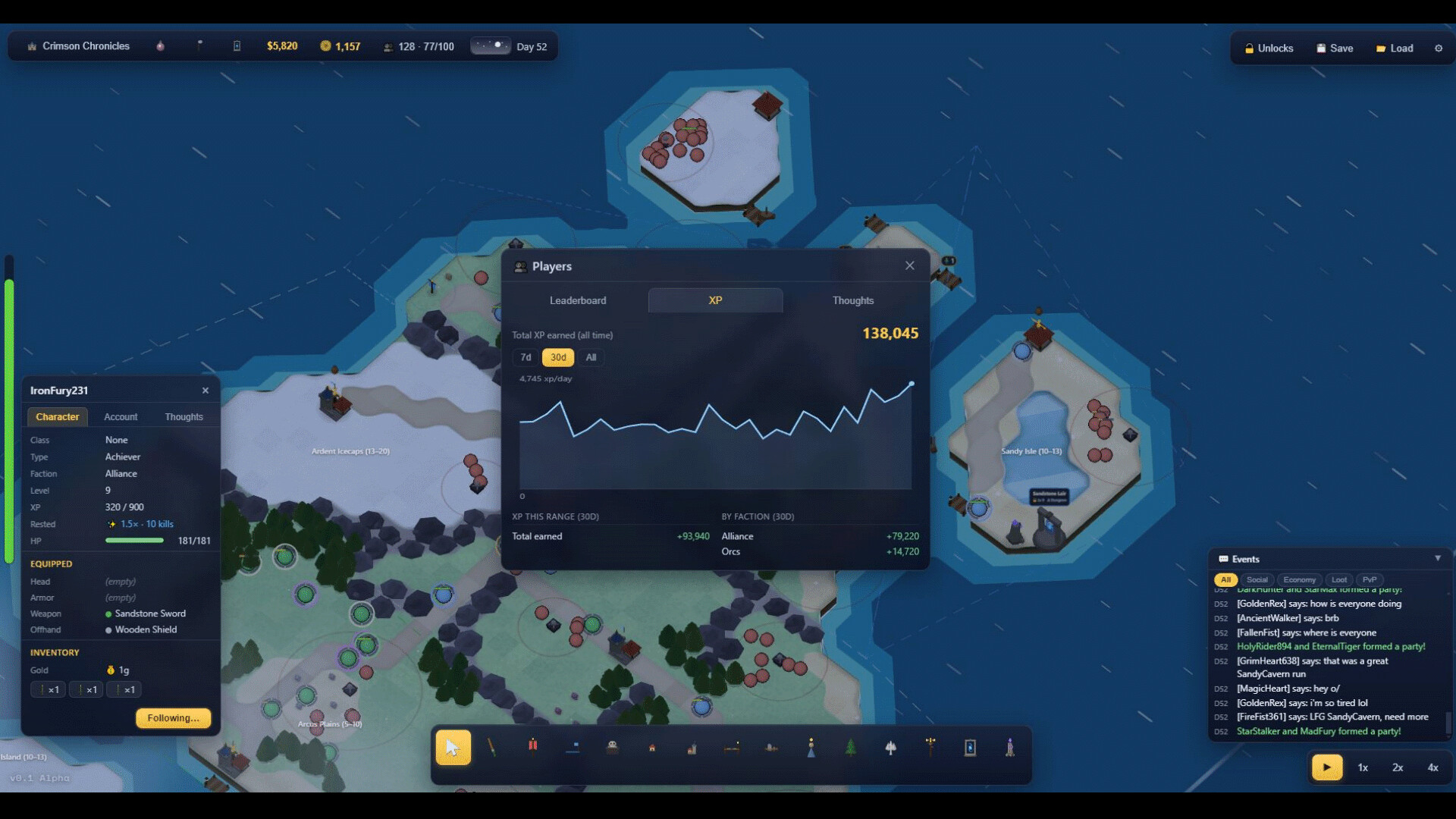
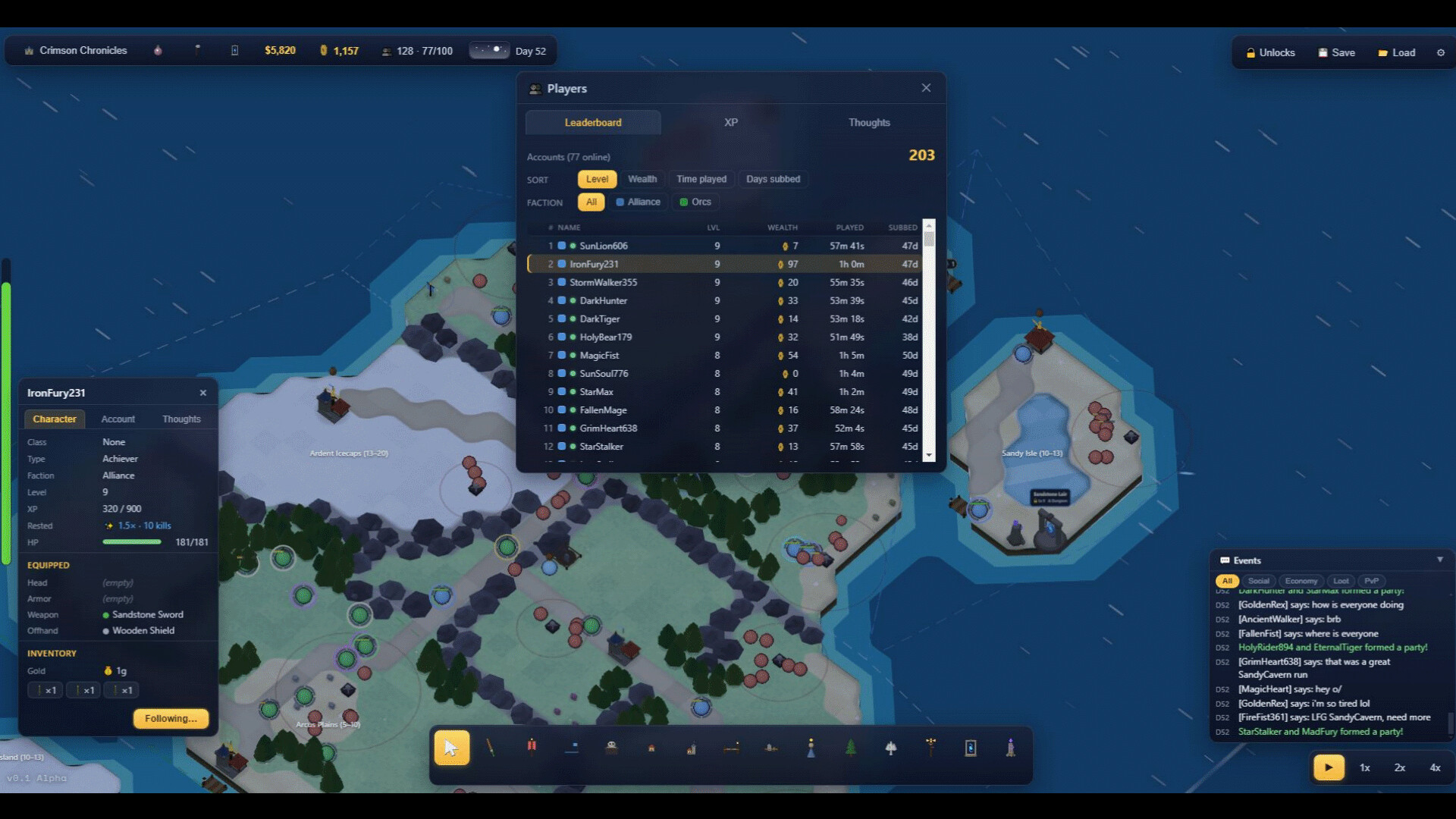
Grow your playerbase. A good world attracts and retains subscribers. Watch the population, the gold economy, and the XP curves — then tune the world to keep adventurers happy and paying.
A world that actually plays itself
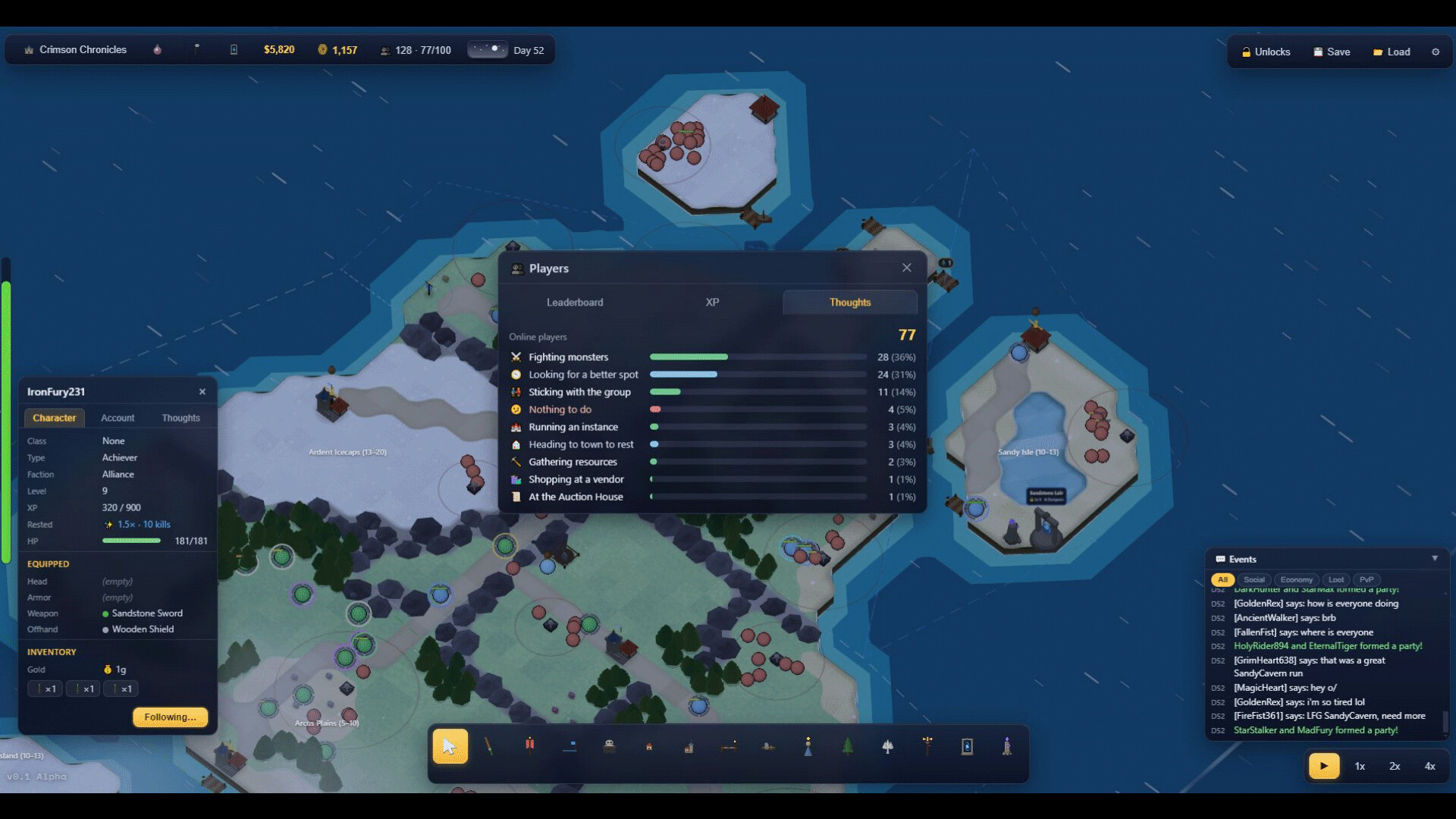
The adventurers aren't scenery. Each one is an autonomous agent with a personality built from a weighted blend of player-type drives — the killers, achievers, explorers, socializers, and the gold-obsessed traders. Those drives shape what every adventurer chooses to do moment to moment:
Levelers push into tougher zones as they outgrow the easy mobs.
Treasure-hunters farm monsters for their most profitable drops.
Gatherers learn professions and work resource nodes.
Traders buy low and sell high on the auction house.
Explorers spend real gold on flight paths to see the far corners of your map.
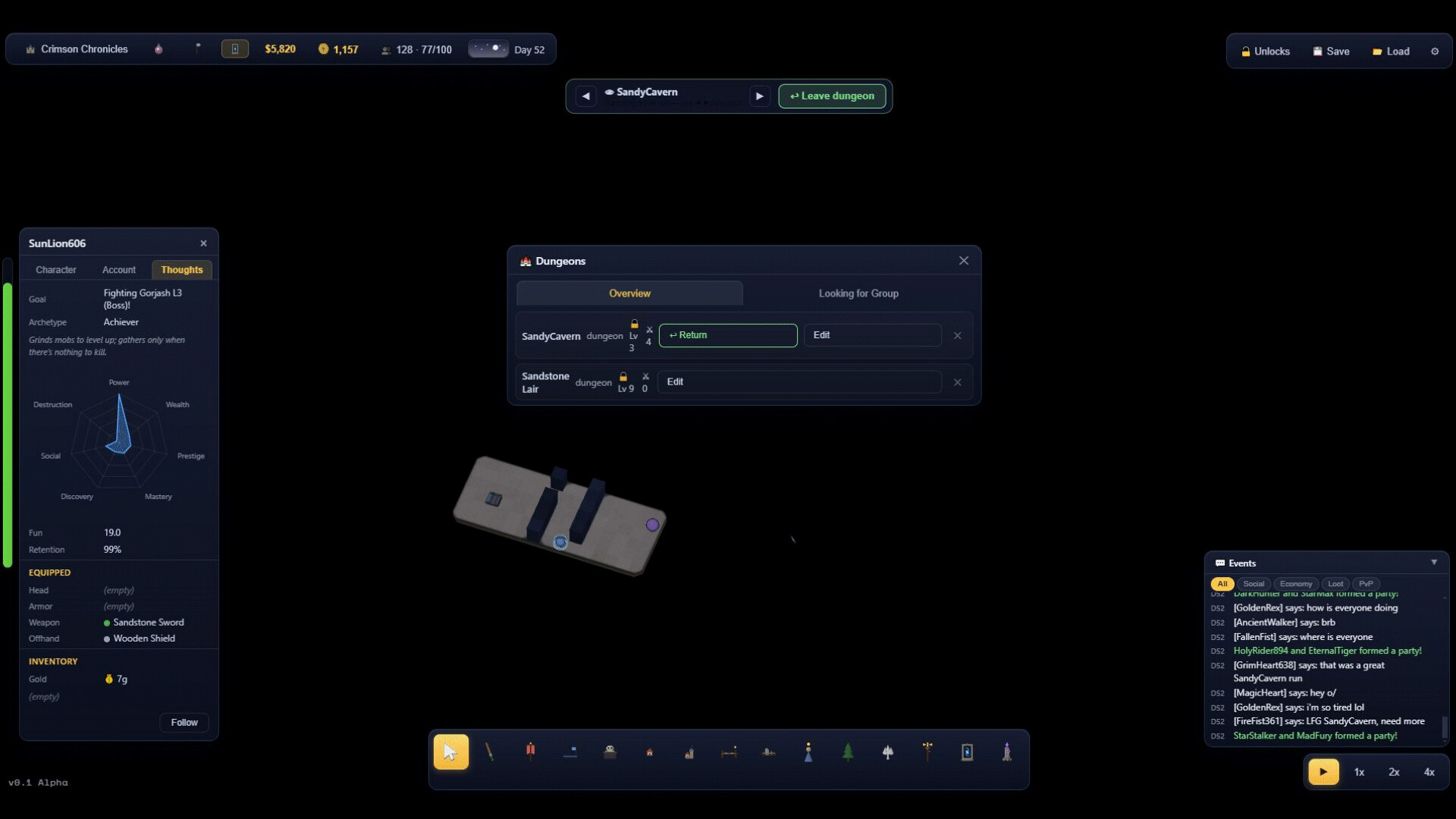
They form parties, share threat in combat, level up, gear up, go broke, get rich, and occasionally die — all emergently, all driven by the world you built. Click any adventurer to read their thoughts, see their drive profile, inspect their gear and professions, and watch their personal story unfold.
Deep authoring tools
Terrain & zones — paint grass, water, roads, and hazard tiles like lava; define polygon zones with their own identity; plant trees and decorate the wilds.
Monsters & spawners — author creatures with stats and loot tables, then place spawners that keep your zones populated.
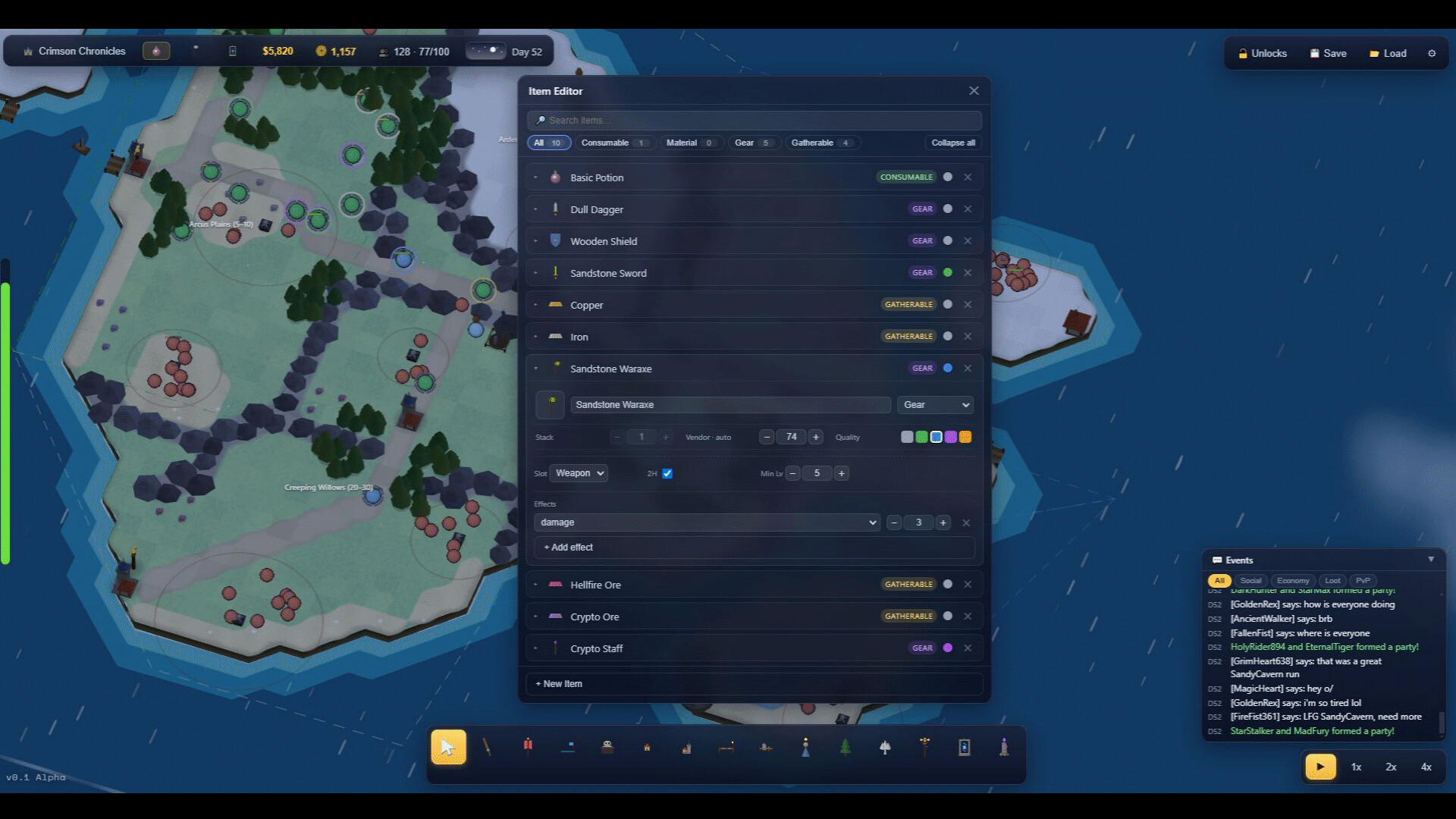
Gear — design weapons, armor, and offhands with slots, level requirements, two-handed rules, and combat-stat effects. Every item has a quality tier from common to legendary that drives both its power and its rarity on the avatar.
Consumables, materials & quests — potions, crafting materials, gathering nodes, and quest content for your adventurers to chase.
Factions & PvP — set up rival factions, balance their populations, and let the conflict play out.
A real, self-correcting economy
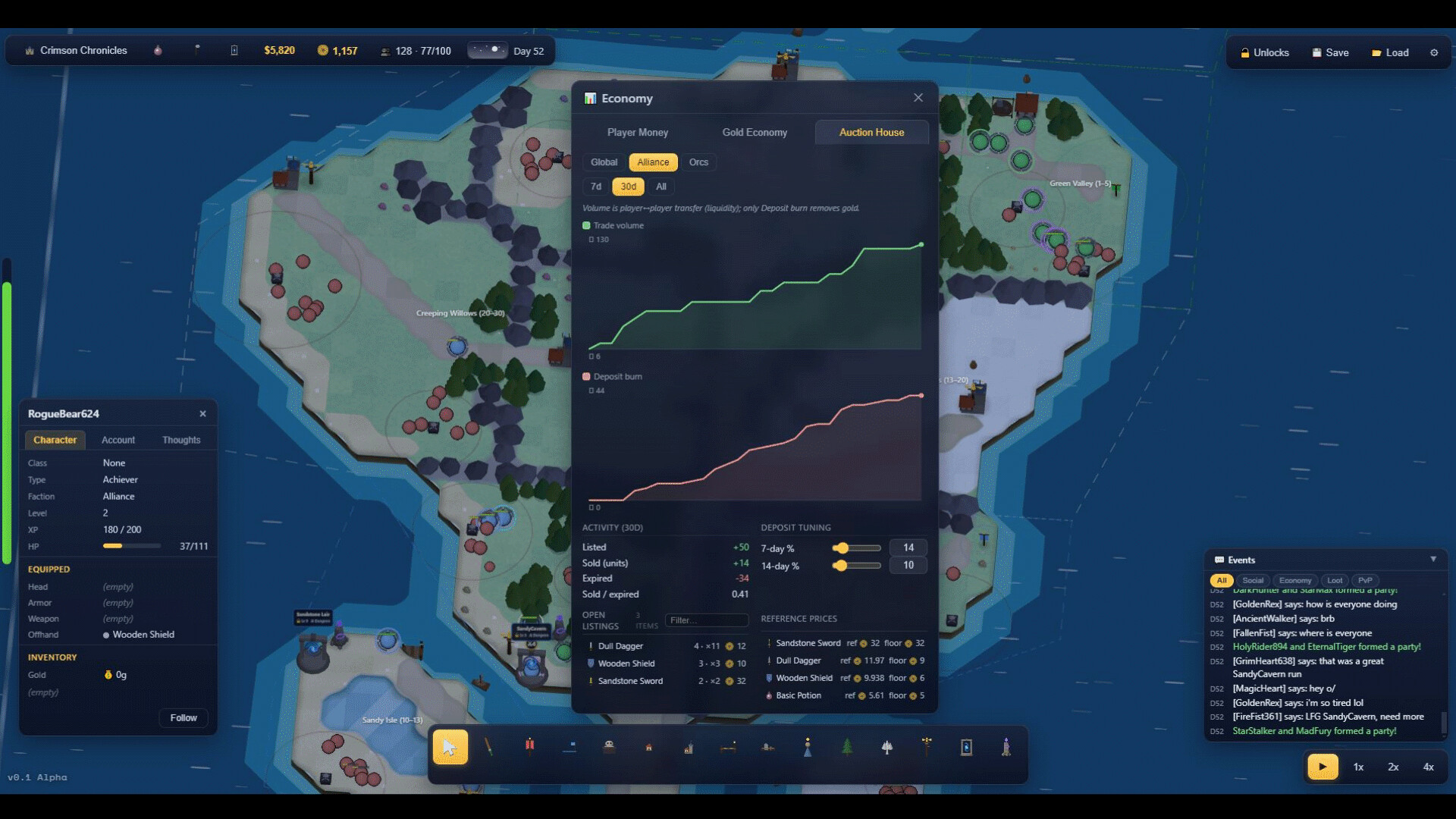
Gold isn't a number that only goes up. The simulation models faucets and sinks: monsters mint gold when looted, while vendor purchases, flight fares, and auction deposits drain it back out. Item prices are world-derived from each item's identity and quality, then nudged by live supply and demand. A built-in economy dashboard tracks gold minted vs. burned (with per-source breakdowns), population, wealth leaderboards, and XP rates over time — so you can spot inflation, dead content, or a broken market and fix it.
Tune everything
A sandbox tuning layer lets you adjust the rules of your world, and a seeded simulation means you can reproduce and experiment with worlds deterministically. The whole thing runs as a living, headless simulation under a stylized, flat illustrated art style — readable, colorful, and built entirely from programmatic visuals and synthesized audio, with a day/night sky cycle overhead.
Genre & style
Genre: Management / tycoon / living-world simulation
Play style: Single-player, sandbox, endlessly tweakable
Vibe: Build-and-observe — set the systems in motion, then watch the consequences ripple through a world of thousands
If you've ever finished a raid and thought "I could have designed this better," this is your chair.