—
메타크리틱
0개
DLC
Steam
플랫폼
캐주얼, 인디
장르
출시 예정
플랫폼별 가격 비교
가격 히스토리
차트 로딩 중...
게임 소개
Remember your first phone?
The flip one? The brick that could crack walnuts? The touchscreen you saved three months of allowance for?
This time, you're on the other side of the counter. It's 2006. You and your college friends pool your savings, rent a garage, and hang up a sign: we make phones now. The keypad-phone giant looks unstoppable. Nobody knows the touchscreen is coming.
Key Features
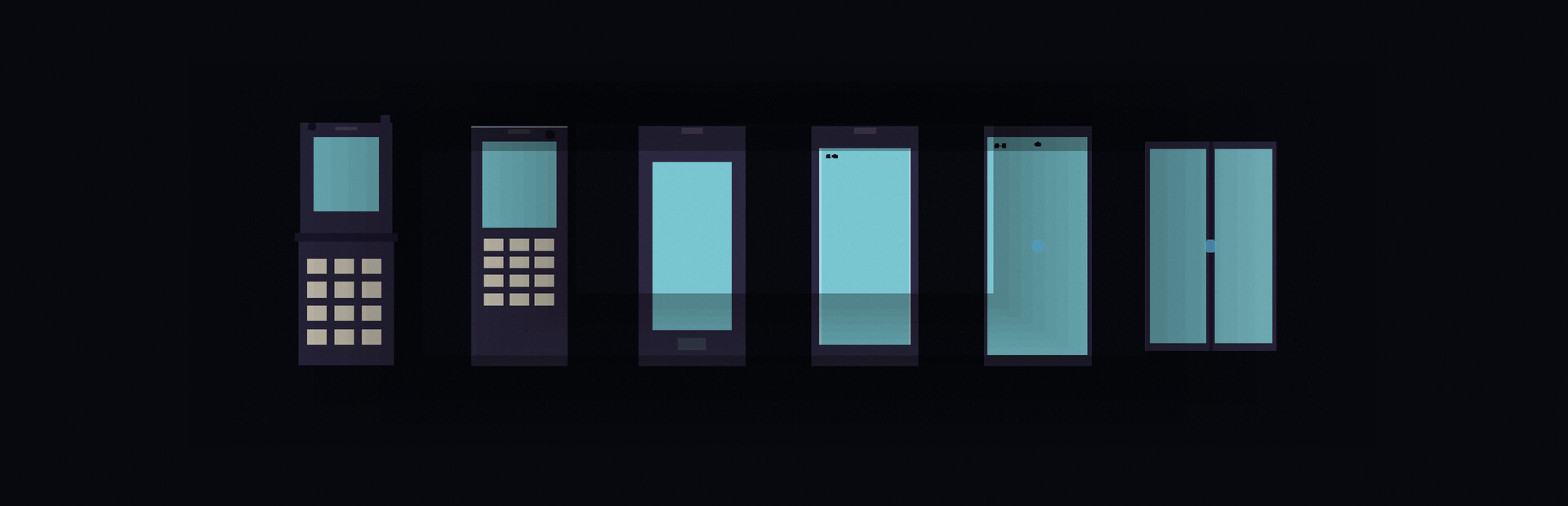
- Twenty years, three eras — from 2006 keypad phones through the touchscreen revolution to the AI-silicon age. Industry events arrive on the real historical timeline.
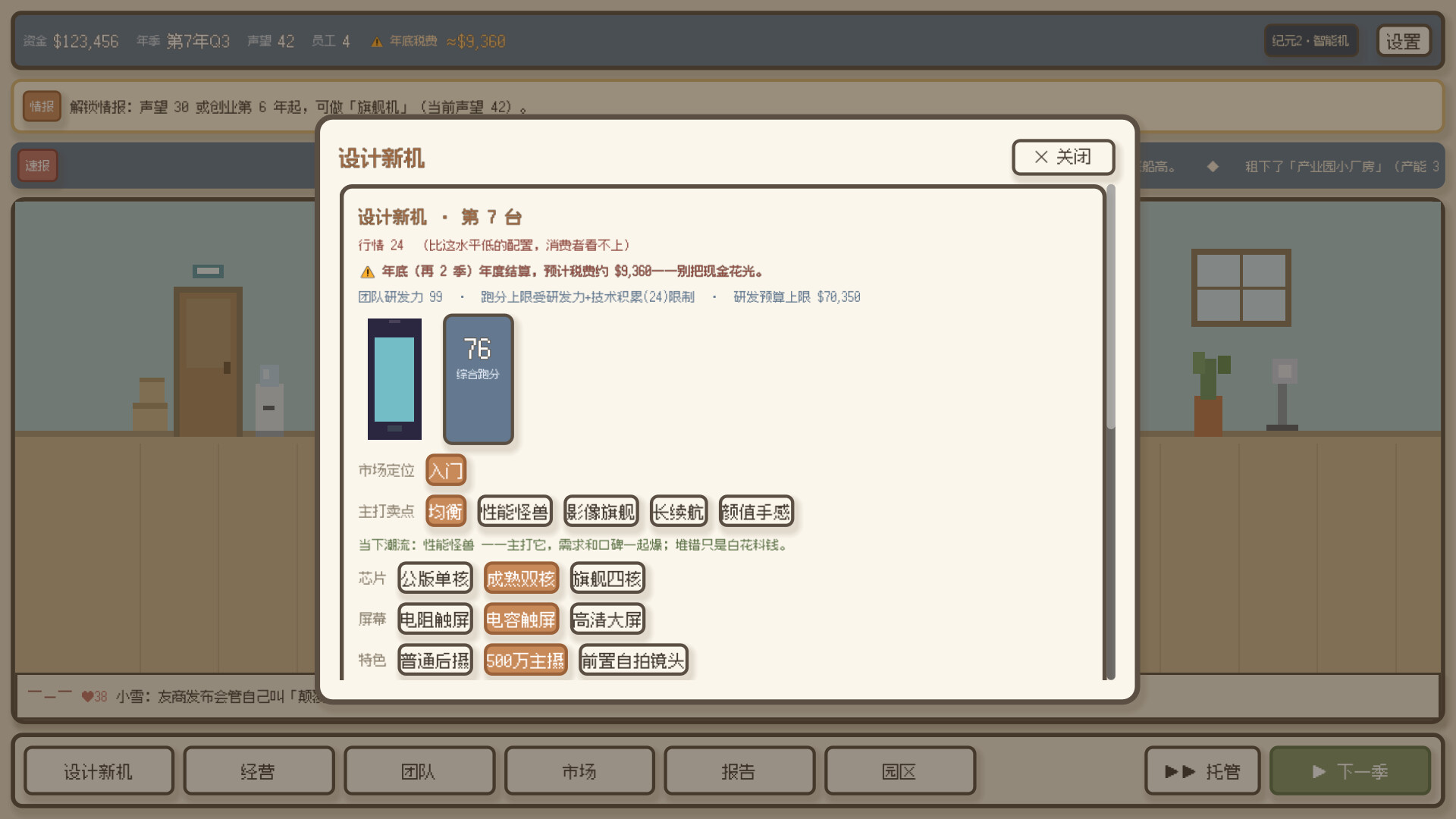
- Design every phone — set R&D budget, price, selling point (performance, camera, battery, design), parts tiers, and chip sourcing. Each launch is a roll of the dice where benchmarks, yield rates, and market mood collide.
- Build or buy — design your own chips, OS, and AI models (huge upfront cost, long-term edge) or buy off-the-shelf (cheap now, vulnerable later). The AI memory crunch in the late game hits buyers hardest; self-researchers can ride it out.
- Multiple viable strategies — budget volume plays, spec-stacked flagships, marketing blitzes, and niche premium all work. The game never lectures you on the "correct" path.
- Sign industry legends — a black-turtleneck perfectionist, a supply-chain magician, a "far, far ahead" hype man, and more. Hire them (salary will sting) or let them leave and become your fiercest rivals.
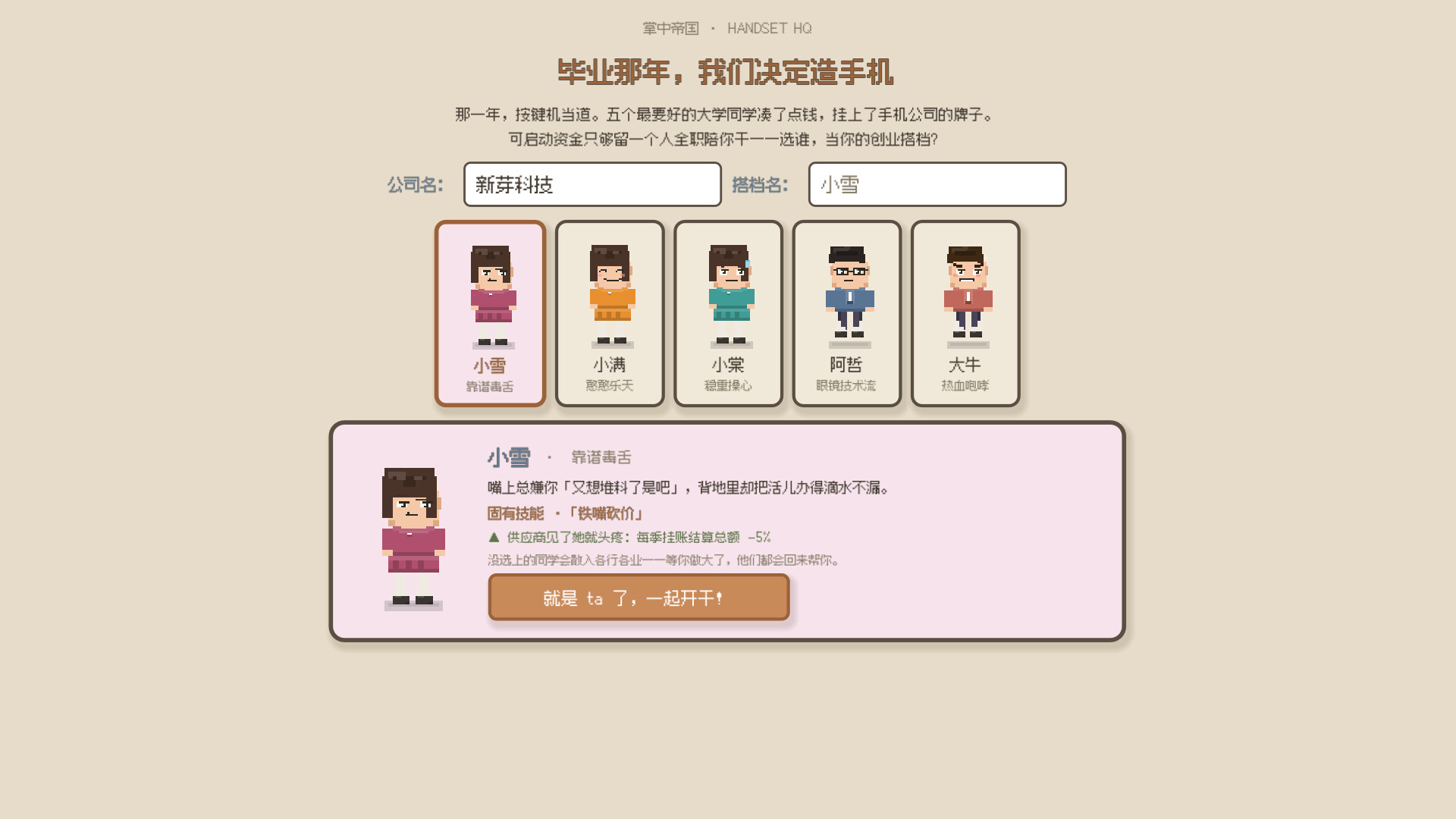
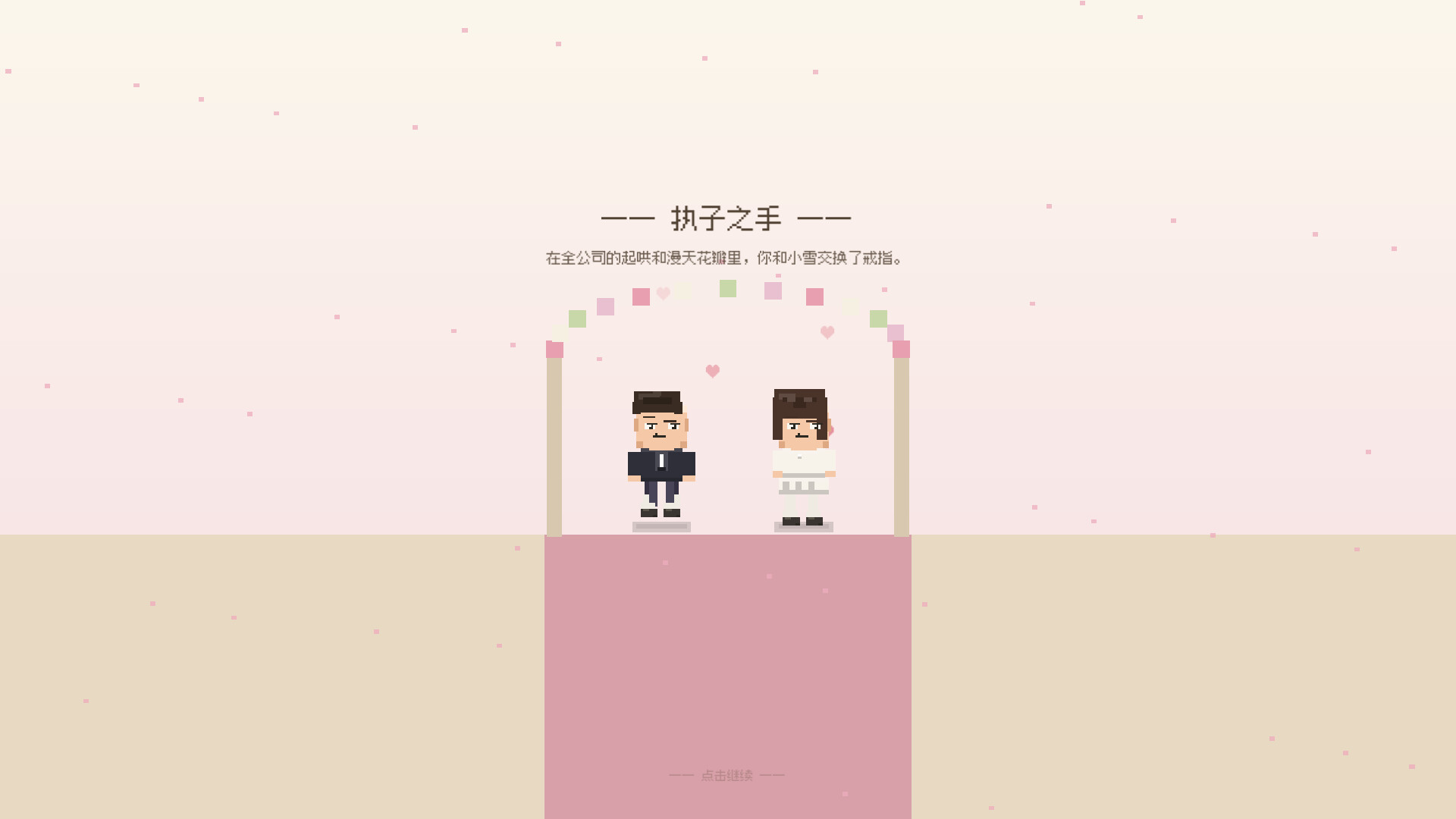
- Five founding partners — pick one to build the company with. Each has a personal wish; fulfill it for a story payoff (a wedding, or two beers on a rooftop).
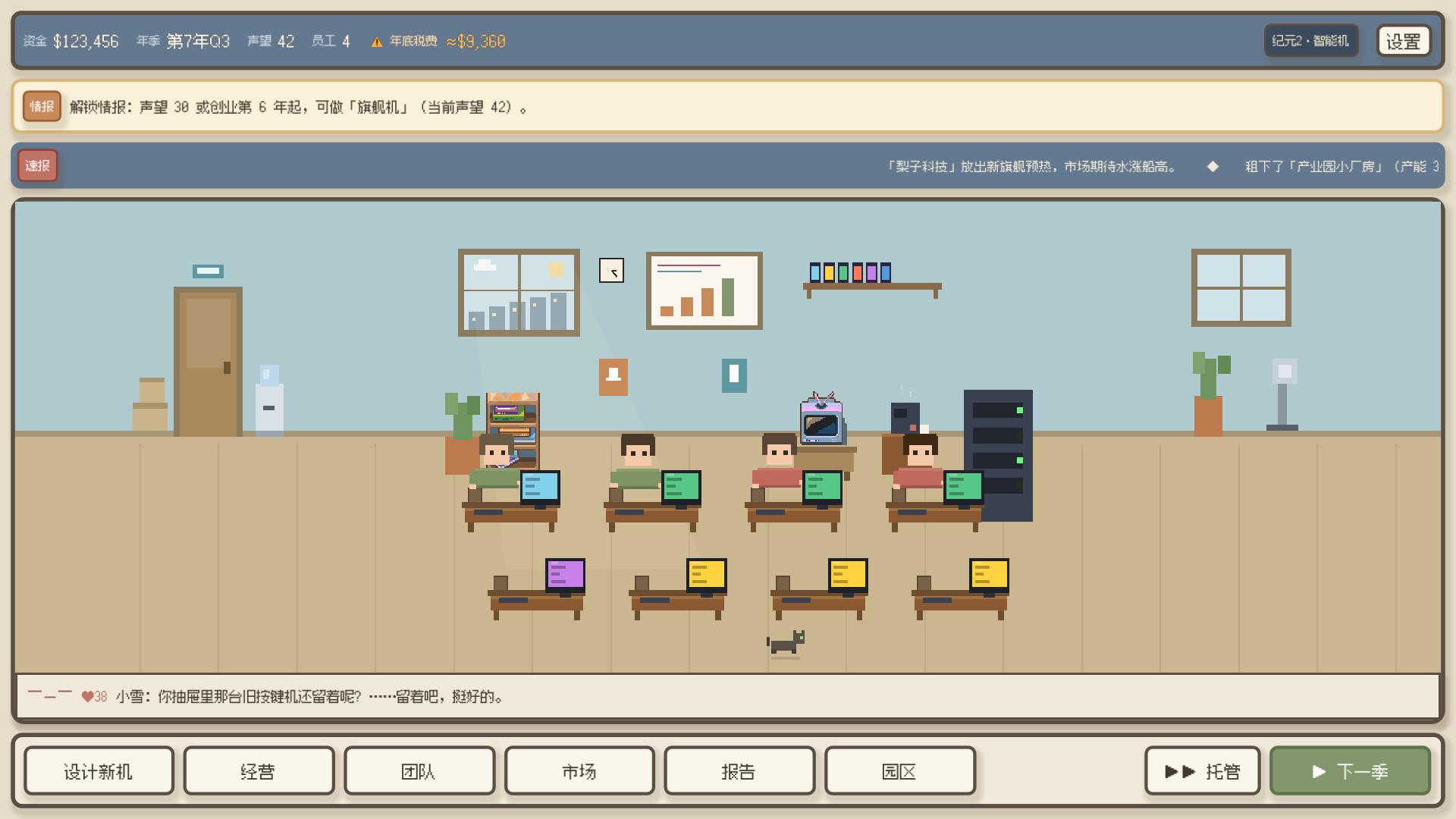
- Auto-pilot mode — hand the routine to your partner; they'll only call you back for the big calls.
- Titles & reputation — the community nicknames you based on how you play: "Price Butcher," "PPT Maker," "Kidney Flagship," and more — both bragging rights and warning labels.
- Trade barriers & boom cycles — late-game tariff walls hit dominant single-segment players; market boom waves reward whoever catches the zeitgeist.
- Pure pixel-art, code-drawn UI, and procedurally-synthesized music — zero external asset dependencies, one cohesive handcrafted look.