—
메타크리틱
0개
DLC
Steam
플랫폼
시뮬레이션, 전략
장르
출시 예정
플랫폼별 가격 비교
가격 히스토리
차트 로딩 중...
게임 소개
Build the machine. Meet the deadline. Sell the company.
Deadline Works is a deep business simulation set in the world of industrial machinery. You start with an empty workshop and a handful of clients. Twenty years later — if you play it right — you sell a multi-million euro company. Then you start again.
The twist: the company you sold doesn't disappear. It becomes a competitor, shaped by everything you built into it. The stronger you grew it, the harder it fights back.
A real business, not a clicker
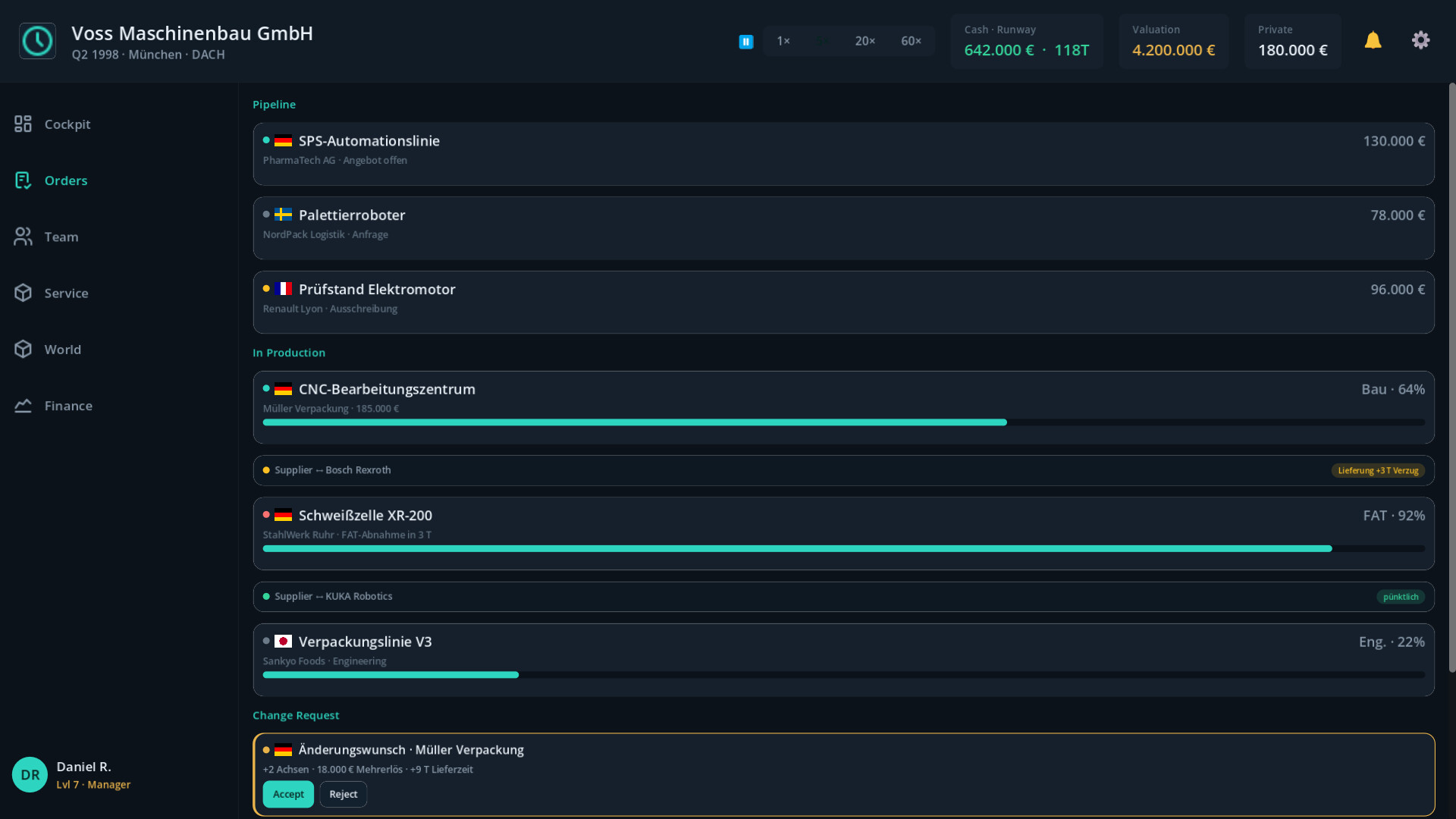
Every order comes from a generated client — a packaging firm, a pharma plant, a steel mill — each with a real budget, a real machine in mind, and the ability to go bankrupt if you keep them waiting. You negotiate terms, manage build phases, and face a Factory Acceptance Test before you see the final payment. Rush the build and you'll fail it. Fail it three times and the client force-accepts — with consequences.
Milestone payments across 5 project phases (signing → design → build → FAT → SAT)
Mid-project change requests: take the scope creep or push back
Supplier delays eat your deadline margin before the client arrives
Causal customer bankruptcy — overdue clients don't pay; overleveraged ones collapse
The right team for the right machine
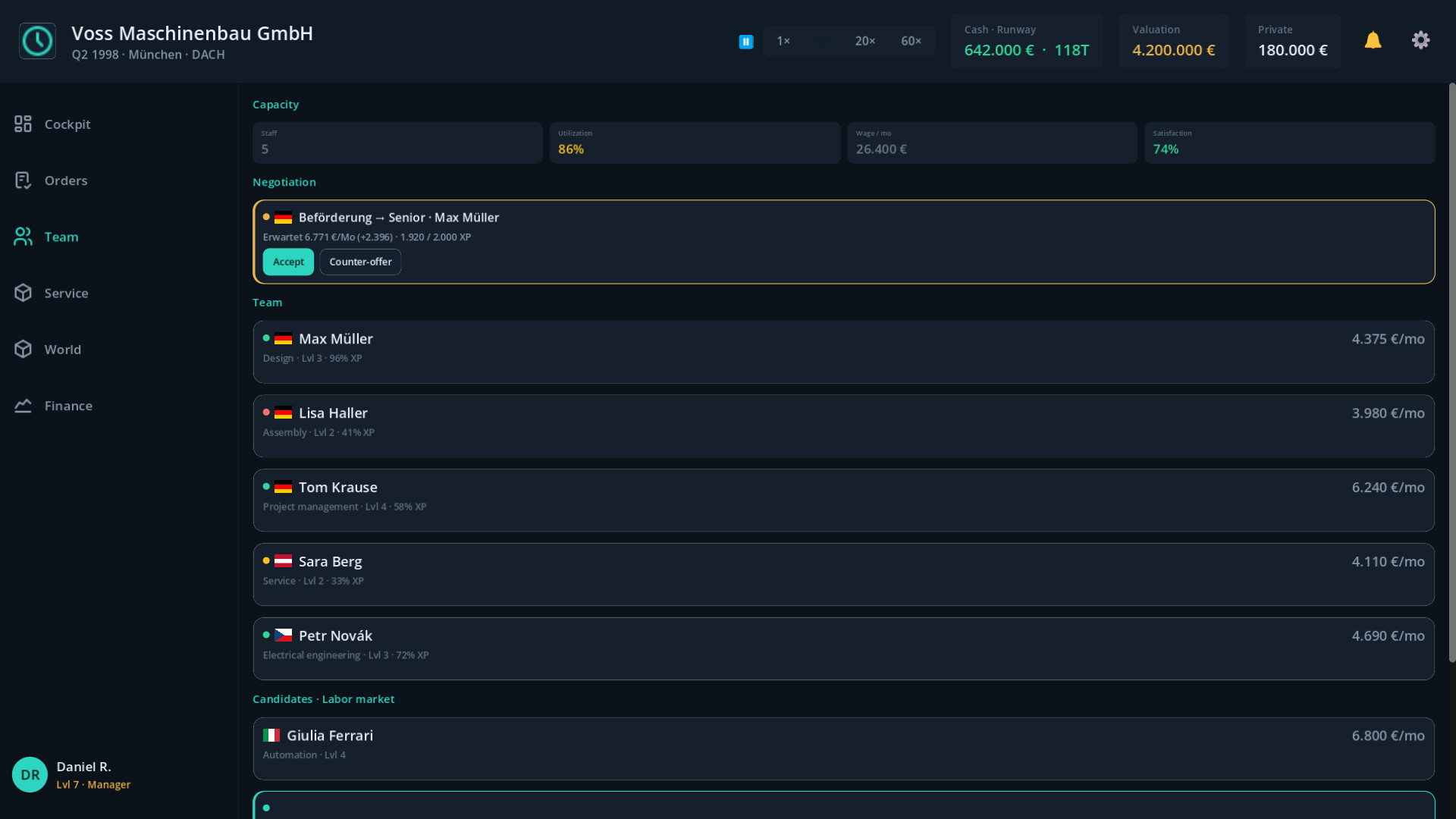
A CNC machine needs more than a mechanical engineer. You need electrical, software, and project management too. Hire the wrong people and you're stuck taking service calls forever. Hire the right team and the big orders start coming.
7 employee roles across 3 engineering disciplines
Machine orders gated by your team's discipline coverage
Negotiate salaries on hire, promotion, and every annual review
Employees track satisfaction — ignore them and they resign (with legal notice periods)
1980 to 2040. The catalog changes with the era.
Start in 1980 with relay panels and CNC mills. Start in 2020 with collaborative robots, AI vision systems, and Industrie 4.0 lines. The machines available to you — and the clients who want them — shift as the decades pass.
124 machine types with real-world availability dates
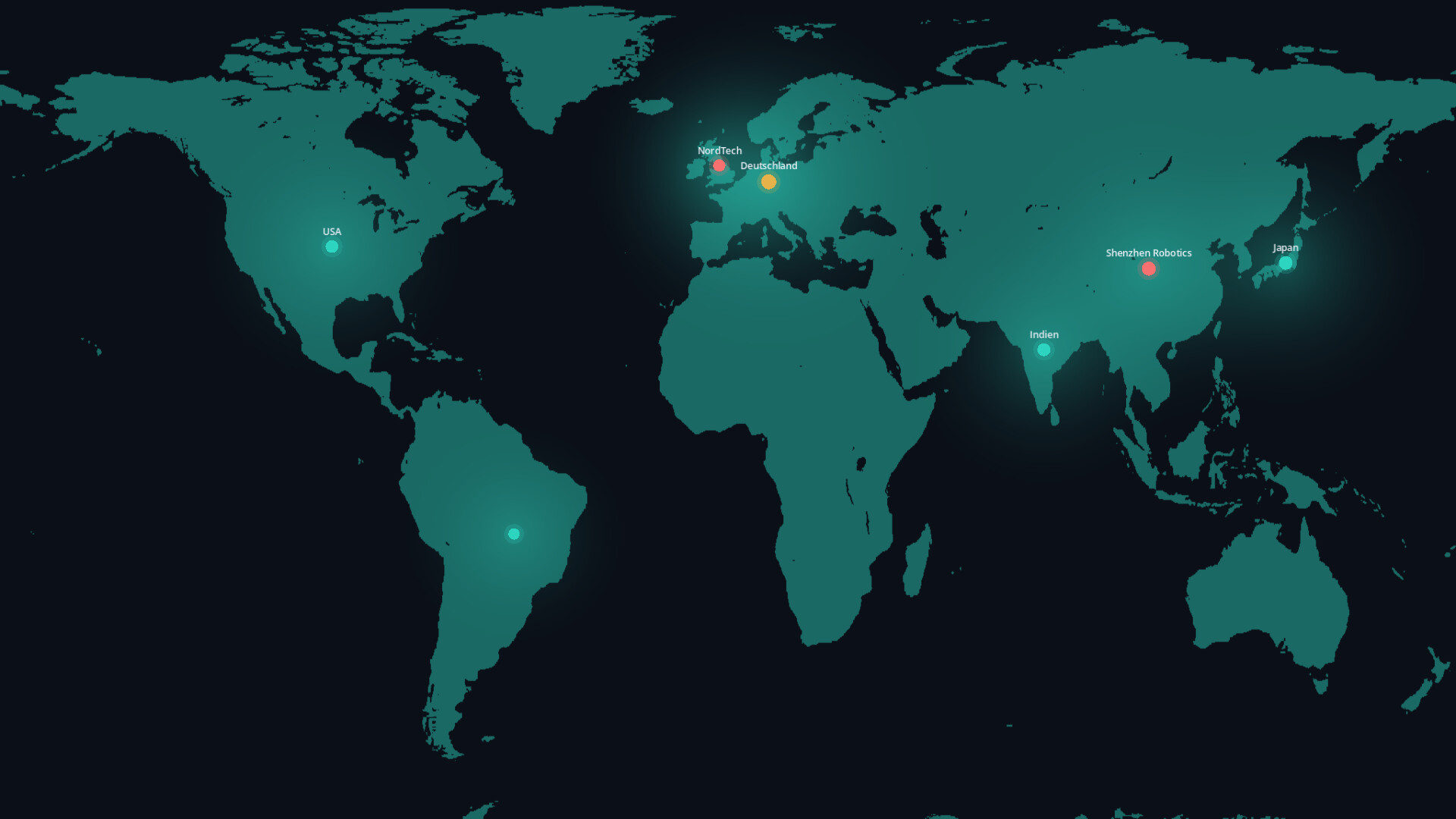
36 industries across 8 world regions, each with its own demand curve
Business cycles with multi-year momentum — recessions shrink orders, booms spike them
World events fire every ~90 days: trade fairs, supplier collapses, market shifts
After-sales is a business, not an afterthought
Every machine you ship keeps generating revenue — if you service it. Neglect the calls and client trust erodes. Let it go long enough and they cancel the contract. A rival picks it up instead.
Installed base with health decay, service contracts, and open-market bids
Retrofit old machines: reset health, cut decay rate, renew the contract
After-sales can grow to 25%+ of total revenue with good management
Series production. Patents. Passive income.
Custom orders pay well. A standard product that sells to 200 clients pays better. Develop a standardized machine, get it to market, file a patent — then collect royalties while rivals try to copy it.
Raise money. Give up equity.
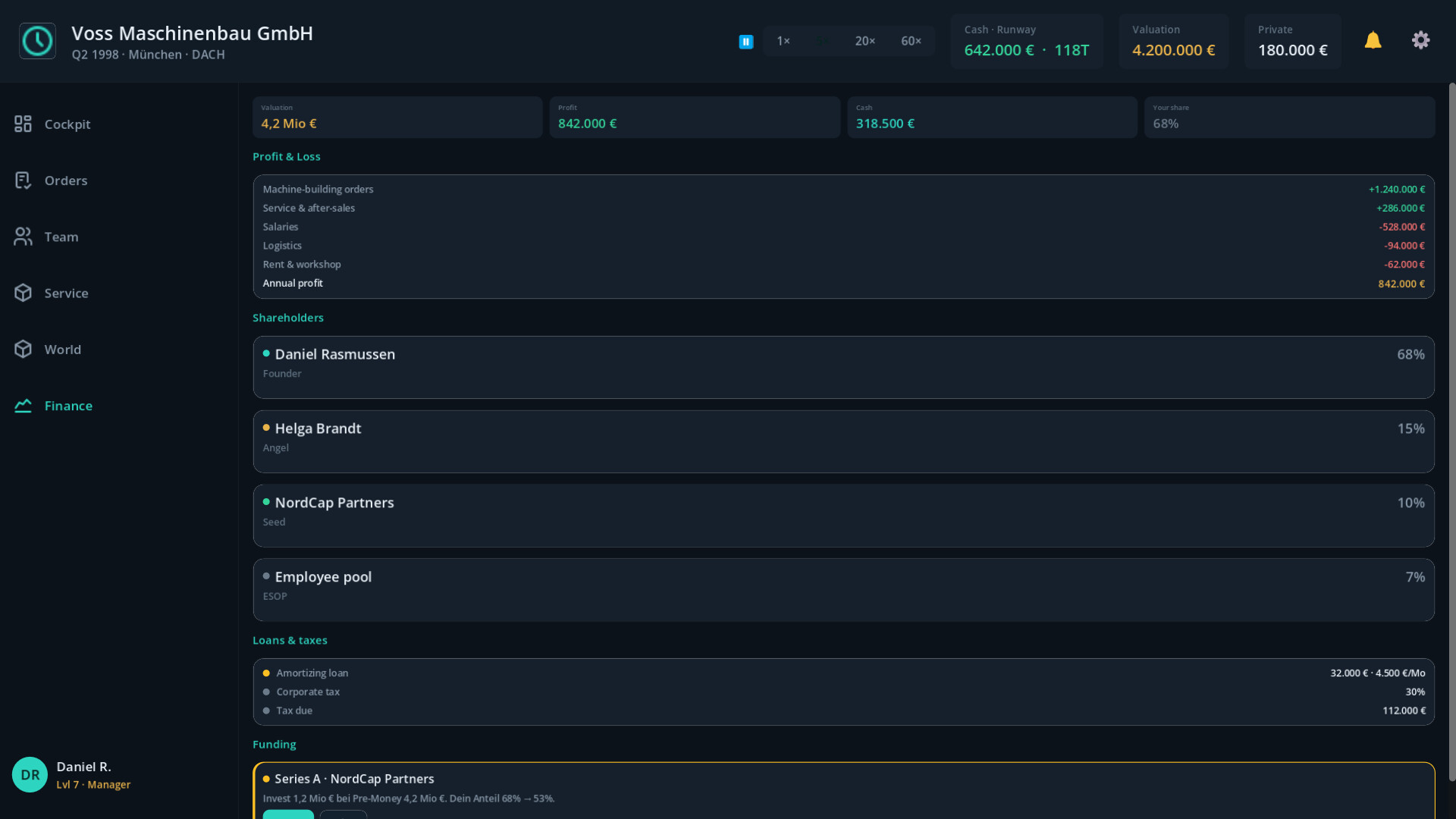
Bootstrap or take investors — both paths work, neither is free. Angel rounds, Series A, and beyond each bring capital and dilution. A real cap table tracks every investor's stake. When you exit, liquidation preferences determine who gets paid first.
Funding rounds: Angel → Seed → Series A → B → C → IPO
Real cap table with dilution and liquidation preferences
Track-record gates — nobody funds a nobody
One active loan at a time; monthly repayments run regardless of profit
The Prestige loop
Sell your company at peak valuation. Bank the proceeds. Start a new company — with a higher manager level, better skills, and the capital to move faster this time. Your old company is now a competitor. It has your clients, your reputation, and the market position you built. It will bid against you on the same contracts.
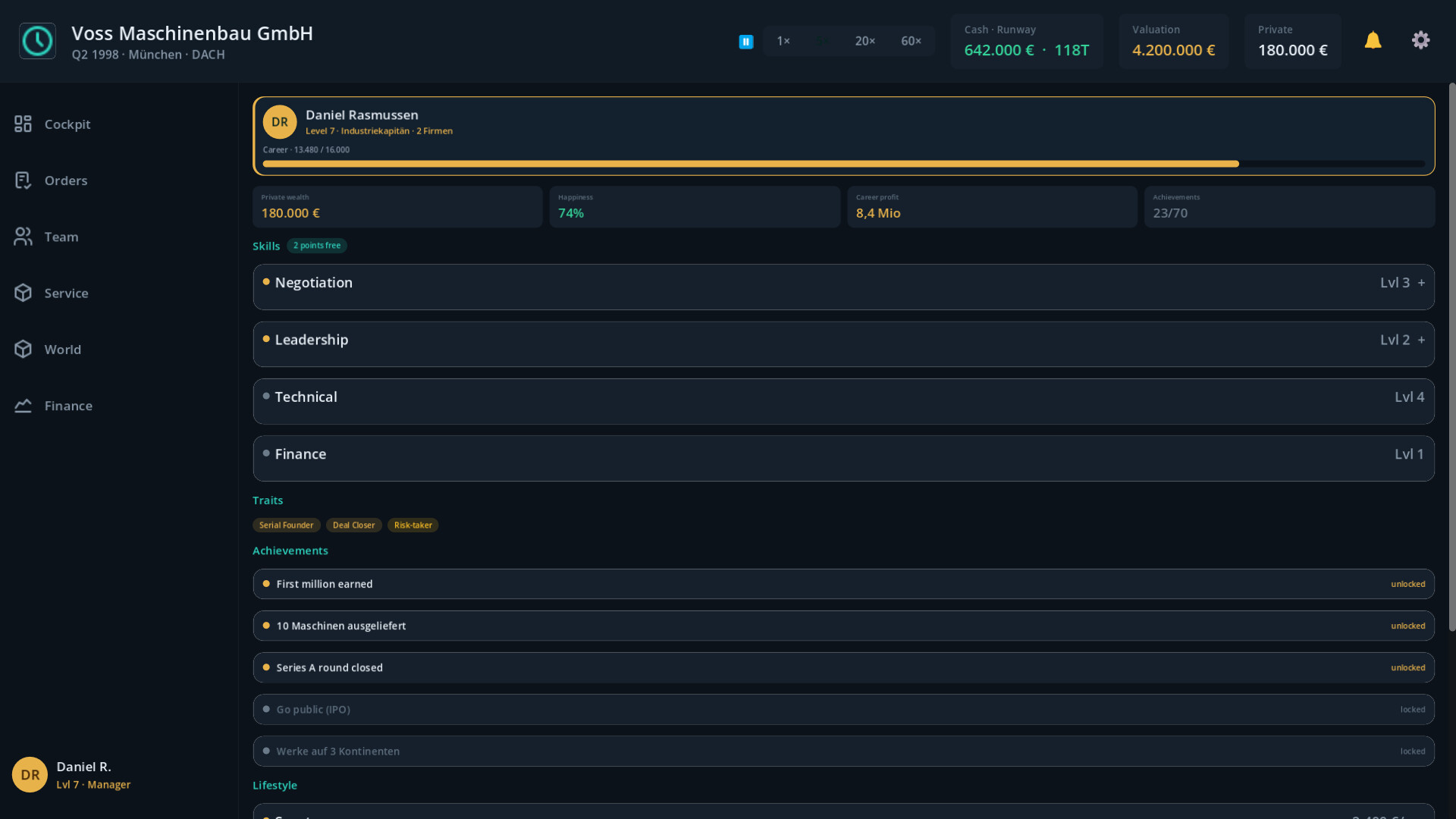
Manage a life, not just a company
Your manager earns a salary from company profits. Spend it on a sports car, a yacht, or a private island — each asset pays a real in-game bonus and costs monthly upkeep. Let the wealth drain and the forced-sale cascade starts, most expensive items first.
Depth you can sink into
13 languages at launch
Start year picker: any year from 1980 to 2040
3 save slots with full progress preview
Speed control: 1× / 5× / 20× / 60×