—
메타크리틱
0개
DLC
Steam
플랫폼
어드벤처, 캐주얼
장르
출시 예정
플랫폼별 가격 비교
가격 히스토리
차트 로딩 중...
게임 소개
You are a Rune Reader.
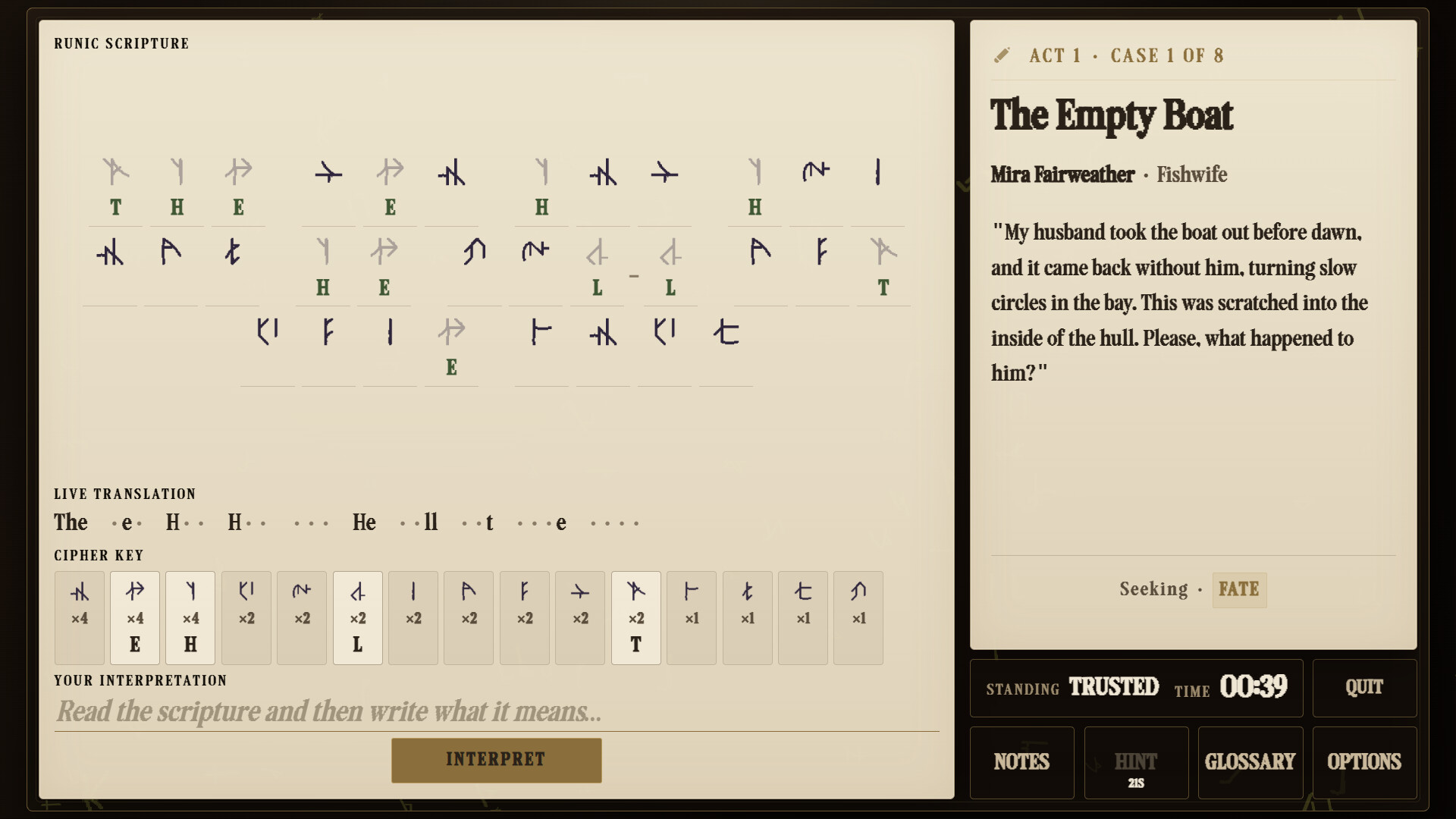
When someone dies, disappears, or leaves a secret behind, the runes remember. People bring their grief to your table: a widow, a cheated merchant, a frightened child, and lay down a scripture no one else can read. Your job is to read it, and then to tell them what it means.
Every case has two halves
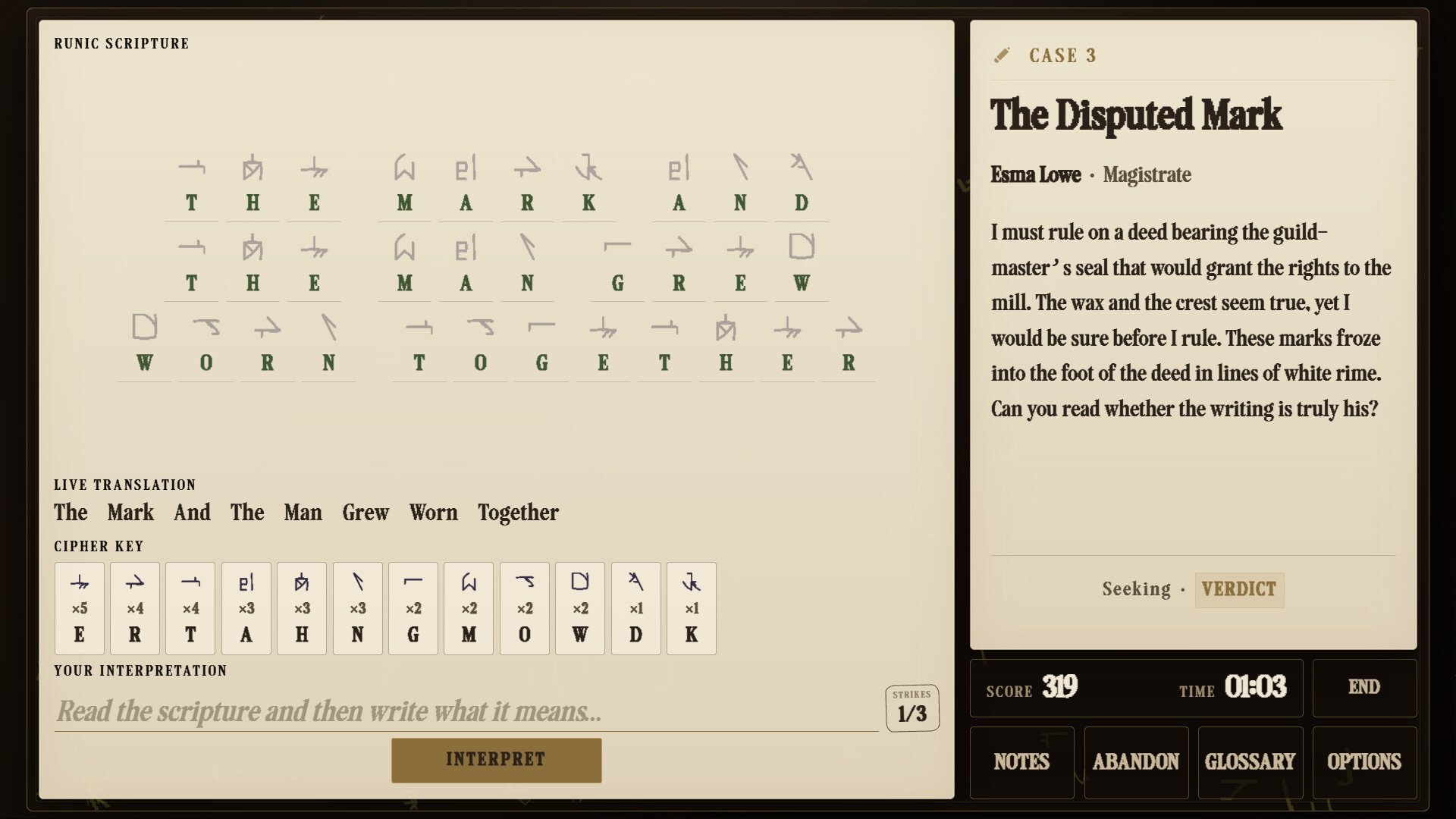
1. DECODE. Each scripture is a substitution cipher with runic symbols standing in for letters. You break it the way real cryptographers do: letter frequency, repeated symbols, short anchor words like THE and AND, and the context of who is asking. The difficulty is tuned tight so it's hard enough to feel earned but never so hard you stall.
2. INTERPRET. The decoded phrase is rarely a plain answer. It is often poetic, evasive, legalistic, or strange. So you don't pick from a menu. You type your own conclusion in your own words, and the engine works out how close you got to the true meaning of the Rune Log.
The truth is not always kindness
Some answers are gut-punches whilst others are quiet relief. How clearly and proficiently you read changes how the world receives you between being trusted, clouded, or unwelcome.
What you get
Story Mode across five villages: A fishing village, a market town, a plague-struck fen, a highland of standing stones, and at last your own home, where the final scriptures are about your own family.
Type your own answers: Free-text conclusions, judged on what you actually understood, not multiple choice.
Tightly-tuned cipher puzzles: Short, satisfying, solvable with pencil-and-paper logic.
Endless Mode: Procedurally generated cases: fates, frauds, imposters, animal culprits, debts and hauntings.
Make your own puzzles: Use the Runic Scripture tool to make and export your own Rune Logs.
Short sessions: Most cases take only a few minutes. Read one over coffee, or lose an evening to the fen.
Rune Log is quiet, occult, melancholic, and grounded. It's a small game about strange messages, and about telling people hard things gently.